“Send heavenward your daily prayers with sighs and tears, that after death your spirit may be worthy to pass happily to our Lord. Amen.” (IC 1,23,9) | “O God, be merciful to me a sinner.” (Lk 18:13)

Kempis hits the reader powerfully with death (1,23).  He urges constant preparation for that moment that will come to each of us: when the Lord calls us to Himself at the end of this earthly existence.  Daily prayer and repentance are necessary to prepare well for the moment we take our last breath.

Jesus’ well-known parable of The Pharisee and the Tax Collector (Lk 18:9-14) once again highlights the vice of pride and the virtue of humility.  The Pharisee thinks he is the source of his own glory — look at how great I am!  Then he wishes to lift up himself by putting another down, comparing himself to the tax collector in his midst (and don’t think that poor wretch wasn’t meant to overhear the Pharisee’s denunciation).  The man in the back, on the other hand, shows true humility, needing few words and using no excuses to lay bare his soul (whose state is known better to God than to either man) by simply asking for mercy.

Kempis would have approved of the tax collector’s attitude as well.  The man’s prayer, “sent heavenward…with sighs and tears,” is exactly the disposition that the sinner (that is, all of us) should have when speaking to God.  To realize we are helpless without God, but that “with God all things are possible” (Mt 19:26), is vital to keep proper perspective on our relationship with the Lord and to the Lord.  To the extent we are open to God’s help, God will help.  Radical humility opens the door to the divine assistance (that is, grace).

Let us never tire of offering ourselves completely to the Lord God, even our sins, so that the merciful Father can forgive us, heal us, and strengthen us for the fight ahead until He calls us home.

Image result for pharisee and  tax collectorThe Parable of the Pharisee and the Publican (1661) by Barent Fabritius

“Oh, the dullness and hardness of man’s heart, which only thinks of what is present, and looks not forward to things to come.” (IC 1,23,1) | “Straight are the paths of the LORD, in them the just walk, but sinners stumble in them.” (Hos 14:10b)

This new chapter (XXIII) of Book One of The Imitation of Christ by Thomas à Kempis is a Meditation on Death.  The crux of it: live well every moment because death can come at any time — and will come eventually for everyone.  In the first section, the quote above ties in very well with the end of the first reading today.

The reading from Hosea (14:2-10) gives us almost the entire last chapter of this book.  Hosea lived in the eight century B.C. in the Northern Kingdom.  The prophet documents various internal intrigues as well as relations with other nations, including Assyria, which would overrun the north in 722 B.C.  He urges the people to admit their sins, repent, and come back to the Lord.  God, for His part, is eager to take them back, and promises abundant blessings if they humbly return.  But the final warning from Hosea is provided in the headline.

Hosea’s final admonition should remind us of Jesus’ words, who well may have been thinking of this prophet, when He uttered the following:

Enter through the narrow gate; for the gate is wide and the road broad that leads to destruction, and those who enter through it are many. How narrow the gate and constricted the road that leads to life. And those who find it are few. (Mt 7:13-14)

The path is straight: keep the commandments.  It is not easy, though, as the road is “constricted.”  By God?  No!  By us!  We far too often find the detours, brush, and trees off the road too tempting not to follow.  We are easily distracted, due to our fallen human nature, with sin and materiality.  We “stumble” amidst the rocks, briers, and detritus that litter these detours that appeal far too easily to our fallen nature.  Kempis and Hosea both are encouraging us to keep our eye in the prize if we are to achieve peace now and ultimate happiness with the Lord forever.

Image result for the narrow path

“[T]he saints of God and all the devout friends of Christ took no account of what pleased the flesh or flourished in this life; but their whole hope and aim aspired to eternal things.” (IC 1,22,4) | “When Joseph awoke, he did as the angel of the Lord had commanded him and took his wife into his home.” (Mt 1:24)

Mortification of the flesh with an eye toward eternal bliss should be a key takeaway for us as we consider the lives of the saints.  To become a saint, one must have demonstrated heroic virtue.  Would we not consider it heroic, based on our fallen inclinations, to “take no account of what pleased the flesh or flourished in life” (1,22) here in this mortal coil for the sake of life eternal?

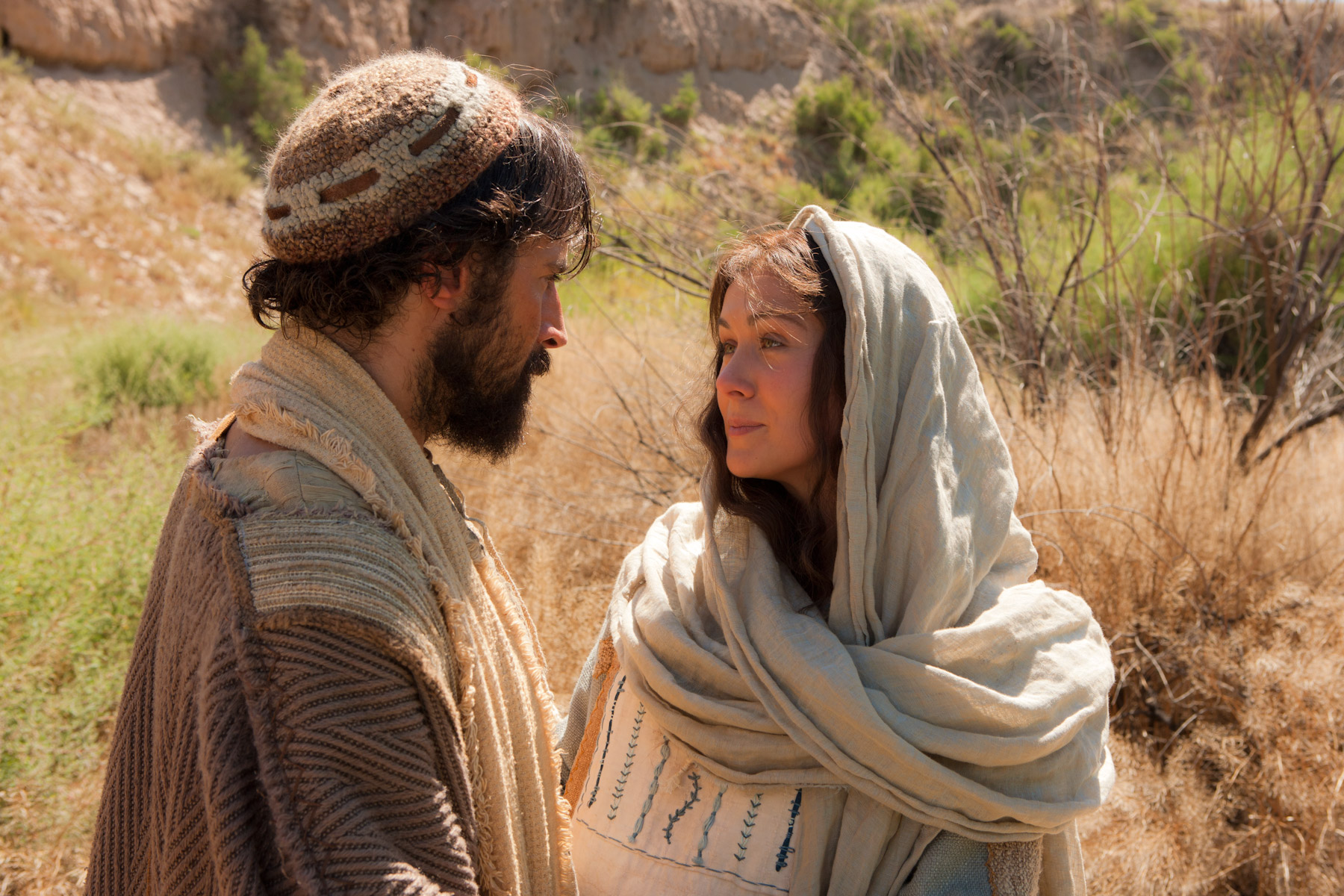
Were there two greater saints than the Virgin Mary and St. Joseph?  They gave their entire lives after betrothal to the raising of the God-Man, focused entirely on Him.  We know Jesus’ mother never sinned so she certainly had no inordinate desires in this life.  A similar case could be made for St. Joseph.  While he was not conceived without original sin, it seems unlikely that he ever sinned from the time he came to know Mary.  They had their challenges from the time of the miraculous conception (see today’s Gospel Mt 1:16, 18-21, 24a), to the difficult circumstances around their Son’s birth, to raising a family as poor folks, to the Finding in the Temple, to losing Joseph to death, to Mary witnessing the rejection and ultimate death of her little Boy.  A sword through her heart was promised when Jesus was only days old (Lk 2:35); she experienced the full blade at the Cross.  Through it all, aspiring to eternal things — with the Eternal Word with them daily all the while — was their focus.

It is good for us to look to the Holy Family for the prime example of family life.  Living for each other, helping lead the family to heaven, and doing the Heavenly Father’s will, were all they aspired to.  With their focus on God they found everything else falling into place.  We would be wise to have the same approach thus guaranteeing the same results.

“The more a man desires to be spiritual, the more this present life becomes distasteful to him; because he better understands and more clearly sees the defects of human corruption.” (IC 1,22,2) | “[W]hoever breaks one of the least of these commandments and teaches others to do so will be called least in the Kingdom of heaven. But whoever obeys and teaches these commandments will be called greatest in the Kingdom of heaven.” (Mt 5:19)

What is the “misery of man” that Kempis speaks of in this chapter (1,22)?  It is not only our worldly desires but even our physical needs.  To the extent that these pull us away from God, they are problematic.  Thus the pressing need to eliminate sin and mortify the body; that is, to loosen our attachments in this brief life so as to better prepare for life eternal.

Jesus also frequently spoke of the Kingdom (in fact, today’s evangelist’s Gospel [Mt 5:17-19] is sometimes called the Gospel of the Kingdom).  He ushered in the Kingdom here on earth (see Mk 1:15 and Jn 11:23-25) but wants us to remain focused on the next life.  How we behave here and now determines our eternal destination (Jesus speaks plenty about hell as well throughout the Gospels; in fact, just read the remainder of this chapter to get a heavy dose).

Considering the words of Kempis, we see how detachment from sin and material needs keeps us focused on the next life.  When this disposition becomes habitual (with God’s grace and our cooperation), the danger of being led astray or leading others astray diminishes, thus honoring Jesus admonition to obey God’s commandments ourselves and teach these commandments to others.  This is  not optional.  The failure to do so has never-ending consequences.

Sermon on the Mount, Scenes from the Life of Christ (6th c.) from the Byzantine School

“We have reason…to humble ourselves and never to think much of ourselves since we are so frail and inconstant.” (IC 1,22,6) | “For we are reduced, O Lord, beyond any other nation, brought low everywhere in the world this day because of our sins.” (Dn 3:37)

It is no surprise that Kempis returns again and again to the “gem casket of all the virtues,” as St. Basil described it: humility (1,22).  He never tires to remind us that our fallen nature, “frail and inconstant,” should make us meek in recognizing our own weakness and the greatness of God.

Blessed are the meek, for they will inherit the land. (Mt 5:5)

The words in the headline come from the lips of Azariah (Abednego) who, we hear proclaimed in today’s first reading, was cast, along with two companions, into a white hot furnace for his refusal to worship a golden idol (Dn 3:25,34-43).  Being spared by God due to their faithfulness, Azariah speaks for the men in the midst of the flames, giving a long testimony to God’s faithfulness to His people, and his trust in God’s mercy.  This miracle leads to King Nebuchadnezzar, the one whose edict they defied, giving them high positions in his kingdom, and a newfound respect for their God, a respect he commanded of all the citizens of his empire.

What an amazing display of humility leading to trust in God!  The three men would not be unfaithful to Yahweh, despite the immediate threat of immolation, whether or not their Lord decided to spare their earthly lives.  Even in the midst of the flames they lay bare their iniquities and the sins of their people.

One significant reason God gave us Scripture is for our instruction (see 2 Tim 3:16-17).  This example from the Old Testament should really make us think about the way we approach adversity regarding challenges to our faith.  Fortitude in the face of persecution, humility regarding our own sinfulness, and trust in the power of God to save us (if not in this life, then the next) lead to glorification of God through our steadfastness.  “The blood of martyrs is the seed of the church,” whether it is red or white.

The Burning Fiery Furnace (1832) by George Jones

“Who is it that is most at ease? No doubt he who is willing to suffer something for God’s sake.” (IC 1,22,1) | “They rose up, drove him out of the town, and led him to the brow of the hill … to hurl him down headlong. But he passed through the midst of them and went away.” (Lk 4:29,30)

We now begin a look at Book One, Chapter 22 of The Imitation of Christ.  This rich chapter is entitled, “Of the Consideration of Human Misery.”  The cause of misery?  Turning away from God, focusing on the material not the spiritual.  We will have opportunity to delve more into different aspects of this in the coming days, but today we take a short paragraph from the first section where, paradoxically, Kempis finds comfort, not misery, in suffering for the Lord.

Jesus Himself was well acquainted with hardship and suffering from the moment of His birth to His last breath on the cross.  He was called the “man of sorrows” by the prophet Isaiah (53:3).  Why did He suffer?  For God’s sake — to fulfill the will of His Father and for the love of God and man.  In today’s Gospel (Lk 4:24-30), Jesus was not about to let his townsfolk of the hook.  He knew their hearts were hardened toward Him.  Truly, familiarity breeds contempt.  For calling them out, instead of repenting, they were about to kill Him right there and then.  But in a scene I liken to Moses parting the Red Sea (since this is the way I always picture it) “he passed through the midst of them and went away.”  He knew His ultimate fate but this was not the time — He still had much work to do in His ministry.  One never gets the sense from Christ that He was particularly perturbed when He was personally attacked, even knowing how He was getting a rise out of the religious leaders.  He was at ease with His mission and remained unafraid during His entire public ministry to call a spade a spade, regardless of the consequences.

We, too, should be at ease with our mission: to live the Gospel and spread the Gospel.  True, these are challenging times when the Good News is militated against by the inverting of truth (see Rom 1:25).  Do we go along to get along or will we be counter-cultural, not counting the cost?  What suffering can come our way that compares to the joy that awaits those of us who keep the faith (see Rom 8:18)?

Jesus was hounded to the edge of the cliff on which Nazareth was built. The angry mob intended to throw Him over the cliff to His death. – Slide 10

“Give yourself to compunction of heart and you will find devotion.” (IC 1,21,1) | “If today you hear his voice, harden not your hearts.” (cf. Ps 95:7-8)

We will end our focus on Chapter XXI where it began — with the quote above from the first section.  Through sorrow for sin brought on by frequent, thorough, and honest examinations of conscience, the heart is softened and turns into the heart of flesh (see here) that can be penetrated by God’s love and mercy which we then are called to extend to others (see Jn 13:34).

Psalm 95 sums up what fittingly could have been God’s (and Moses’s) appeal to the defiant Israelites newly freed from bondage in Egypt.  This psalm, written hundreds of years after the event, but specifically mentioning this encounter between Yahweh and the  Chosen People, portrays well what should have been the attitude of the people: joy in song, kneeling in worship, standing in thanksgiving.

For us today the challenge is to have a disposition open to the Lord’s voice penetrating to our innermost being.  A deep sorrow for sin, even the slightest indiscretion, a firm purpose of amendment, and avoidance of the near occasion of sin, are all necessary to walk the narrow path to salvation (see Mt 7:13-14).  Frequent and earnest prayer, regular reception of the sacraments, and a resolute heart are needed.

O my God, I am heartily sorry for having offended Thee, and I detest all my sins because of thy just punishments, but most of all because they offend Thee, my God, who art all good and deserving of all my love.

I firmly resolve with the help of Thy grace to sin no more and to avoid the near occasion of sin. Amen.

Image result for heart of stone heart of flesh

“It is often more profitable and more secure for a man not to have many comforts in this life; especially such as are according to the flesh.” (IC 1,21,3) | “Father, I have sinned against heaven and against you. I no longer deserve to be called your son” (Lk 15:21)

Kempis reiterates the need for mortification to get closer to the Trinity; in this chapter (1,21) this drawing nearer to the Lord should result from a deep sorrow of heart for offending so good a God with our sins.

Arguably, the most famous parable of Jesus’ is the Prodigal Son that we heard today (Lk 15:1-3,11-32).  This younger son, in essence, tells his dad to drop dead — I want my inheritance now!  He proceeds to live it up, burning through his new found wealth in short order.  Then, when difficult times come, his fair weather, free-loading “friends” are nowhere to be found.  Reduced to tending pigs, a particularly obnoxious line of work for a Jew, he “comes to his senses.”  He decides to go back to his boyhood home, confess his sinful behavior, and beg his father for work.  The patriarch, eagerly awaiting his wayward son’s return, runs out to greet him, welcomes him home, and lavishes upon him the royal treatment.  The older son is livid that his brother is given such fanfare, leading the father to try to help the older son understand the father’s motivation in these actions.

It is not uncommon to hear folks (maybe even ourselves) speak of how only when they reached rock bottom in an addiction or other sinful behavior that they finally cried out to God for help.  When things are going well, when the creature comforts are all in place, divine things can far too often take a back seat, the trunk, or not be along for the ride at all.  This is why Kempis’s advice is so wise and so needed, particularly in a time and place in which our every desire can be easily fulfilled.  Let us not get too comfortable with all the comforts and distractions around us; these are all passing.  Rather, like the Prodigal Son, let us come back to the Father, acknowledging our sins and waywardness.  We can be assured that He will bridge the greater distance to welcome us back.

(By the way, let us not fall into the trap of the older son, self-righteously taking offense when someone who has led a wayward life comes home.  Remember God’s mercy to each one of us, personally, and also what Scripture tells us: “Do I find pleasure in the death of the wicked…? Do I not rejoice when they turn from their evil way and live?” [Ezek 18:23])

(An aside: To really dive into this parable in ways you very likely never considered, read the fabulous work by Henri Nouwen, The Return of the Prodigal Son.)

The Return of the Prodigal Son (c. 1661–1669) by Rembrandt van Rijn

“[B]ecause … we still love the things which flatter us, therefore we remain cold and very slow.” (IC 1,21,5) | “When the chief priests and the Pharisees heard his parables, they knew that he was speaking about them.” (Mt 21:45)

Kempis is on target that worldly accolades do much to impede us in the spiritual life (1,21).  This section talks about how our focus is to be on our eternal destiny, but is it not the case that worldly ambition can easily blind us to such concerns?  When we focus on how we are received in this world, the danger of such self-absorption is making ourselves and our status our only concern.  Thus it is easy to increasingly freeze out God and others in our pursuit, making us slow, at best, in receiving divine messages to repent and reform.

Jesus today (Mt 21:33-43,45-46), as in yesterday’s reading, takes a dig at the Pharisees.  His Parable of the Wicked Tenants is a thinly veiled summary of the history of the Chosen People.  God kept sending prophets to the Israelites who, time and again, rejected their message, sometimes even killing them.  The impression one gets from this reading is that the light comes on slowly after Jesus relates the entire story to them and thus we read at the end that they wish to arrest Jesus there and then but were too cowardly to do so because of the pro-Jesus crowd.

Kempis’s message certainly reflects the general attitude of the Pharisees: cold and slow of heart, concerned with their own status, and consumed with being exalted by the people (today we would call it clericalism) (see Mt 23:1-6).  Well, as was mentioned in the first paragraph, we easily can imitate the Pharisees: so caught up in ourselves and our pursuits that not only is God forgotten but He may be considered an obstacle to achieving selfish goals that militate against what is required for salvation.

It is far better for us to stick with the correct order of priorities: God first, others second, us last.

day laborers

“[I]f you did seriously consider in your heart the future punishment of hell or purgatory, I believe you would willingly endure work and pain, and fear no austerity.” (IC 1,21,5) | “My child, remember that you received what was good during your lifetime while Lazarus likewise received what was bad; but now he is comforted here, whereas you are tormented.”

Kempis here describes the eternal consequences of not having sorrow for sin (1,21).  Solitude, frequent examination of conscience, and a firm purpose of amendment are all emphasized as necessary in this life for happiness in the next.

Today’s “parable” (Lk 16:19-31; I’ve heard good arguments against it being a parable, strictly speaking, since it is the only such story that actually gives a proper name to a character [sometimes the wealthy feaster is called Dives, which simply Latin for “rich man,” but his proper name is not in this tale]) is the famous story of the rich man and Lazarus; the person of wealth feasts with no concern for the poor beggar in his midst.  Fortunes are reversed in the next world when Lazarus enjoys bliss but the man of worldly means endures torture.  The burning man asks for a bit of relief but it cannot be provided.  And, while the entire story is directed at the Pharisees, the last line, in response to Dives request to at least warn his brothers, is most poignant for the Lord’s hearers:

If they will not listen to Moses and the prophets, neither will they be persuaded if someone should rise from the dead.

The episode of Lazarus being raised from the dead only appears in John’s Gospel (Jn 11:1-44, but it is worth reading the entire chapter), immediately after which the Sanhedrin meets to put into high gear their plans to have Jesus put to death.  We learn there that Jesus escapes to Ephraim for awhile, but the very next verse tells us that “Passover was near” and then three verses later that it was six days away.  John is a quite different Gospel than the three synoptics, so chronology is particularly difficult to discern with the Beloved Disciple.  Did Jesus relate today’s parable before or after Lazarus actual rising from death?  If before, imagine the Pharisees recalling with varied reactions and emotions this pointed tale when watching Jesus’ friend emerge from his tomb.  If after, picture the seething indignation they must have felt being called out for their lack of faith even after witnessing the long dead come to life (thus making their immediate turn toward plotting against the upstart Rabbi unsurprising).  This is not to mention the infinitely more significant Resurrection that takes place after Jesus is executed and the Pharisees response to that event.

The Pharisees then, and we today, should take heed with utmost seriousness the lesson Jesus attempted to teach them and attempts to teach persons of all times and places: enjoying the creature comforts while neglecting the least of our brothers is a sure path to, at best, a long stay in purgatory (maybe that’s where Dives was? — think about it based on evidence in the story), or, infinitely worse, eternal damnation.  As Kempis implores, we “would willingly endure work and pain, and fear no austerity” in this life if we “seriously consider” our fate for eternity.

In hindsight, the rich man would have done anything to avoid his fate.  We have no excuse in that we have the advantage of knowing that “someone” who rose from the dead.

So let us listen to the Christ who lives forever and never be so caught up in ourselves that we ignore injustice and the legitimate needs of others.  Another reading of the Judgment of the Nations (Mt 25:31-46) is in order, in case any of us does not appreciate the seriousness of this call.

Medieval illumination, The Rich Man and LazarusThe Rich Man and Lazarus (medieval illumination)