
TODAY’S READINGS
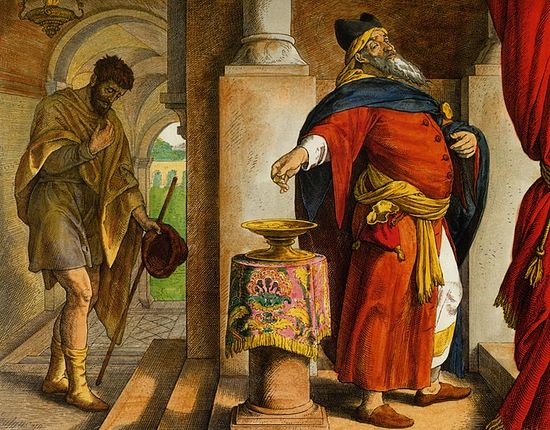
Today’s Gospel (Lk 18:9-14) gives us the Parable of the Pharisee and the Tax Collector. Jesus is making few friends with the former group but is giving hope to the latter. The words of the tax collector in prayer are extolled by Jesus:
“‘O God, be merciful to me a sinner.’” (v. 13b)
“[The tax collector] asked God to ‘be merciful’ (hilaskomai) to him. This verb…occurs only once elsewhere in the New Testament, where it means to ‘expiate’ or make atonement for sin (Heb 2:17). Such ‘sacrificial overtones’ fit the parable’s temple setting, all the more so if the prayer occurs at the time of the daily sacrifice.” (The Gospel of Luke [Catholic Commentary on Sacred Scripture], 304)
“‘Prayer is the raising of one’s mind and heart to God or the requesting of good things from God.’ But when we pray, do we speak from the height of our pride and will, or ‘out of the depths’ of a humble and contrite heart? He who humbles himself will be exalted; humility is the foundation of prayer, Only when we humbly acknowledge that ‘we do not know how to pray as we ought,’ are we ready to receive freely the gift of prayer. ‘Man is a beggar before God.'” (CCC 2559)
“With bold confidence, we began praying to our Father. In begging him that his name be hallowed, we were in fact asking him that we ourselves might be always made more holy. But though we are clothed with the baptismal garment, we do not cease to sin, to turn away from God. Now, in this new petition, we return to him like the prodigal son and, like the tax collector, recognize that we are sinners before him. Our petition begins with a ‘confession’ of our wretchedness and his mercy. Our hope is firm because, in his Son, ‘we have redemption, the forgiveness of sins.’ We find the efficacious and undoubted sign of his forgiveness in the sacraments of his Church.” (CCC 2839)
Humility is the gem-casket of all virtues. We are to put the onus on ourselves for our sins, faults, and shortcomings. It is easy to blame others for paving the way toward our own indiscretions, but keeping it simple is the way to go. Acknowledge we’re sinners and beg for the Almighty’s mercy. We know better and yet we fall so many times.
“What I do, I do not understand. For I do not do what I want, but I do what I hate. Now if I do what I do not want, I concur that the law is good. So now it is no longer I who do it, but sin that dwells in me. For I know that good does not dwell in me, that is, in my flesh. The willing is ready at hand, but doing the good is not. For I do not do the good I want, but I do the evil I do not want. Now if [I] do what I do not want, it is no longer I who do it, but sin that dwells in me.” (Rom 7:15-20)
Paul has the right attitude. While a sinner like all of us, he recognizes sin, its source, and its detrimental effects. Half the battle is acknowledging the wrongdoing we do; then resolve to overcome it (with God’s grace of course). I’m reminded of the AA 12-step program: admit our powerlessness and humbly ask God for help.
It seems to me that the words of the publican are worth incorporating into our daily prayer time. Let’s resolve to do so.
THE LITANY OF REPARATION IN THE BLESSED SACRAMENT
A beautiful prayer that acknowledges sins against the Eucharist and our sorrow for these outrages with a desire to make amends. Thanks to Dr. John Bergsma for sharing this in today’s Exodus & Exile episode.
God bless.
 Unworthy Servant