
TODAY’S READINGS
Today’s Gospel reading (Jn 10:31-42) continues Jesus ongoing contentious interaction with with the Jewish religious leaders. They wish to kill Him:
“The Jews answered him,
“We are not stoning you for a good work but for blasphemy.
You, a man, are making yourself God.”
Jesus answered them,
“Is it not written in your law, ‘I said, ‘You are gods”‘?
If it calls them gods to whom the word of God came,
and Scripture cannot be set aside,
can you say that the one
whom the Father has consecrated and sent into the world
blasphemes because I said, ‘I am the Son of God’?“ (vv. 33-36)
“your law: Sometimes this expression refers to the OT in general and not just to the Pentateuch (12:34; 15:25; 1 Cor 14:34). I said, you are gods: A citation from Ps 82:6. ● The psalm is a prayer for Yahweh to punish the corrupt shepherds of Israel. These leaders, who are charged with teaching and enforcing divine Law, are called ‘gods’ by the Psalmist because of the divine authority they wield over the people. The abuse of this power makes their corruption all the more insidious. Jesus reasons that if sinful authorities are given a divine title because of their duties, how much more is he entitled to it who is guiltless and who speaks the words of God (8:45–47).
“Scripture cannot be nullified: Three implications can be drawn from this statement. (1) Scripture cannot be set aside, since its teaching is as trustworthy and true as God himself (17:17). (2) The OT, represented in this context by a psalm, has permanent authority even under the New Covenant (Mt 5:17). (3) The authority of Scripture extends even to individual words, as in this context where Jesus’ whole argument rests on the import of a single word (‘gods’) from Ps 82:6.
“consecrated: The Greek means to be ‘sanctified’ or ‘set apart as holy’. Christ is set apart by the Father to consecrate the world in truth (17:19). ● Jesus’ words resonate against the background of the Feast of the Dedication, which celebrates the consecration of the Second Temple by the Maccabees (1 Mac 4:48), just as its predecessors, the wilderness Tabernacle (Num 7:1) and the Solomonic Temple, had been consecrated (1 Kings 9:3). These sanctuaries of old are replaced by the new and consecrated temple of Jesus’ body (2:20–21).” (The Gospel of John [Ignatius Catholic Study Bible], 38)
I’m just happy to share some wonderful exegesis (above) on this passage that I have long found perplexing. The Jews were not wielding their God-given authority faithfully. The one who comes from God, who is the Son of God, thus God, has the authority and is recognized as such (see Mt 7:28-29 which concludes the Sermon on the Mount).
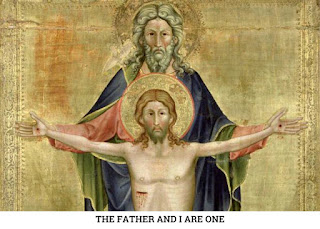
They wish to kill Him for His declaration “I and the Father are one” (v. 30) It was not His time yet. But His confirmation that He is the Son of God will bring upon Him a death sentence, appropriately, under the cover of darkness (Mt 26:63-66). Less than a day later, He will be dead.
God bless.
 Unworthy Servant