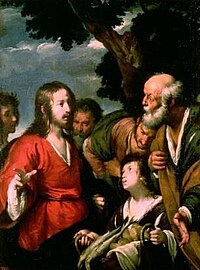
“Neither will they be persuaded if someone should rise from the dead.”

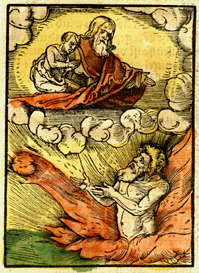
The gospel for this Twenty-sixth Sunday in Ordinary Time (Lk 16:19-31) gives us the famous story Jesus tells of the Rich Man and Lazarus.  In life, the rich man (sometimes called Dives which simply means “rich”) shows no concern for the poor, sick man Lazarus.  When both die, Dives begs Abraham, with whom Lazarus is now seated, to give him some relief in his torment.  This not being possible, Dives begs the patriarch to send Lazarus to warn his brothers so they do not suffer the same fate.  Abraham’s response concludes with the words in the headline.

https://i0.wp.com/www.orthodox.net/ikons/parable-rich-man-and-lazarus-02.jpg

Jesus is not only alluding to His forthcoming death and resurrection but also the raising of Lazarus (Jn 11:1-44), which likely had happened already since Lazarus is mentioned by name.  In both cases, some hearts were moved, but many were not only not moved but further hardened.  Two thousand years have passed and little has changed.  The gospel message has spread the world over yet, while adherents to Christianity outnumber any other individual religion, Christians make up less than one-third of the population of our planet.  So, a significant majority have not been persuaded to this day that Jesus is the Risen Savior.

This calls for a renewed and intensive evangelization to be sure.  But renewal starts at home.  When Christians live what they profess (holy), and are unified in doing so (one), then the Church can become catholic (that is, universal) as it becomes once again faithful to its roots (apostolic).  Divided Christians not following the Lord’s commands are a scandal to the world.

Let us each pray for ongoing conversion of hearts (first and foremost ours, then others) so that we become shining examples to our culture of authentic Christianity and accelerate the arrival of the Kingdom as we pray for every time we say the Our Father (Mt 6:10 — in fact, this prayer is an excellent manual for living a holy life).

“God…wills everyone to be saved.”

(Submitted by me for yesterday’s bulletin as a member of my parish’s Spiritual Life Committee.)

St. Paul, today, offers an important message to every Christian: “God…wills everyone to be saved.”  He prefaces this remark by encouraging prayers “for everyone” and then he specifically mentions “kings and for all in authority.”  No one is to be excluded from our prayer of “supplication…petitions, and thanksgivings.”  No one is beyond the reach of God’s mercy, as Pope Francis is so fond of emphasizing, particularly in this Jubilee Year of Mercy.

Disappointed in your elected leaders?  Pray for them all the more!  Troubled by policies of the president, congress, and state and local officials that militate against the Catholic Faith?  Petition the Lord God that they come to realize the error of their ways.  Hurt or angered by those who seem beyond help or forgiveness?  Beg the Lord in supplication to change their hearts (and yours).  Grateful for family, friends, co-workers, neighbors (and even some politicians)?  Be sure to thank them and God for their presence in your life.

To what does Paul tell us that these prayers lead?  First, a “quiet and tranquil life.”  Why is this the result?  Because when we turn to Jesus on others’ behalf we are cooperating with Him in His desire to help everyone to be saved.  In doing so, Christ gives us the grace to overcome any feelings of pain or animosity toward those who have grieved us.  Working with God for others gives us peace because then we are obeying the greatest commandment: “You shall love the Lord, your God, with all your heart, with all your soul, and with all your mind….You shall love your neighbor as yourself.” (Matthew 22:37, 39)

What else is the result of such prayers?  “Devotion and dignity.”  One cannot help but think of the ever-growing threat to religious freedom happening in our country and throughout the world.  Here, prayers of supplication and petition are desperately needed to ask God to enlighten with the truth those with the power to adjudicate, legislate, and execute so that they will ensure that we retain the freedom to express our devotion to God and live Christian values in the public square while upholding the dignity of all persons, from conception until natural death, each and every one whom the Lord wishes to be saved.

Who will you pray for each day that you have not prayed for before?

“If Christ has not been raised, your faith is vain; you are still in your sins.”

After having spent the last couple of days focusing on the Cross in these posts, St. Paul moves our attention in this day’s first reading to the Resurrection (1 Cor 15:12-20).  Countering some Corinthians’ view that there is no resurrection from the dead, the Apostle to the Gentiles puts the matter starkly, as we see in the headline.

The passion, death, and resurrection of Christ are a strict unity that had to occur for our redemption. Jesus Himself said so in predicting His own demise and rise (notice my emphasis):

[Jesus] began to teach them that the Son of Man must suffer greatly and be rejected by the elders, the chief priests, and the scribes, and be killed, and rise after three days. (Mk 8:31; see also Mt 16:21 and Lk 9:22)

So reject the modern “scholars” who would have you believe that the “historical Jesus” never rose from the dead or that it doesn’t matter one way or the other if he did or did not (e.g., the classic line: “even if they find the bones of Jesus it would not affect my faith”)..  Flee from such talk — waste no time on it.  A “savior” who does not keep his word is either a liar or a madman.  Jesus is neither.  And the Risen Jesus is worthy of our faith.

All aspects of the life of our Lord are worthy of meditation and contemplation, but none more so than the time from the Last Supper until Easter morning (try the Sorrowful Mysteries of the Rosary and the first two Glorious Mysteries).  Let us renew our desire to thank God for so loving a Savior.  May we one day rise in glory to be with Him for all eternity.
Image result for the resurrection

The Resurrection of Christ

Date: 1570


“Woman, behold, your son.”

Today, on the Memorial of Our Lady of Sorrows, we heard one of the seven last sayings of Jesus from the cross (above — taken from Jn 19:25-27), this one directed to His mother.    While we tend to think of these words as Jesus referring to the apostle John, due to Jesus’ next words, let us stop right after this utterance and consider it the moment it left our Lord’s lips.

Altdorfer Albrecht - 'Christ on the Cross between Mary and St John'

Christ on the Cross between Mary and St. John

Albrecht Altdorfer (1512)

What must Mary have been thinking at this moment?  Jesus is asking her to look at her Son — undoubtedly she looked up intently.  Must she not have flashed back through her entire life?  (As an aside, such scenes in particular are what made the movie, The Passion of the Christ, so moving for me.)  The time as a young teenager when she consented to Jesus’ miraculous conception.  The trials of her pregnancy.  The joyous birth in a humble stable surrounded by shepherds, animals, and angels.  Taking care of the Child, nursing Him, watching Him grow, hearing His first words, and teaching Him about God and the world.  Watching her husband train the Boy in his shop.  Listening to Him, laughing with Him, crying with Him, seeing Him grow to become a teenager and then an adult.  Being the beneficiary of the good work He did in helping the family and then supporting her after Joseph died. Finally, watching Him depart to His public ministry (which she helped kick off by her request at Cana).

And let us not forget the warning she received from Simeon at the presentation of the babe in the Temple.  Certainly she must have recalled with vividness his solemn words coming to full fruition in these last moments of Jesus’ life:

“Behold, this child is destined for the fall and rise of many in Israel, and to be a sign that will be contradicted (and you yourself a sword will pierce) so that the thoughts of many hearts may be revealed.” (Lk 2:34-35)

Now this same Child, who was given a love unequaled by any mother in history, was before her, although perfectly innocent, bloody and bruised, at the point of death due to torture.  Yet she never lost faith, never broke down, but stood there in testimony of her will being united to God’s will, even if it meant death for her Son.

How can any Christian diminish the role of Mary in salvation history?  God chose her from all history to be His mother.  Must she not be a perfect vessel?  And who knew the Savior better than the woman who consented to His incarnation and then knew Him intimately for thirty years and certainly followed His public ministry?  Would not this woman be the perfect person to ask for help in getting to know Jesus?  And did anyone else ever give better advice than what were her last words in scripture: “Do whatever he tells you” (Jn 2:5)?

Let us today come to more fully appreciate the Blessed Virgin Mary’s role in Jesus’ life and our lives.  Meditating on the seven dolors (or sorrows) of Mary will help (see here).

I will close with this optional sequence for today’s Mass.  It is called Stabat Mater (or Standing Mother).  Try, if you are able, to get through it without welling up:

At the cross her station keeping,
Stood the mournful Mother weeping,
Close to Jesus to the last.

Through her heart, his sorrow sharing,
All his bitter anguish bearing,
Now at length the sword had passed.

Oh, how sad and sore distressed
Was that Mother highly blessed
Of the sole begotten One!

Christ above in torment hangs,
She beneath beholds the pangs
Of her dying, glorious Son.

Is there one who would not weep,
‘Whelmed in miseries so deep,
Christ’s dear Mother to behold?

Can the human heart refrain
From partaking in her pain,
In that mother’s pain untold?

Bruised, derided, cursed, defiled,
She beheld her tender Child,
All with bloody scourges rent.

For the sins of his own nation
Saw him hang in desolation
Till his spirit forth he sent.

O sweet Mother! font of love,
Touch my spirit from above,
Make my heart with yours accord.

Make me feel as you have felt;
Make my soul to glow and melt
With the love of Christ, my Lord.

Holy Mother, pierce me through,
In my heart each wound renew
Of my Savior crucified.

Let me share with you his pain,
Who for all our sins was slain,
Who for me in torments died.

Let me mingle tears with you,
Mourning him who mourned for me,
All the days that I may live.

By the cross with you to stay,
There with you to weep and pray,
Is all I ask of you to give.

Virgin of all virgins blest!
Listen to my fond request:
Let me share your grief divine.

Let me to my latest breath,
In my body bear the death
Of that dying Son of yours.

Wounded with his every wound,
Steep my soul till it has swooned
In his very Blood away.

Be to me, O Virgin, nigh,
Lest in flames I burn and die,
In his awful judgment day.

Christ, when you shall call me hence,
Be your Mother my defense,
Be your cross my victory.

While my body here decays,
May my soul your goodness praise,
Safe in heaven eternally.
Amen. (Alleluia)

“For I resolved to know nothing while I was with you except Jesus Christ, and him crucified

Today is the Feast of the Exaltation of the Holy Cross.  Unusually for me, the verse in the headline does not come from any of today’s readings.  It is actually from Paul’s first letter to the Corinthians (2:2).

Not that the scripture passages proclaimed today are not appropriate or thought provoking.  The Old Testament reading tells of the complaining Israelites being attacked by snakes only to realize the error of their ways, beseeching Moses to intercede for them, and then being healed by a serpent on a pole.

The second reading has Paul telling the Philippians that Jesus “humbled himself,
becoming obedient to death, even death on a cross.”  We are to follow the Messiah’s lead: humility leads to obedience that should be our hallmark until our last breath.

Finally, John ties Jesus upcoming sacrifice to the story we heard in the first reading by giving us Jesus’ words to Nicodemus:

And just as Moses lifted up the serpent in the desert,
so must the Son of Man be lifted up,
so that everyone who believes in him may have eternal life.

Hearing this, we should immediately think of Paul’s words in another letter to the Corinthians:

For our sake he made him to be sin who did not know sin. (5:21)

The serpent, who from early on was the symbol of iniquity, prefigured Jesus in the desert.  A serpent on a pole healed the recalcitrant Chosen People.  Jesus, taking on the sins of all persons of all time, became like that reptile in order to heal all of us who look on and believe.

Now, getting back to the quote that came to my mind on this day.  Whenever, I hear about someone deriding Catholics for “keeping Christ on the cross” I think of the words from Paul in the headline.  If he is preaching Christ crucified should we ever stop doing so?  This sacrifice on Calvary happened at a point in time, to be sure.  But its effects are applied to all time — to every human being from Adam to the last person to be conceived before the end of the world.  It seems to me a laudable and worthy exercise to look upon a crucifix, to consider what horror (my) sin is, and what (my) sin contributes to the sufferings of this innocent man. By choosing to defy God through sin (“boldly” or not) we add to the misery of the good Lord.  He felt the pain of sins committed not those avoided.  So we still have the choice every single day to relieve Jesus or add to His pain.

So let us look on a crucifix, a painting, or a film (the more true to life, the better) and re-consider our behavior all the while being filled with thanksgiving for so great a gift.

The Crucifixion

El Greco (1596-1600)
Oil on canvas, 312 x 169 cm
Museo del Prado, Madrid

“The sprinkled blood…speaks more eloquently than that of Abel.”

For today’s Mass, the second reading is an excerpt from the Book of Hebrews (12:18-19, 22-24a).  The author contrasts the Old Testament and the New Testament by discussing how one approached Mount Sinai (think Moses and the Ten Commandments) versus how one is to approach Mount Zion (think Jesus and the Paschal Mystery).  Being “terrified and trembling” (v. 21 — not included in the reading) is replaced by a “festal gathering” (v. 22).

The reading and the section culminate with the words in the headline.  Why the joy then?  Because Jesus has redeemed us through His blood.  The author of Hebrews is reminded of the first murder of an innocent — Cain killing Abel out of jealousy.  Recall God’s reaction to this killing:

Your brother’s blood cries out to me from the ground! (Gen 4:10)

https://upload.wikimedia.org/wikipedia/commons/b/bd/Peter_Paul_Rubens_-_Cain_slaying_Abel,_1608-1609.jpg


Peter Paul Rubens – Cain slaying Abel, 1608-1609


So Abel is a type of Jesus. That is, he prefigures the coming Messiah. The Bible is full of typology.  But no type perfectly anticipates its antitype:

Whereas Abel’s blood called for retribution, the blood of Jesus. innocent victim of a worse crime, cries out for mercy and forgiveness.  Instead of bringing a curse (see Gen 4:11), it brings the blessing of eternal redemption (Heb 9:12) and victory over death. [Mary Healy, Hebrews (Catholic Commentary of Sacred Scripture), (Grand Rapids, MI: Baker Academic, 2016), 278]

Nevertheless, just as Abel honored the Father God by his life, so did Jesus honor His Father by His life.  Both were martyrs.  Because of jealous rage evil forces sought to eliminate both of these men thinking that God would favor the perpetrators then.  Cain learned nothing from his parents Fall or the admonitions of God (Gen 4:7) and the religious leaders in Jesus’ day learned nothing from the reproaches of Isaiah or Jesus:

Ah! Those who call evil good, and good evil. (Is 5:20)

This is the heir. Let us kill him that the inheritance may become ours.
(Lk 20:14 — see The Parable of the Tenant Farmers at Lk 20:9-19 especially the last verse)

Let us be reminded of this Precious Blood, spilled at so great a cost and with so great a love, in our devotions and particularly in our receiving that same Blood in the Eucharist.  May we allow It to speak eloquently to our hearts so that we live as though we believe It is flowing through our very own veins and heart.

Image result for receiving the precious blood


“Much will be required of the person entrusted with much, and still more will be demanded of the person entrusted with more.”

(Submitted by me for last week’s bulletin as a member of my parish’s Spiritual Life Committee.)

In today’s gospel reading (Lk 12:32-48), after strongly emphasizing the need for preparation on our part for His return, Jesus concludes with these words: “Much will be required of the person entrusted with much, and still more will be demanded of the person entrusted with more.”

Do we consider ourselves among those “entrusted with more”? We should. The Catechism of the Catholic Church (CCC) says: “the fullness of grace and truth…Christ has entrusted to the Catholic Church” (no. 819).

Regarding grace, what immediately comes to mind are the seven sacraments. Some of us recall the Baltimore Catechism definition: “A Sacrament is an outward sign instituted by Christ to give grace.” Jesus Christ established all the sacraments because we need all of them. In particular, we are blessed to have the Holy Eucharist available to us weekly, even daily. This “Sacrament of sacraments” (CCC 1211) sustains us and helps us to grow in virtue if we are open to its graces. Remember Jesus’ words: “Amen, amen, I say to you, unless you eat the flesh of the Son of Man and drink his blood, you do not have life within you” (John 6:53).

Regarding truth, we have Divine Revelation in Sacred Scripture and Sacred Tradition handed down since the time of Christ and safeguarded by the teaching authority of the Church, the Magisterium. We are the servants in the parable who are to know the master’s will and follow it to the letter. We have no excuse not to know God’s will for us. We should continue to learn our Faith, all the while praying to the Holy Spirit that He will pour out on us His gifts of wisdom, understanding, counsel, fortitude, knowledge, piety, and fear of the Lord (see Isaiah 11:2-3).

A final word, this regarding Jesus’ coming. We tend to read this gospel in light of Jesus’ second coming. And we know that Jesus will come again on the last day, affirming this every time we recite the Creed. But, regardless of when that day comes, we know that we will meet the Lord face to face to give an account of our lives the day we take our last breath. The saying goes, “Live each day as if it were your last, someday you’ll be right.” Let us prepare for that day by using to the fullest those gifts graciously given by God to us this day and every day.

What will you do this week with what has been entrusted to you?

“They all ate and were satisfied.”

“They all ate and were satisfied.”

Today’s gospel reading relates the feeding of the five thousand as told by Matthew (14:13-21).  This episode in Jesus’ ministry is one of the rare ones that appears in all four gospels (Mk 6:3244; Lk 9:1017; Jn 6:113).  The story is a familiar one: multitudes come to listen to Jesus and, after a long day, as opposed to the suggestion of some disciples that the crowd should be dismissed to get food, Jesus wants His closest companions to feed the group; with only a few loaves and fish, Jesus blesses the food and then feeds the entire gathering of thousands.  As the headline says, all consumed their fill.

     Bernardo Strozzi, early 17th century

Not so much directly here, but certainly in John’s account, considering how it leads into the Bread of Life discourse (John 6), the tie-in between this episode and the Eucharist is clear.  The heading to this post struck me today in a particular way in this vein.  When we partake of Holy Communion do we feel satisfied?  We should.  An infinite amount of grace is available in each Host.  The more we are open to this grace the better we will be satisfied.  If our “appetite” is “spoiled” by sin, vice, bad habits, worldly concerns, “junk food” if you will, how can we approach true and total satisfaction in the Bread of Life?  Our consumer culture has us imbibing a lot of unhealthy influences.  Turning off, simplifying, and praying are good ways to scrape off the dross of our lives and be open to God’s gifts.  Frequent recourse to Confession is an excellent way to “clean house” and receive the strength to overcome those sinful ways that are barriers to fulfillment.

https://tomperna.files.wordpress.com/2012/06/jesus-eucharist-ewtn.jpg

May all Catholics, and all the world for that matter, come to find true contentment in the Eucharistic Lord!

“They yearned for the comforting of Israel, and the Holy Spirit dwelt in them.”

The headline of this post is the Alleluia verse for the gospel read today for the Memorial of Sts. Joachim and Ann, parents of Mary.  This quote is an adaptation of Luke 2:25 which introduces Simeon to us at Jesus’ presentation in the temple.

We learned of the names of Jesus’ mother’s parents very early in Christian history (the first half of the 2nd century) and are blessed that these names have come down to us through tradition.

It was common for young Jewish girls of Mary’s time to long for the coming of the messiah, even daring to hope that they might be the chosen vessel.  Some pious writings from visionaries claim that Mary would not even dare to think herself worthy of such an honor, but simply hoped that she could assist the chosen girl.

This seems very reasonable but, whether or not this is the case, her humility is well known from her encounter with the angel at the Annunciation (Lk 1:26-38), her Magnificat immediately after meeting Elizabeth (Lk 1:46-56), and all of her actions recounted in the New Testament.

It would be a mistake to discount Mary’s parents in her formation of this disposition.  Undoubtedly the Father placed the pure little one in a loving home with nurturing parents who were God-fearing and who entrusted their little girl to the Lord.  Parents who would help her grow in faith and humility and be open to God’s plan for her.  Thus she was able to accept this special call to be Mother of God even though she felt unworthy.

In recent years more and more parents have been canonized.  This is a wonderful thing, as the traditional role of parents is under massive assault in our time.  Joachim and Ann are the exemplars of parenthood as noted in tradition and their influence evident in the words and actions of their daughter.

Sts. Joachim and Ann, pray for us!

File:EducacionVirgenVelazquez.jpg

Education of the Virgin, attributed to Diego Velázquez (1599–1660), c. 1617

Peace of Mind

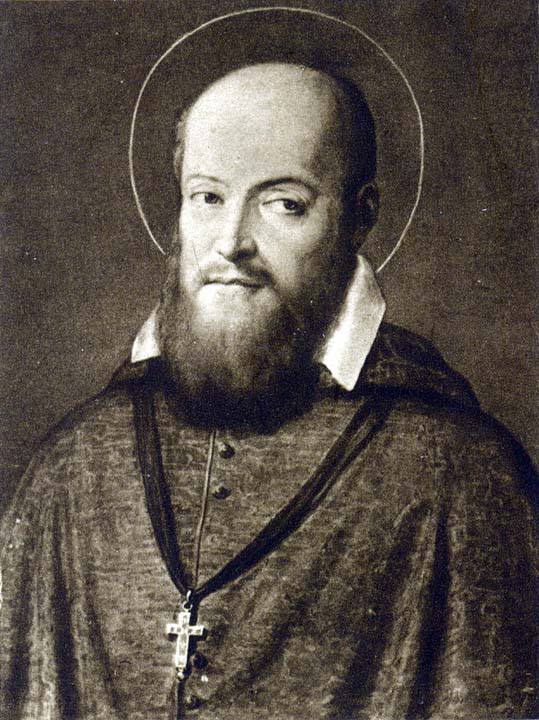
“Diligently and accurately handle all the affairs of which you are in charge, but if possible do not be unduly worried about them.  Do not let them upset and disturb you.  In taking care of them, never torment yourself, for such anxieties make clear-thinking difficult and prevent your doing things well.  If you practice this advice you will succeed in discharging your duties very meritoriously for, beyond doubt, time employed calmly is spent most efficaciously.”

St Francis de Sales, “Spiritual Diary,” pp. 178-179.

The wonderfully wise saint gives these sorely needed words of wisdom in today’s Meditation for Spiritual Growth in The Vatican II Weekday Missal, St. Paul Editions, p. 1156.

https://i0.wp.com/cdn.quotationof.com/images/saint-francis-de-sales-1.jpg