Lent Day 13: To judge, or not to judge

TODAY’S READINGS

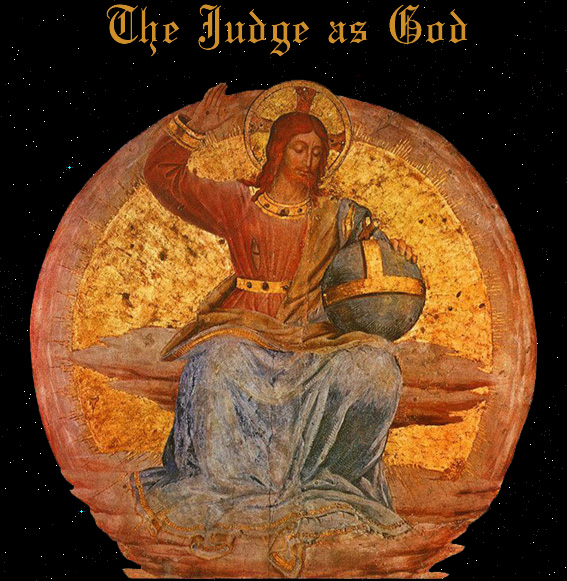
Today’s Gospel (Lk 6:36-38) contains a line that has become quite controversial in the past ten years or so:

“Stop judging and you will not be judged.” (v. 37a)

“The Greek word for judging can mean…to condemn (it is translated ‘condemn’ at 19:22), and what follows indicates that’s its meaning here. God is kind to the wicked (6:35), and disciples of Jesus are to imitate God’s mercy (verse 36) by not being judgmental fault-finders. Jesus tells his disciples that if they do not judge others, ‘you will not be judged’ — judged by God. Jesus does not mean that his disciples will be exempt from the final judgment (referred to at 10:14,; 11:31-320; he means that if they refrain from condemning others, then God will be lenient with them.” (Bringing the Gospel of Luke to Life, 179-80)

We are not to judge the hearts of others — leave that up to God. So, it is wise to attribute the best possible motives, no matter how implausible, to others’ actions. But, this does not mean we cannot make rational judgments about behavior. This we have an obligation today out of love and to avoid scandalizing others.

An excellent resource to hash this out is Ted Sri’s book, Who Am I to Judge? (a video is here). God’s moral law is not to be subject to relativism, lest it continue on its way to dictatorship.

God bless.

Lent Day 12: No cross, no crown

TODAY’S READINGS

Today’s Gospel (Mk 9:2-10) gives us one account of the Transfiguration and Jesus’ instruction afterwards:

As they were coming down from the mountain,
he charged them not to relate what they had seen to anyone,
except when the Son of Man had risen from the dead.
(v. 9)

“Jesus’ transfiguration, as an anticipation of his resurrected glory, could not be understood apart from his dying and rising. The disciples might eagerly accept a glorified Jesus, but they were slow to understand a Jesus who must suffer and die on the way to glorification. Too much attention on the final outcome could hinder their coming to grips with the necessity of the cross for Jesus — and for them.” (Bringing the Gospel of Mark to Life, 220)

“The glorious transformation of his human nature, foreshadowed in the Transfiguration, cannot take place apart from his humiliation on the cross, nor can it be understood properly until the passion has taken place. He can become the exalted, risen Son of Man only by being first a dead man. Then his glory will be openly proclaimed to all. But this mystery eludes the understanding of the three disciples…” (The Gospel of Mark [Catholic Commentary on Sacred Scripture], 176)

I’m reminded of the pithy saying, “No cross, no crown” or in a longer version, “There is no Easter Sunday without Good Friday.” For Jesus to command his three closest apostles to keep quiet about what they had seen makes sense per the commentaries above (I bet they were bursting about this after Pentecost, though). But, for us, it seems to me there is no problem deeply considering this event (saying the Rosary you can’t avoid it — and who would want to! — since it is the fourth Luminous Mystery).

The hope of the resurrection to new life should be a tremendous encouragement to us. Jesus preceded us to heaven, and we have the hope to follow Him some day. But, Jesus told us that, “Whoever wishes to come after me must deny himself, take up his cross, and follow me” (Mt 16:26). He also said, “‘No slave is greater than his master.’ If they persecuted me, they will also persecute you” (Jn 15:20). The good news is that if we remain steadfast in faith and bear our troubles with patience and love, we will surely here these words directed to us from the Lord: “Come, you who are blessed by my Father. Inherit the kingdom prepared for you from the foundation of the world (Mt 25:34).”

So, it’s okay to look ahead to the potential reward as long as we do not lose sight of the premised slog to get there. Losing sight of the latter imperils attainment of the former.

Bp Barron’s Sunday Sermon (a deep dive into the Binding of Isaac)

My video post on today’s first reading and its connection to the Eucharist.

After the Transfiguration Christ tells apostles not to reveal this fact until after the Resurrection by Italian School

God bless.

Lent Day 11: Is perfection attainable?

TODAY’S READINGS

Today’s Gospel (Mt 5:43-48), again from the Sermon on the Mount, ends with these challenging (to say the least) words of Jesus:

“So be perfect, just as your heavenly Father is perfect.” (v. 48)

“Strictly speaking, it is quite impossible for a created being to be as perfect as God. What our Lord means here is that God’s own perfection should be the model which every Christian tries to follow, even though he realizes that there is an infinite distance between himself and his Creator. However, this does not reduce the force of this commandment; it sheds more light on it. It is a difficult commandment to live up to, but along with this we must take into account the enormous help grace gives us to go so far as to tend towards divine perfection. Certainly, the perfection which we should imitate does not refer to the power and wisdom of God, which are totally beyond our scope; here the context seems to refer primarily to love and mercy. Along the same lines, St Luke quotes these words of our Lord: “Be merciful. even as your Father is merciful” (Lk 6:36).

“Clearly, the ‘universal call to holiness’ is not a recommendation but a commandment of Jesus Christ.” (The Navarre Bible: St Matthew, 69-70)

“Jesus advocates moral righteousness higher than the Old Covenant—it is a standard of mercy. Just as Israel was to imitate God in being ‘holy’ (Lev 19:2), so Jesus calls the Church to imitate God’s perfect compassion (Lk 6:36). The Father is kind and merciful to the good and evil alike, so his children must extend mercy even to their enemies (5:7; Lk 10:29–37; Jas 2:13). See note on Lk 6:36 (CCC 1968, 2842).” (Ignatius Catholic Study Bible: The Gospel of Matthew, 27)

“There is an insurmountable problem in our Lord’s solemn injunction, which concludes this whole section as its summary, as long as we insist on an abstract, essentialist definition of the term ‘perfect’. The being of man, in this sense, can never be perfect in the same way God’s is, and the Lord seems to be enjoining the impossible. Persons have been known to wreck their psychic, physical, and spiritual lives trying to apply this command in an erroneous way. If we apply the literal Greek meaning of the word for ‘perfect; as noted (τέλειος from τέλος = ‘goal’, ‘end’), we will see that what the command intends is, rather. ‘Guide your actions and attitudes by the same intention, the same finality, as your heavenly Father’s.’ Far from implying a head-braking striving for the unattainable, we should rise from our immersion in the business of self-survival and focus our outlook from the divine point of view. (Fire of Mercy, Heart of the Word, Volume I, 241)

“This ‘as’ is not unique in Jesus’ teaching: ‘You, therefore, must be perfect, as your heavenly Father is perfect’; “Be merciful, even as your Father is merciful’; ‘A new commandment I give to you, that you love one another, even as I have loved you, that you also love one another.’ It is impossible to keep the Lord’s commandment by imitating the divine model from outside; there has to be a vital participation, coming from the depths of the heart, in the holiness and the mercy and the love of our God. Only the Spirit by whom we live can make ‘ours’ the same mind that was in Christ Jesus. Then the unity of forgiveness becomes possible and we find ourselves ‘forgiving one another, as God in Christ forgave’ us.” (CCC 2842)

Feel better? I’m reminded of the famous quote attributed to Mark Twain, “Some people are troubled by the things in the Bible they can’t understand. The things that trouble me are the things I can understand.” Well, if the call to perfection does not trouble the hearer, I’m not sure what else in Scripture would. Any even mildly engaged Christian with an ounce of honest introspection, need only a moment, at most, to realize we all are far from perfect. But this declaration of Jesus should compel us to examine our conscience, pray fervently for help, and then frequent the sacraments to get that help.

Hearkening back to yesterday’s post, “You can pay me now or pay me later.” A person does not get into heaven with any imperfections. Best to clean up our act here, discipline ourselves here, detach ourselves here. It’s easy to understand but very difficult to do.

Jesus Receiving the World from God the Father (c. 1657) by Antonio Arnas Fernández

God bless.

Lent Day 10: Save your pennies

TODAY’S READINGS

Today’s Gospel (Mt 5:20-26), from the Sermon on the Mount, ends with these words of Jesus:

“Amen, I say to you,
you will not be released until you have paid the last penny.”
(v. 26)

“Keeping debtors in prison until family or friends paid off the debts was a Roman rather than Old Testament practice. Jesus uses this practice as a comparison for what happens to those who face God’s judgment without having been reconciled with others (see 18:33-35 for another us of this comparison). Being required to pay off debts down to the last penny means being held accountable by God fro all that we do or fail to do. A failure to seek reconciliation with those who have something against us will not go unnoticed when we stand before God’s judgment.” (Bringing the Gospel of Matthew to Life, 87)

I’ve always found this last line in the section about unrighteous anger consoling. It seems quite plain to me that this verse indicates the reality of Purgatory (I encourage you to read this entire post that deals with just this verse and topic). Clearly this entire pericope is speaking of judgment and the consequences of our actions on how we will be judged. Yes, Gehenna is really a possibility (and, no, it’s not empty), as Jesus says, but for those who do not make a complete break with God, but who need some cleaning up, there is the consolation of a place of purgation. Not knowing the pain of this state, and aiming for heaven, we should hearken to the fact, as the old commercial stated, that “you can pay me now, or pay me later.” Take care of penance and reparation here and now.

Let us pray that our anger does not get the best of us here, and if it does, that we make amends quickly and completely, so that our debt owed is not exorbitant, and our time away from God is short.

And let us not forget the poor debtors, exemplified in the drawing below, who have preceded us in death and are begging for our alms (Masses and other prayers) in order to be released soon.

An inmate of ‘the grate’ at Fleet Prison, a debtors’ prison in London, circa 1840. The words ‘Poor Debtor’ are inscribed on the right wall. ‘The grate’ allowed prisoners to beg for charity from passers-by. Published in the Illustrated London News – pub. 14th March 1846 (Photo by Hulton Archive/Getty Images)

God bless.

Lent Day 9: Rock solid

TODAY’S READINGS

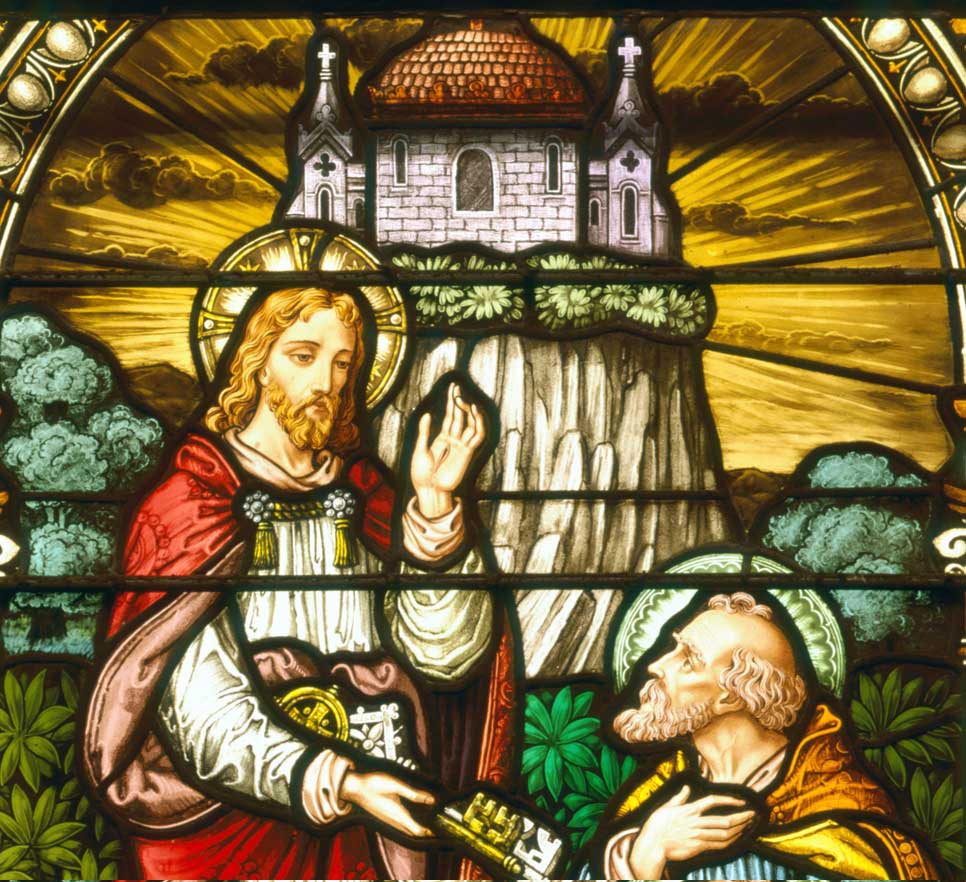
From today’s Gospel (Mt 16:13-19), we celebrate the Feast of the Chair of St. Peter with, what else but, Matthew 16.

“And so I say to you, you are Peter,
and upon this rock I will build my Church,
and the gates of the netherworld shall not prevail against it.”
(v. 18)

I will build: Jesus portrays the Church as a spiritual Temple (cf. 1 Cor 3:16–17; 2 Cor 6:16; Eph 2:19–22; 1 Pet 2:4–8). ● As Solomon was the son of David and the anointed Temple builder in the OT, so Jesus is the Davidic “Son” of God (16:16) and the anointed Messiah who builds the Church in the New. Jesus elsewhere sees himself as both similar and superior to King Solomon (12:42). See note on Mt 7:24. my Church: Among the Gospels, Matthew alone uses the word Church (18:17). The word is used often in the Greek OT for the “congregation” or “assembly” of Israel united to God. Jesus uses it in a similar way for the New Covenant community. the gates of Hades: In the OT, Hades—also called “Sheol” or “the Pit”—is the place of the dead where souls descend through its gates (Ps 9:13, 17; Wis 16:13; Is 38:10; Jon 2:2). It is not hell, but a temporary realm where souls are detained until the Last Judgment (Rev 20:13–15). By extension, Hades is also the habitation of evil forces that bring about death and deception (Rev 6:8; 20:1–3). According to Jewish tradition, the foundation stone (Heb.‘eben shetiyyah) of the Jerusalem Temple capped off and sealed a long shaft leading down to the netherworld (Rev 9:1–2; 20:1–3). The Temple, resting securely on a rock, was thus the center of the cosmos, the junction between heaven and Hades. Drawing from this background, Jesus guarantees that the powers of death and deception will not overcome the Church—i.e., the new Temple built on Peter. He enables Peter (and his successors) to hold error at bay and faithfully proclaim the gospel (CCC 552).” (The Ignatius Catholic Study Bible: The New Testament, 36.)

“The Lord made Simon alone, whom he named Peter, the “rock” of his Church. He gave him the keys of his Church and instituted him shepherd of the whole flock. “The office of binding and loosing which was given to Peter was also assigned to the college of apostles united to its head.” This pastoral office of Peter and the other apostles belongs to the Church’s very foundation and is continued by the bishops under the primacy of the Pope.” (CCC 881)

“In the symbolism of Israel’s theology, the gates of the netherworld were the opening leading down to Hades, also called Sheol, or the Pit, which was the dark and gloomy underworld hidden deep within the bowels of the earth. There the souls of the dead sank down into a shadowy, joyless existence. There also, in Jewish thinking, was the habitation of infernal powers that bring death and deception into the world of the living (see Rev 9:1-6; 11:7; 20:1-3). Later, rabbinic Judaism believed that the foundation stone of the temple capped off the shaft leading down to the underworld. Peter is now given a comparable role in the living temple built by the Messiah. Thanks to the blessing of Jesus on Peter, now made the rock of the new temple, neither death, nor the devil, nor his deceiving spirits shall prevail against the Church.” (The Gospel of Matthew [Catholic Commentary on Sacred Scripture], 208-09)

Thanks be to God for the Rock that our faith can stand firm on. No matter how “rocky” things seem to get in our world or even in our Church, we can be confident that the Church is indefectibly holy because of its head (Christ) and its soul (the Holy Spirit). Hell has no chance. The Church cannot err on matters of faith and morals, so regardless of whatever happens or whatever we hear that concerns us, we can be assured that the age-old teaching of the Church does not waver — so neither should we waver. Jesus promised to stay with us till the end of time and He keeps His promises (and if he wants to hurry back there’ll be no complaints from me).

God bless.

Lent Day 8: Signs, signs

TODAY’S READINGS

From today’s Gospel (Lk 11:29-32), hitting a chord:

“This generation is an evil generation;
it seeks a sign, but no sign will be given it,
except the sign of Jonah.”
(v. 29)

“Seeking a sign is an indication that ‘this generation is an evil generation.’ The phrase likens the Israelites of his day who reject him (see 17:25) to the evil generation that wandered in the wilderness and failed to enter the promised land (Num 32:13; Deut 1:35). Earlier, Jesus had criticized ‘this generation’ of his contemporaries for failing to respond to him and John (Luke 7:31; see 9:41). Here Jesus speaks six times against ‘this generation’ (11:29-32, 50-51). Because he is being rejected, Jesus frequently warns ‘this generation’ about the coming judgment (see 10:13-14; 11:19), when others will join together to condemn it for failing to hear and repent.” (The Gospel of Luke (Catholic Commentary on Sacred Scripture, 228)

“The expression ‘this generation’ can simply refer to those who are alive at the time of Jesus (see 21:32), but it often has the connotation of those who respond negatively to him (see 7:31-34; 17:25), as is the case here. This generation is ‘an evil generation’ because ‘it seeks a sign.’ After seeing Jesus free a man from a demon, some ‘to test him, asked him for a sign from heaven’ (11:160 to prove that he expelled demons by the power of God. It should be evident that Jesus is on God’s side, if he frees men and women from the grip of evil. It should also be evident that God has endowed Jesus with power, if he is overcoming the forces of Satan and healing afflictions. To demand anything more to authenticate Jesus reveals a hostile skepticism, a refusal to believe.” (Bringing the Gospel of Luke to Life, 325-26)

An evil generation may demand a sign, but maybe more evil is the current generation that is not even interested in a sign, since an exponentially growing number of persons do not believe in God, anyway. Who is the Jonah today that will convince our world to repent of its evil ways (see Jonah 3)? Unfortunately for many, repentance requires hearing, and so many of us are tuned out. Would we even notice the sign or hear the Word?

Let us pray fervently that God will send the sort of prophet who, like Jonah, in one sentence, softens hearts and has their owners cry bitter tears of repentance.

Jonah Preaches to the Ninevites (17th c.) by Andrea Vaccaro

God bless.

Lent Day 7: To forgive is divine

TODAY’S READINGS

Jesus reiterates this sentiment immediately after teaching the Our Father (Mt 6:7-15):

“If you forgive men their transgressions,
your heavenly Father will forgive you.
But if you do not forgive men,
neither will your Father forgive your transgressions
.” (vv. 14-15)

“A God who forgives is a wonderful God. But if God, who is thrice-holy, has mercy on the sinner, how much more ought we to forgive others — we sinners, who know from our own experience the wretchedness of sin. No one on earth is perfect. Just as God loves us, even though they have defects, and forgive them. If we wait to love people who have no defects, we shall never love anyone. If we wait until others mend their ways or apologize, we will scarcely ever forgive them. But then we ourselves will never be forgiven. ‘All right: that person has behaved badly towards you. But, haven’t you behaved worse towards God?’ (Bl. J. Escriva, The Way, 686)” (The Navarre Bible: St Matthew, 76)

I was a bit surprised that most of my commentaries either said very little or nothing about these two verses. What has long impressed me about this short passage is that it seems to put an exclamation mark on the Lord’s Prayer that Jesus just taught. The Our Father has seven petitions, but none more challenging than the one having to do with forgiveness. It’s as if Christ, driving home the point, is saying: You heard me right: Forgiveness is mandatory. Do not expect God’s mercy on your judgment day if you were unable to extend mercy to others during the time I gave you on earth..

Consider The Parable of the Unforgiving Servant (Mt 18:21-35). Being “handed…over to the torturers”? Jesus, the Divine Physician, gives us some tough medicine, focusing on where it hurts, to raise our awareness of this tender spot so that we can take care of it and find healing.

If Jesus, the perfectly innocent one, can, from the cross, forgive His creatures of their brutality toward the God-Man, who are we sinners to hold back even under the most difficult circumstances. It is not easy to forgive, particularly when the offense is egregious, but it is what we must do. Let us pray — and never cease praying — to forgive.

God bless.

Lent Day 6: To others = to Jesus

TODAY’S READINGS

A glimpse at the Last Judgment (Mt 25:31-46) with Jesus’ words. Am I thrilled or am I terrified?

Amen, I say to you, whatever you did
for one of these least brothers of mine, you did for me.”
(v. 40)

“St Teresa of Avila writes: ‘Here the Lord asks only two things of us: live for his Majesty and love for our neighbour. It is these two virtues that we must strive, and if we attain them perfectly we are doing his will […]. The surest sign that we are keeping these two commandments is, I think, that we should really be loving our neighbour; for we cannot be sure if we are loving God, although we may have good reasons for believing that we are, but we can know quite well if we are loving our neighbour. And be certain that, the farther advanced you find you are in this, the greater the love you will have for God; for so dearly does his Majesty love us that he will reward our love for our neighbour by increasing the love which we beat to himself, and that in a thousand ways: this I cannot doubt (Interior Castle, V, 3)” (The Navarre Bible: St Matthew, 213-14)

“It seems likely that the ‘least brothers’ refers to Christians, perhaps to those missionaries who faced numerous hardships for their efforts to evangelize the world. The reason is that these words of Jesus recall earlier descriptions of the disciples in Matthew (10:42; 12:49-50; 18:6, 10). Likewise, ‘all the nations’ assembled for judgment appear to represent all the non-believing Gentiles of the world who are called to account for their treatment of Jesus’ followers. Certainly the Greek term for ‘nations (v. 32) often means ‘Gentiles,’ or ‘pagans,’ in Matthew (see e.g., 4:15; 6:32; 10:5; 12:18).” (The Gospel of Matthew [Christian Commentary on Sacred Scripture], 326-27)

“Jesus’ prophesy of the Last Judgment unfolds at two historical levels. (1) He initially foretells the judgment of Old Covenant Israel. This involves his “coming” to Jerusalem (A.D. 70) as the Shepherd who separates the faithful sheep of Israel from the wicked goats (10:23; 16:27–28; cf. Ezek 34:17–22). (2) He ultimately foretells the General Judgment at the end of history. This will involve Christ’s Second Coming and the general resurrection of all people before his throne to be blessed (25:34) or cursed (25:41) according to their deeds (Jn 5:25–29; Rev 20:11–12; CCC 1038–39).” (Ignatius Catholic Study Bible: The Gospel of Matthew, 63)

If anyone believes that works we do in this life have no bearing on our eternal fate in the next life, these words of Jesus should disabuse that person of this notion. I am reminded of time, talent, and treasure: Everyone has something to offer, from the busiest worker with the big salary and the well-funded retirement accounts to the homebound person barely scraping by. Monetary donations, assisting at the parish or soup kitchen, conducting a Bible study, a Rosary, or all of the above. We have all been given much, regardless of our circumstances. So, “[m]uch will be required of the person entrusted with much, and still more will be demanded of the person entrusted with more” (Lk 12:48).

God bless.

Lent Day 5: “Repent and believe in the gospel”

TODAY’S READINGS

Let’s say something about each of today’s readings with the help of Dr. Bergsma’s The Word of the Lord:

Gn 9:8-15:

“I will establish my covenant with you,
that never again shall all bodily creatures be destroyed
by the waters of a flood;
there shall not be another flood to devastate the earth.”
(v. 11)

“The flood illustrates a pattern in salvation history of God’s mercy being greater than his justice. Although God justly could have ended the history of the earth with the flood, nonetheless he has mercy on man and animals by going to great lengths to spare representatives of each kind, and then offers to them a new covenant at the end of the time of judgement, a new covenant which includes a solemn commitment to no longer punish in that same way. We can see the covenant with Noah as a foreshadowing of the New Covenant in Christ, which came after the long punishment of Israel in the exile and opened the door to endless mercy and forgiveness by the pouring out of the Holy Spirit.” (pp. 68-69)

Ps 25:4-5, 6-7, 8-9:

“Your ways, O LORD, make known to me;
teach me your paths,
Guide me in your truth and teach me,
for you are God my savior.” (vv. 4-5)

“This desire is very far from the attitude that is just interested in the ‘minimum’ necessary to ‘get into heaven,’ or what the basic requirements of the Church are in order to ‘get the sacrament,’ or what are the ‘essentials’ that — as long as I observe them — I can ‘do my own thing.'” (p. 70)

1 Pt 3:18-22:

“[Baptism] is not a removal of dirt from the body
but an appeal to God for a clear conscience,
through the resurrection of Jesus Christ,
who has gone into heaven…”
(21-22a)

“Peter describes Baptism as ‘an appeal to God for a clear conscience.’ This unusual formulation can confuse people, but the Apostle means that the rite of Baptism is, in a sense,, a prayer to God for the cleansing of our consciences through the gift of the Holy Spirit. Only Baptism can truly clear our consciences by removing and forgiving sin and infusing us with ‘the mind of Christ’ (1 Cor 2:16).

“The Holy Spirit was poured out after the resurrection and ascension — and just as Peter recalled the resurrection and ascension in his sermon at the first Christian Pentecost (Acts 2:24-33), so now he ties the efficacy of Baptism to the resurrection and ascension. Jesus is now enthroned over all spiritual powers and pours out the Spirit on all who come to him in faith and humility — in particular through the waters of Baptism.” (p. 71)

Mk 1:12-15:

“This is the time of fulfillment.
The kingdom of God is at hand.
Repent, and believe in the gospel.”
(v. 15)

“‘This is the time of fulfillment’ — the culmination of all covenants, including that with Noah. ‘The kingdom of God is at hand’ — this means not just ‘it is close,’ but ‘it is here, it has arrived.’ How? In the person of Jesus, who is the King. ‘Repent and believe in the gospel.’ ‘Repent’ means to cease and turn away from our sins. Sin can be defined as selfishness or also as breaking the covenant. Sin is what separates us from God — indeed, the only thing that can separate us, because sin is in its essence a rejection of love, and God is love.” (p. 72)

We are blessed to be Christians living in the time of fulfillment. While God cannot stop loving us (after all, “God is love” [1 Jn 4:8]), and “neither death, nor life, nor angels, nor principalities, nor present things, nor future things, nor powers, nor height, nor depth, nor any other creature will be able to separate us from the love of God in Christ Jesus our Lord” (Rom 8:38-39), God forbid that we fully willingly separate ourselves from the love of God through sin we know is serious. And, if we do commit mortal sin, the beautiful Sacrament of Reconciliation (Confession), the mercy of God, is just a priest away.

I’ve quoted generously from The Word of the Lord: Reflections on the Sunday Mass Readings for Year B. I cannot recommend more highly picking up your own copy — it will enrich your Sundays significantly. Also, consider checking out the weekly podcasts with the author and Scott Hahn, which go even deeper into the Sunday readings. Both are worth every penny — and vastly more.

Finally, following, find some important considerations regarding the beginning of Jesus’ public ministry in Mark as shared by Jimmy Akin: https://www.ncregister.com/blog/jesus-ministry-begins-9-things-to-know-and-share

REMINDER

My daily ten-minute Eucharist for Lent vidcasts continue today, where we discuss some additional Bible and Eucharist resources before looking once more to the CCC where it provides us a glimpse at the Mass as celebrated in the second century.

God bless.

Lent Day 4: Good Dr. Jesus

TODAY’S READINGS

The immediate aftermath of the calling of Levi (Lk 5:27-32) gives Jesus an opportunity to impart an important principal on the judgmental Pharisees:

Those who are healthy do not need a physician, but the sick do.
I have not come to call the righteous to repentance but sinners.
” (vv. 31-32)

“Jesus did not come to perpetuate Old Covenant standards of righteousness, which were designed to separate Israel from the sins and uncleanness of their Gentile neighbors (Lev 20:26). Jesus brings a new standard of righteousness that tears down the wall that barricades Israel from other nations, as he stretches the boundaries of God’s covenant family to include everyone in need of mercy, even tax collectors and sinners.” (The Gospel of Luke [The Ignatius Catholic Study Bible], 30-31)

“This implies that the sin is the real illness and that ‘tax collectors and sinners’ are the sick who need healing:’I saw their ways, / but I will heal them’ (Isa 57:18). Jesus has just taught this lesson by forgiving the paralyzed man’s sins before healing him physically. By eating with tax collectors and sinners (see Luke 7:34; 15:1-2; 19:5), Jesus does not condone their sins but calls them to repentance. At the end of the Gospel, Jesus will commission his disciples to continue this mission by proclaiming repentance and the forgiveness of sins (24:47).” (The Gospel of Luke [Catholic Commentary on Sacred Scripture], 120)

“[Jesus] eating with sinners is part of his mission. He does not simply preach to them but associates with them and draws them into fellowship with himself. He has come to call sinners to repentance — to profoundly reformed lives, a reorientation of their thinking and behavior. repentance is not a precondition for associating with Jesus but a consequence of it.” (Bringing the Gospel of Luke to Life, 152)

It seems to me, the biggest problem the Pharisees had is they thought they were righteous. Had they been paying an iota of prayerful attention to Jesus teaching (and certainly they knew it, since they were constantly following Him and looking for ways to accuse Him, denounce Him, and trap Him), they would have come to realize that none are completely righteous — we all are sinners. Yes, some may be in ICU, others in an urgent care, and still others with just a nagging cold, but we all need the Divine Physician to heal us. Self-righteous and judgmental the Pharisees were; what they especially needed was open-heart surgery to give God — who they claimed to know yet missed Him in their midst — access to enter them and transform them.

And so we should also allow the Lord to work on us. Let us go to Dr. Jesus for the diagnosis (we can go daily and it’s free — no costly health insurance required). Following His prescription, we are assured of the prognosis: eternal beatitude.

For related information, check out my friend Mike Aquilina’s article. Even better, dive into a full-length treatment from him, The Healing Imperative.

REMINDER

My daily ten-minute Eucharist for Lent vidcasts continue today, where we continue looking at the CCC, this time focusing on the Last Supper. Also mentioned: an article encouraging us to look at Lent through a Eucharistic lens.

God bless.