Lent Day 36: What is truth? And can you handle it?

TODAY’S READINGS

Today’s Gospel reading (Jn 8:31-42) continues Jesus dialogue with the Jewish religious leaders. It begins this way:

“If you remain in my word, you will truly be my disciples,
and you will know the truth, and the truth will set you free.”
(vv. 31b-32)

“Jesus embodies divine truth (14:6) and has come to bear witness to the truth (18:37). Acceptance of him liberates us from the slavery of sin, ignorance, and deception (8:12; CCC 2466).” (The Gospel of John [Ignatius Catholic Study Bible], 34)

“In Jesus Christ, the whole of God’s truth has been made manifest. ‘Full of grace and truth,’ he came as the ‘light of the world,’ he is the Truth. ‘Whoever believes in me may not remain in darkness.’ The disciple of Jesus continues in his word so as to know ‘the truth [that] will make you free’ and that sanctifies. To follow Jesus is to live in ‘the Spirit of truth,’ whom the Father sends in his name and who leads ‘into all the truth.’ To his disciples Jesus teaches the unconditional love of truth: ‘Let what you say be simply “Yes or No.”” (CCC 2466)

“The knowledge of the truth which Christ is speaking about is not just intellectual knowledge; it is rather the maturing in the soul of the seed of divine Revelation. That Revelation’s climax is to be found in Christ’s teaching, and it constitutes a genuine communication of supernatural life (cf. Jn 5;24): he who believes in Jesus, and through him in the Father, receives the wonderful gift of eternal life. Knowing the truth is, in the last analysis, knowing Christ himself, God become man to save us; it means realizing that the inaccessible God has become man, our Friend, our Life.

“This is the only kind of knowledge which really sets us free, because it removes us from a position of alienation from God — the state of sin and therefore of slavery to the devil and to all the attachments of our fallen nature — and puts us on the path of friendship with God, the path of grace, of the Kingdom of God. Therefore, the liberation we obtain is not just light which shows the way; it is grace, which empowers us to keep to that way despite our limitations.” (The Navarre Bible: St John, 127-28)

“[N]otice how Jesus says that human freedom follows upon and presupposes knowledge of the truth. In order to be truly free, a person must first know what is true.” (The Gospel of John [Catholic Commentary on Sacred Scripture] , 161)

Two lines come to mind, as I reflect on the highlighted verses of this passage:

1. “What is truth?” (Jn 18:38)

Pilate’s famous words while looking Truth right in the eyes. Echoed today by seemingly millions. Can we really know the truth? Cardinal Ratzinger bemoaned the “dictatorship of relativism” today. Most clear thinking folks nodded their heads in agreement in that homily nearly twenty years ago. Not so many folks would have believed that it didn’t even take twenty years till concepts like “mother,” “marriage,” and “gender” were up for grabs. This twisting of truth and reality itself is the work of the devil, as Jesus tells the Pharisees a little further on in the same interaction we heard proclaimed today:

“You belong to your father the devil and you willingly carry out your father’s desires. He was a murderer from the beginning and does not stand in truth, because there is no truth in him. When he tells a lie, he speaks in character, because he is a liar and the father of lies.” (Jn 8:44)

And what does Satan “inspire” people to do?

They exchanged the truth of God for a lie and revered and worshiped the creature rather than the creator. (Rom 1:25)

Wow. Doesn’t that encapsulate perfectly the state of our world today? With no eternal anchor, the crashing waves of self-focus toss us about. When anything goes, nothing stays firm.

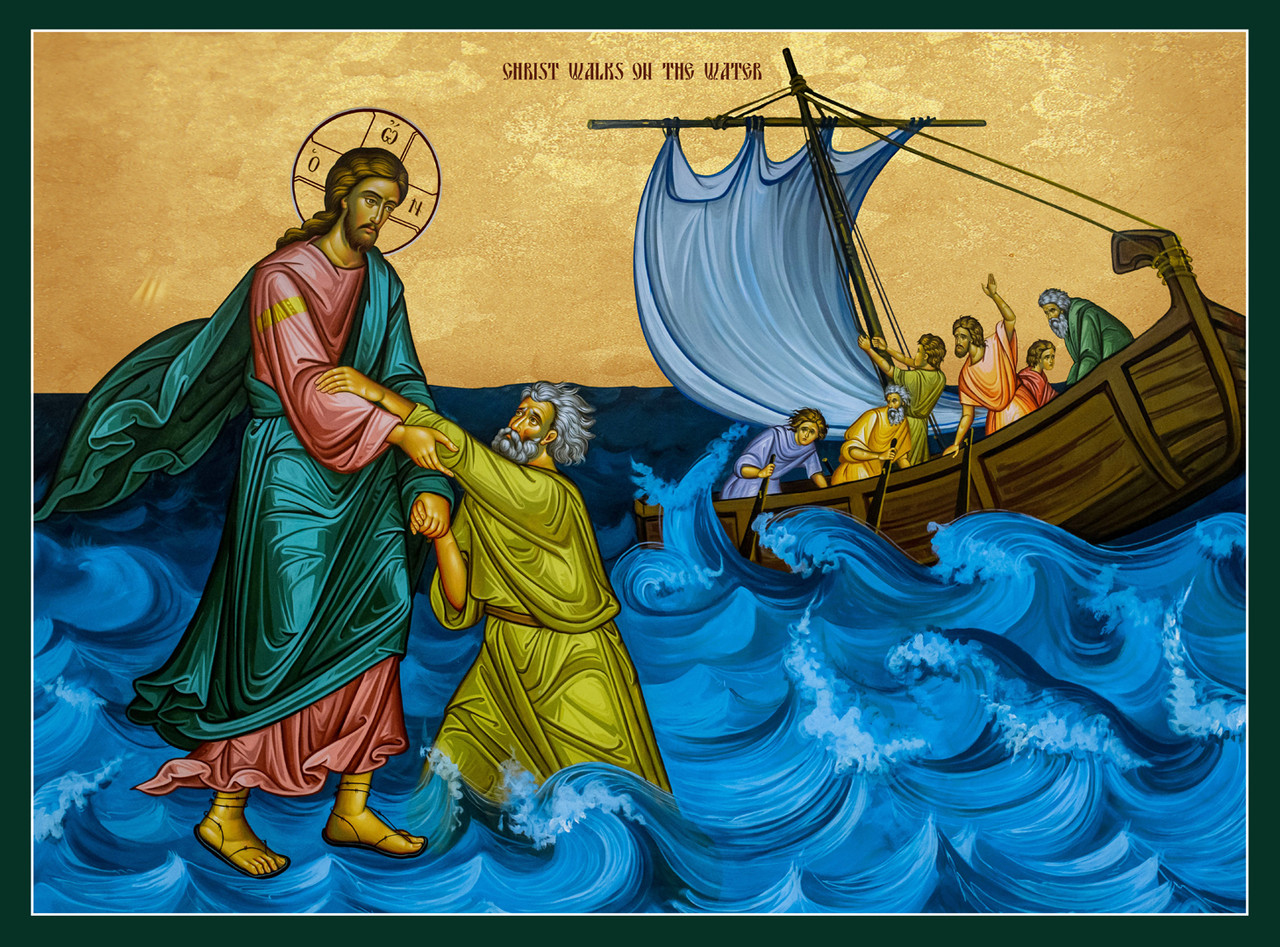
Let us cling to the Rock that is Peter and the Church Christ founded as if our life depended on it (and it does, here and hereafter). A sure “light”house in the stormy weather of our modern confused age.

2. “You can’t handle the truth!” — Col. Nathan R. Jessup

Certainly, the Gospel message is a challenging one. Hearing the truth and living it out can be painful at times. But it is the antidote to what ails us in a time of cultural sickness and even death. It seems that in our day, maybe more than ever, we can’t handle the Truth that is Jesus and His message, preferring “my truth.” To be fully and authentically human, stick with “the Truth.”
God bless.


Lent Day 34: Forgiving and Challenging Jesus

TODAY’S READINGS

Today’s Gospel reading (Jn 8:1-11) is the famous episode in which Jesus is brought the woman caught in the act of adultery. It ends with consoling words and a warning:

“Has no one condemned you?”
She replied, “No one, sir.”
Then Jesus said, “Neither do I condemn you.
Go, and from now on do not sin any more.”
(vv. 10b-11)

“Jesus, who is the Just One, does not condemn the woman; whereas these people are sinners, yet they pass sentence of death. God’s infinite mercy should move us always to have compassion on those who commit sins, because we ourselves are sinners and in need of God’s forgiveness.” (The Navarre Bible: St John, 122)

“Jesus strikes a balance, being merciful to a sinner while abhorring the sin. He gives the woman an opportunity to make a new start, not condemned for her past and free to behave differently in the future.” (Bringing the Gospel of John to Life, 229)

“Jesus offers this woman a fresh start by turning her away from her sins and opening her up to God’s infinite mercy.” (The Gospel of John [Catholic Commentary on Sacred Scripture], 153)

“Jesus’ attitude is striking: we do not hear words of scorn, we do not hear words of condemnation, but only words of love, of mercy, which are an invitation to conversion. ‘Neither do I condemn you; go, and do not sin again’ (v. 11). Ah! Brothers and Sisters, God’s face is the face of a merciful father who is always patient. Have you thought about God’s patience, the patience he has with each one of us? That is his mercy. He always has patience, patience with us, he understands us, he waits for us, he does not tire of forgiving us if we are able to return to him with a contrite heart.” (Pope Francis, “Angelus,” 17 March 2013)

Imagine the relief of this poor sinner when Jesus saved her life and then showed such mercy! Why had she indulged in this sin? Why did she keep indulging in it (I’m guessing her indiscretion was widely known since the Pharisees conveniently found her in the act in order to try to trap Jesus). She was being used twice: first by her illicit lover, then by the Pharisees. Now she escapes the death sentence scot-free. But wait. The ongoing condition is now placed upon her: “do not sin anymore” or maybe a better translation is “stop sinning.”

We don’t know what happened to this woman. One thing for sure: her encounter with the Lord changed her forever. Is she one of the many unnamed saints? I like to think so. Imagine the story she could have told, must have told, of this, in turn, harrowing and blessed encounter, if not immediately then in her golden years.

Jesus provides challenges to us constantly. We all love the forgiveness part — we get it and do nothing to deserve it. Harder is the stop sinning part. Yes, we may have very good intentions, even a firm resolution, to mend our ways — until we try to get out of the crowded parking lot, or when following the slowpoke on the road, or when checking our emails or texts, or when dealing with a family member, or during a tough day at work. The list goes on.

The answer: frequent prayer, regular recourse to the sacraments, self-discipline. Stop sinning? Grace does not make it easy but it does make it possible. Let us open our hearts to the grace God is so willing and desiring to give us in the sacraments and we will see progress.

Christ and the Adulterous Woman (1881) by Rodolpho Bernardelli

God bless.

Lent Day 32: Impressive Jesus

TODAY’S READINGS

Today’s Gospel reading (Jn 7:40-53) has Jesus impressing the crowds and the Pharisees hoping to arrest Him. The guards sent to do the job came away impressed with this Galilean:

“Never before has anyone spoken like this man.” (v. 46)

“Like the crowds who are ‘amazed’ at Jesus’ teaching (7:15) and miracles (7:21), the guards are awed at his teaching: there is something unprecedented about Jesus.” (The Gospel of John [Catholic Commentary on Sacred Scripture], 45)

“The truth begins to influence the straightforward souls of the servants of the Sanhedrin but it cannot make headway against the obstinacy of the Pharisees. ‘Notice that the Pharisees and scribe derive no benefit either from witnessing miracles or reading the Scriptures; whereas their servants, without these helps, were captivated by a single discourse, and those who set out to arrest Jesus went back under the influence of hi authority,. And they did not say, “We cannot arrest him, the people will not let us’; instead they extolled Christ’s wisdom. Not only is the their prudence admirable, for they did not need signs; it is also impressive that they were won over by his teaching on its own; they did not say, in effect, “No man has ever worked such miracles,” but “No man ever spoke like this man.” Their conviction also is worthy of admiration: they go to the Pharisees, who were opposed to Christ, and address them in the way the do (St John Chrysostom, Hom. on St. John, 9).” (The Navarre Bible: St John, 119)

“Never before had anyone spoken the word of God as did the Word become flesh; never before did God reveal himself as he does in Jesus.” (Bringing the Gospel of John to Life, 221)

Anyone who takes the Gospel seriously must come to the same conclusion as the guards. Anyone who takes the Gospel seriously must come away feeling either as the guards do or as the Pharisees do. There can be no fence-sitters when dealing with the message of Jesus. Jesus said:

“Do you think that I have come to establish peace on the earth? No, I tell you, but rather division.” (Lk 12:51)

Scripture also says:

Indeed, the word of God is living and effective, sharper than any two-edged sword, penetrating even between soul and spirit, joints and marrow, and able to discern reflections and thoughts of the heart. (Heb 4:12)

In what follows, woe to those who do not take the Word (that is, Jesus) seriously:

No creature is concealed from him, but everything is naked and exposed to the eyes of him to whom we must render an account. (Heb 4:13)

The Catechism of the Catholic Church drives home the message:

“Christianity is the religion of the ‘Word’ of God, a word which is ‘not a written and mute word, but the Word which is incarnate and living’ (St. Bernard, S. missus est hom. 4,11:PL 183,86.) (CCC 108)

If it has been a while since Jesus’ words have moved you, or if you have been away awhile, I encourage you to make Bible reading a daily part of your life. A chapter a day is a good practice. Or you may follow the Church’s daily readings (ideally, hearing them proclaimed at Mass on weekdays and certainly on Sundays) here.

Which side of the divide are you on?

The Pharisees (1912) by Karl Schmidt-Rottluf

God bless.

Lent Day 31: Obnoxious Jesus

TODAY’S READINGS

Today’s first reading (Wis 2:1a, 12-22) gives us a striking prophecy of the ultimate and perfect “just one,” Jesus Christ. It begins with these troubling words:

“Let us beset the just one, because he is obnoxious to us;
he sets himself against our doings,
Reproaches us for transgressions of the law
and charges us with violations of our training.”
(v. 12)

“The reasoning of the ungodly has progressed from a reflection of the finality of death, to an embrace of hedonism, to a rejection of the weak, and now finally to active persecution of the righteous man precisely because of his righteousness. He is inconvenient because he opposes, reproaches, and accuses the wayward for their sins. While the author is not drawing a direct line of connection, one cannot avoid thinking of the biblical prophets here. Isaiah, Jeremiah, and the other prophets consistently rebuke the nation for their disobedience to God’s law and their straying from his ways. Here, Wisdom highlights two types of moral error: ‘sins against the law’ and ‘sins against our training,’ which perfectly match the priorities of Hellenistic Judaism. On the one hand, ‘sins against the law’ refers to transgressions of the law of Moses, the ancient ancestral law of the Jews. On the other hand, ‘sins against out training [paideia]’ refers to rejecting the lessons learned in the context of family and, more precisely, Greek education. The erring ones have strayed from both the Jewish ideal of law observance and from the Greek educational idea of paideia.” (Wisdom of Solomon [Catholic Commentary on Sacred Scripture], 45)

“Their words are echoed in the insults offered by the scribes and Pharisees to Jesus when he was on the cross (cf. Mt 27:40-43; Mk 15:31-32; Lk 23:35-37). (The Navarre Bible: Wisdom Books , 312)

I immediately think how Jesus is found so “obnoxious” to so many today (even self-proclaimed Christians, including Catholics — some in very high positions in society). The Word of God, who is Jesus, is ignored, spurned, or even deemed “hate speech” when it (He) goes against the “enlightened” “progress” we have purportedly made now well into the twenty-first century. And Scripture says:

“[I]f the light in you is darkness, how great will the darkness be.” (Mt 6:23)

The devil is the black light. We surely can know that when a culture of death predominates and every manner of perversion is hailed as good and proper and normal that the prince of this world is delighting in his influence over weak and stupid mortals.

Let us all work to exorcise Satan and his minions by standing up for the Truth no matter the cost and, above all, praying to Jesus through Mary for deliverance from this pervasive and growing evil. We were promised by the Lord from the very beginning of their ultimate triumph:

“I will put enmity between you and the woman,
and between your offspring and hers;
They will strike at your head,
while you strike at their heel.
” (Gen 3:15)

May it occur soon. Thy kingdom come!

NEW BOOK IN THE CATHOLIC COMMENTARY ON SACRED SCRIPTURE SERIES!

I’m excited to quote above from the first entry in the Old Testament series from the Catholic Commentary on Sacred Scripture series. Check it out!

God bless.

Lent Day 29: Hear, believe, and live

TODAY’S READINGS

Today’s Gospel (Jn 5:17-30) picks up where yesterday’s left off. Jesus reveals much about Himself and His Father, much to the chagrin of the Pharisees:

“Amen, amen, I say to you, whoever hears my word
and believes in the one who sent me
has eternal life and will not come to condemnation,
but has passed from death to life.”
(v. 24)

“The Father has placed judging and giving life in the hands of his Son, and now Jesus speaks about his carrying out these divine prerogatives. He again prefaces his words with a solemn ‘Amen, amen, I say to you,’ assuring his listeners (and readers of John’s Gospel) of the importance of what he is saying. He proclaims that ‘whoever hears my word and believes in the one who sent me has eternal life.’ The ‘word’ of Jesus is the word of God: ‘the one whom God sent speaks the words of God” (3:34; see also 12:49-50; 14:24; 17:8). When Jesus says ‘hears my word,’ he uses ‘hears’ in its biblical sense of accepting and heeding (see Deut 6:4). We might have expected Jesus to say ‘Whoever hears my word and believes me,’ but he says whoever hears my word ‘and believes in the one who sent me’ — literally, ‘believes the one who sent me.’ Since Jesus speaks the word of God, to accept his word is to believe God (see 12:44).

“Jesus proclaims that whoever hears his word and believes the one who sent him ‘has eternal life.’ ‘Now this is eternal life, that they should know you , the only true God, and the one whom he sent, Jesus Christ’ (17:3). To know God is to experientially know him as Jesus reveals him; accepting his revelation brings union with God and ‘eternal life.’ The one who believes ‘has eternal life and will not come to condemnation, but has passed from death to life.’ For those drawn into union with God through Jesus, ‘eternal life’ begins now, even if its fullness lies in the future (see 6:54). Come to condemnation means being left in the perishable state of humanity, destined for death (see 3:16-18). Whoever receives eternal life ‘has passed from death to life’ — literally, ‘has been transferred out of death to life.’ These united with God through Jesus have been taken from the realm of death into the realm of eternal life. Even if they die physically , they live eternally (see 11:25-26).” (Bringing the Gospel of John to Life, 136-37)

I chose the particular passage I did because I love it when Jesus is very clear what we mortals are called to believe and live out. Martin, in the extended excerpt above, says, ‘When Jesus says ‘hears my word,’ he uses ‘hears’ in its biblical sense of accepting and heeding.’

Yes, we are to hear the Word of God. But more importantly, we must internalize it and live it

Woe unto You, Scribes and Pharisees (1850) by James Tissot

God bless.

Lent Day 28: Suffering is not the worst

TODAY’S READINGS

Today’s Gospel (Jn 5:1-16) picks up where yesterday’s left off. Jesus heals a man ill for thirty-eight years…on the sabbath. Jesus last words to the man:

“Look, you are well; do not sin any more,
so that nothing worse may happen to you.” (v. 14)

“Jesus’ remark here can mean that sin causes something worse to a person than physical illness: spiritual illness that can be eternally fatal.” (The Gospel of John [Catholic Commentary on Sacred Scripture], 100)

“The Bible reveals a link between sin and suffering, with the former being the cause of the latter (Ps 107:17). This general truth, however, does not extend to every individual case (9:3).” (The Gospel of John [The Ignatius Catholic Study Bible], 27

“The man may have come to the temple to thank God for his cure. Jesus goes over and reminds him that the health of the soul is more important physical health.

“Our Lord uses holy fear of God as motivation in the struggle against sin: ‘Sin no more, that nothing worse befall you’. This holy fear is born out of respect for God our Father; it is perfectly compatible with love. Just as children love and respect their parents and try to avoid annoying them partly because they are afraid of being punished, so we should fight against sin firstly because it is an offence against God, but also because we can be punished in this life and, above all, in the next.” (The Navarre Bible: St John, 89)

“This statement accomplishes three things. First, it teaches than bodily sickness is an image of sin in the soul. Second, it teaches that it is much more important to avoid sin than avoid sickness. Third, it tells us to look at the healing as a parable: the sick people lying under the porticoes stand for sinners; getting into the baths stands for baptism; getting cured from sickness stands for having sins washed away; the question of whether the man wanted to be cured stands for the question of whether we really want to be free from our sins. If the man had grasped all three of these things, he would have wanted to become a follower of Christ and asked to be baptized.” (Mary’s Voice in the Gospel According to John, 61-62)

Suffering is an interesting thing (maybe not so much so when one is in the midst of terrible pain, but…). Suffering may come out of the blue through no fault of our own. Suffering may come due to bad habits, carelessness, or recklessness. Suffering may come due to our sinful behavior. But, as terrible as it is to suffer, nobody deals with it better than the Catholic Church. The possibility of suffering being redemptive, no matter the reason it comes our way, has had the faithful endure the most horrible physical and mental torments that they united with Christ’s Passion for the forgiveness of sins and the redemption of souls. After all, Jesus said:

In the world you will have trouble, but take courage, I have conquered the world. (Jn 16:33)

The Greek for “trouble” (θλίψιν) has also been translated as “tribulation,” “affliction,” and “distress.” If the servant is no better than his Master, and God Himself suffered the pain and humiliation of the cross, do we sinful persons dare to think we should get off scot-free?

So, let no suffering go to waste. The Lord can use it to heal our souls and those of many others. Consider the greeting we will get in heaven from those who we helped by and through sufferings we laid at the foot of the Cross while on this mortal coil.

BOOK RECOMMENDATION

Note the last commentary I cite is the first time I’ve used it here. Michael Pakaluk’s Mary’s Voice in the Gospel According to John is an outstanding book that I can heartily recommend. He also has a commentary on Mark. Hopefully he will get to the other Gospels, as well. Clearly a man who loves the Lord and His word and has imbibed deeply of it.

God bless.

Lent Day 21: 77x

TODAY’S READINGS

Today’s Gospel (Mt 18:21-35) gives us the chilling Parable of the Unforgiving Servant; it is prompted by the following interaction:

Peter approached Jesus and asked him,
“Lord, if my brother sins against me,
how often must I forgive him?
As many as seven times?”
Jesus answered, “I say to you, not seven times but seventy-seven times.”
(vv. 21-22)

“Some later rabbis considered three times to be a sufficient cap on forgiving someone for the same offense. If that view was prominent in Jesus’ day, Peter may have understood his suggestion of seven times to be quite generous, reflecting Christ’s emphasis on forgiveness (see 6:12, 14-15).

“Jesus’ response, however, is not seven times but seventy-seven times. This hyperbole is not meant to limit forgiveness to the high level of seventy-seven instances, but to express a boundless willingness to forgive one’s brother. The increase from seven to seventy-seven recalls Lamech, who appears last in the genealogy of Cain’s family, a family that was filled with immorality, murder, and vengeance. Lamech boasts, ‘If Cain is avenged sevenfold, then Lamech seventy-sevenfold’ (Gen 4:24). Just as Cain’s descendants responded to their enemies with unlimited vengeance, so Christians should respond to sins committed against them with limitless forgiveness.” (The Gospel of Matthew [Christian Commentary on Sacred Scripture], 234)

“What we human beings cannot possibly do on our own becomes possible because the incarnate Word infuses into our fallen nature the Father’s eternal capacity and desire to forgive. By his statement ‘I say to you seventy-seven times’, Jesus is communicating to Peter not so much an abstract moral truth as the actual capacity to live that truth. A brother must always be forgiven because he and I are children of the same Father and brothers of the same Jesus, and the children cannot fall beneath the level of the divine Father and Brother; for if they do, what is then the basis of the blood relationship and life they share?” (Fire of Mercy, Heart of the Word, Vol. II ,644)

Being a Christian is not easy! In fact, it is well nigh impossible…without God’s grace, “the capacity to live that truth.” Even one act of forgiveness may take all of our will power to muster. But seven, never mind seventy-seven. I am reminded of the Scripture:

For my thoughts are not your thoughts,

my thoughts higher than your thoughts.

For as the heavens are higher than the earth,

so are my ways higher than your ways,

my thoughts higher than your thoughts. (Is 55:8-9)

God bless.

Lent Day 19: Jesus understands…all too well

TODAY’S READINGS

Today’s Gospel (Jn 2:13-25) relates Jesus’ first cleansing of the Temple early in His ministry, just days after His “coming out” party: the Miracle at Cana.

Jesus would not trust himself to them because he knew them all,
and did not need anyone to testify about human nature.
He himself understood it well.
(v. 24-25)

“Jesus…has serious reservations about their belief in him…They believed in him, but he did not trust or believe in them: the Gospel uses the same word for ‘believe’ in the previous verse and for ‘trust’ in this verse. Jesus did not entrust himself to them because he knew them all. Jesus knew that Nathanael was a true Israelite , without duplicity (1:47); he has insight into what is in the hearts of others. He knew those who were impressed by the signs he worked, and he judged their belief to be insufficient for him to trust himself to them. the Gospel does not spell out why their belief falls short, but it implies that there are degrees of belief in Jesus, some of which are inadequate. Perhaps people were impressed by the signs Jesus worked but did not sufficiently perceive what the signs signified about the one who worked them; perhaps they were still on the first rung of the ladder of belief. Even though Nathanael believed in Jesus (1:49), Jesus called him to greater belief (1:50-51). this Gospel was written to call its readers to greater belief (1:50-51). this Gospel was written to call its readers to greater belief in Jesus and greater perception of who he is, even as it used the traditional titles of ‘Messiah’ and ‘Son of god’ t proclaim him (20:31).” (Bringing the Gospel of John to Life, 59)

“Jesus’ miracles moved many to recognize that he had extraordinary, divine powers. But that falls short of perfect theological faith. Jesus knew their faith was limited, and that they were not very deeply attached to him: they were interested in him as a miracle worker. this explains why he did not trust them (cf. Jn 6:15, 26) ‘Many people today are like that. they carry the name of faithful , but they are fickle and inconstant’, comments Chrysostom (Hom. on St John, 23,1).

“Jesus’ knowledge of men’s hearts is another sign of his divinity; for example, Nathanael and the Samaritan woman recognized him as the Messiah because they were convinced by the evidence of supernatural power he showed by reading their hearts (cf. Jn 11:49; 4:29). (The Navarre Bible: St John, 66)

Despite what it says in the immediately previous paragraph, I’m not sure Jesus had to call on His divinity (remember Philippians 2:6) to discern what’s in the heart. Two things come to mind:

  1. It seems to me we often forget that Jesus lived for thirty years a “hidden life.” Hidden does not mean hiding from the world, though. I suspect Jesus was a keen observer of His fellow man. How many nasty people came into His dad’s (and later His) workshop? How often did customers refuse to pay the full amount or pay at all? How did Jesus feel when He became the complaint department? How much gossip did he hear when in town or delivering goods? He saw plenty of human nature (which He shared with us) on display, maybe more so because He grew up in a small town and not a thriving metropolis — everybody knew each other’s business and some, undoubtedly nosed their way in.
  2. Jesus, being the perfect man, without concupiscence clouding His intellect, would have been particularly sensitive to others’ feelings, emotions, and masks. He knew sincerity or lack thereof when He encountered it.

Jesus reads hearts. What will His reaction be when He finishes our tome?

Jesus Cleansing the Temple (ca. 1655) by Bernardino Mei

God bless.

Lent Day 16: Raising Lazarus

TODAY’S READINGS

Today’s Gospel (Lk 16:19-31) is the famous story of the Rich Man and Lazarus; Abraham’s last words are depressing:

“If they will not listen to Moses and the prophets,
neither will they be persuaded
if someone should rise from the dead.”
(v. 31)

“Minds defiantly closed to God’s revelation will remain closed no matter what signs are given them or wonders performed for them…While the rich man spoke of someone from the dead going to his brothers, Abraham in his response used the phrase rise from the dead. Luke’s readers would naturally think of Jesus’ rising from the dead. the resurrection of Jesus will not convince everyone that he is God’s Son and Messiah, Lord and savior. In the Acts of the Apostles Luke will tell how the Gospel message is accepted by some and disbelieved bu others; Abraham’s words foreshadow such disbelief.” (Bringing the Gospel of Luke to Life, 449)

How sad it is that Jesus’ Resurrection was rejected by so many at the time and far more today. The Lord endures an unimaginable suffering for all humankind but emerges victorious over sin, Satan, and death. Heaven is opened up if only we are faithful enough to take advantage.

Jesus raised Lazarus from the dead and the religious leaders were angry:

So from that day on they planned to kill him. (John 11:53, but read Jn 11:45-53)

Jesus raised Himself from the dead and the religious leaders were angry.

While they were still speaking to the people, the priests, the captain of the temple guard, and the Sadducees* confronted them,

disturbed that they were teaching the people and proclaiming in Jesus the resurrection of the dead.a

They laid hands on them and put them in custody until the next day, since it was already evening. (Acts 4:1-3)

We declare Jesus, the God-Man raised from the dead, as we are required:

But if Christ is preached as raised from the dead, how can some among you say there is no resurrection of the dead?

If there is no resurrection of the dead, then neither has Christ been raised.f

And if Christ has not been raised, then empty [too] is our preaching; empty, too, your faith. (1 Cor 15:12-14)

This we are to do regardless of the consequences.

The Resurrection of Lazarus, Detail from Life and Passion of Christ (1303-1305)
by Giotto de Bondone

God bless.

Lent Day 14: Call no man father?

TODAY’S READINGS

In today’s Gospel (Mt 23:1-12), as Jesus death approaches, He really lays into the scribes and Pharisees. One verse that has caused controversy since the Protestant Revolt:

“Call no one on earth your father;
you have but one Father in heaven.”
(v. 9)

“Jesus is stressing that humility is essential for the ministry, lest those who area placed in authority over others think of themselves as superiors rather than servants. No one, after all can compare to the ‘Father’ in heaven…The disciples of Jesus will share in the mission of the Father..through their commission to teach the gospel (28:19-20), but theirs is a derivative participation in something divine. Hence, the title[] in questions appl[ies] absolutely only to the Lord.” (The Gospel of Matthew [Catholic Commentary on Sacred Scripture], 292)

“Jesus uses hyperbole to post a warning that no one should pridefully desire honorific titles. His words are not meant literally. The NT writers elsewhere use father for natural fathers (Heb 12:7–11) and spiritual fathers in the Church (1 Cor 4:15; Philem 10). ● The spiritual fatherhood of New Covenant priests is an extension of its application to Old Covenant priests (Judg 17:10; 18:19).” (Ignatius Catholic Study Bible: The Gospel of Matthew, 57)

Understood properly, using the Bible itself (not to mention Tradition), there can be no question that using “Father” to address our biological fathers and our priests, All these men must acknowledge they are not God — not even close. But, to the extent they emulate the first person of the Trinity, they are true Fathers.

Check here and here on one my favorite Catholic resources, that provides an apologetic for calling certain men “Father.” St. Paul Center (another of my fave organizations) helps with this question here.

Depiction of God the Father (detail) (1654) by Pieter de Grebber

God bless.