Lent Day 20: Just passing through…

TODAY’S READINGS

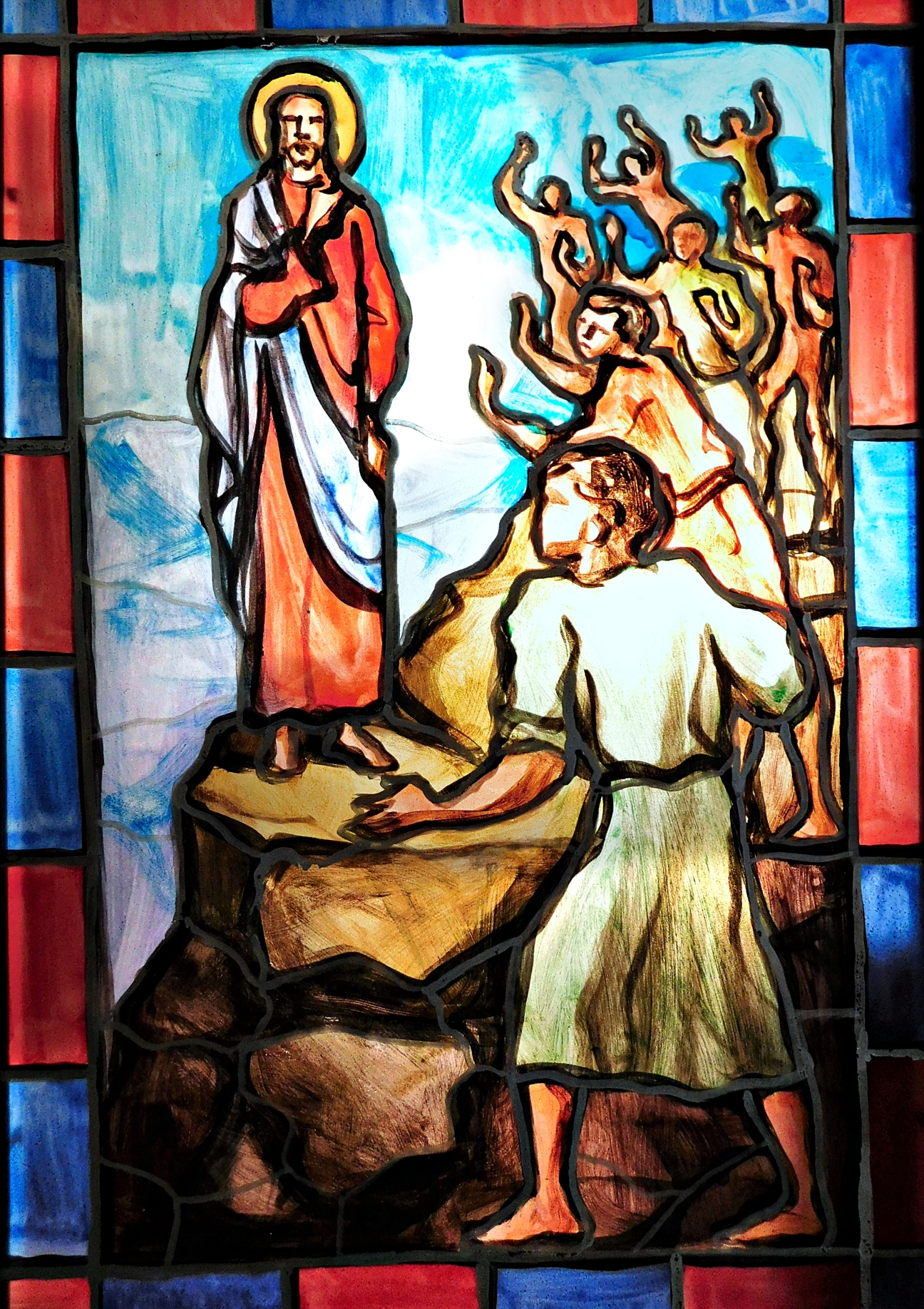
Today’s Gospel (Lk 4:24-30) has Jesus stirring up the crowd in His home town of Nazareth so much so that they are ready to do this to Him:

They rose up, drove him out of the town,
and led him to the brow of the hill
on which their town had been built,
to hurl him down headlong.
But he passed through the midst of them and went away.
(vv. 29-30)

“Luke could have selected other incidents to present as the initial event in Jesus’ public ministry (see 4;15, 23) but chose to use Jesus’ visit to Nazareth with its unhappy ending. Luke probably intended it as an illustration of Jesus being ‘a sign that will be contradicted’ and the cause of ‘the fall and rise of many in Israel,’ as Simeon prophesied after his birth (2:34). Luke probably also presents the incident as a foreshadowing of what lies ahead: Jesus will be embraced by some but rejected by others, culminating in his death. Yet death will have no more hold over him than the mob in Nazareth: he will, as it were, pass through the midst of the earth, rising from his tomb.” (Bringing the Gospel of Luke to Life, 123)

The last verse has long fascinated me. What did this look like? I have often imagined it like Moses parting the Red Sea. Jesus stares down the crowd and starts walking and they separate like the waters. Was it Jesus’ demeanor? Did He exude a power that repelled them? Was the crowd’s bark worse than its bite? Did friends and neighbors have second thoughts? Remember, this was Jesus residence for over twenty years. He knew these people as well as anyone, but clearly they didn’t know Him. I’m reminded of yesterday’s Gospel:

Jesus would not trust himself to them because he knew them all,
and did not need anyone to testify about human nature.
He himself understood it well.
(Jn 2:24-25)

There are many scenes in Jesus’ life I wish I could have been present for, but this ranks near the top.
Mount Precipice near Nazareth, the site commemorating the Gospel story of
the attempt to throw Jesus off a cliff.

God bless.

Lent Day 8: Signs, signs

TODAY’S READINGS

From today’s Gospel (Lk 11:29-32), hitting a chord:

“This generation is an evil generation;
it seeks a sign, but no sign will be given it,
except the sign of Jonah.”
(v. 29)

“Seeking a sign is an indication that ‘this generation is an evil generation.’ The phrase likens the Israelites of his day who reject him (see 17:25) to the evil generation that wandered in the wilderness and failed to enter the promised land (Num 32:13; Deut 1:35). Earlier, Jesus had criticized ‘this generation’ of his contemporaries for failing to respond to him and John (Luke 7:31; see 9:41). Here Jesus speaks six times against ‘this generation’ (11:29-32, 50-51). Because he is being rejected, Jesus frequently warns ‘this generation’ about the coming judgment (see 10:13-14; 11:19), when others will join together to condemn it for failing to hear and repent.” (The Gospel of Luke (Catholic Commentary on Sacred Scripture, 228)

“The expression ‘this generation’ can simply refer to those who are alive at the time of Jesus (see 21:32), but it often has the connotation of those who respond negatively to him (see 7:31-34; 17:25), as is the case here. This generation is ‘an evil generation’ because ‘it seeks a sign.’ After seeing Jesus free a man from a demon, some ‘to test him, asked him for a sign from heaven’ (11:160 to prove that he expelled demons by the power of God. It should be evident that Jesus is on God’s side, if he frees men and women from the grip of evil. It should also be evident that God has endowed Jesus with power, if he is overcoming the forces of Satan and healing afflictions. To demand anything more to authenticate Jesus reveals a hostile skepticism, a refusal to believe.” (Bringing the Gospel of Luke to Life, 325-26)

An evil generation may demand a sign, but maybe more evil is the current generation that is not even interested in a sign, since an exponentially growing number of persons do not believe in God, anyway. Who is the Jonah today that will convince our world to repent of its evil ways (see Jonah 3)? Unfortunately for many, repentance requires hearing, and so many of us are tuned out. Would we even notice the sign or hear the Word?

Let us pray fervently that God will send the sort of prophet who, like Jonah, in one sentence, softens hearts and has their owners cry bitter tears of repentance.

Jonah Preaches to the Ninevites (17th c.) by Andrea Vaccaro

God bless.

Lent Day 4: Good Dr. Jesus

TODAY’S READINGS

The immediate aftermath of the calling of Levi (Lk 5:27-32) gives Jesus an opportunity to impart an important principal on the judgmental Pharisees:

Those who are healthy do not need a physician, but the sick do.
I have not come to call the righteous to repentance but sinners.
” (vv. 31-32)

“Jesus did not come to perpetuate Old Covenant standards of righteousness, which were designed to separate Israel from the sins and uncleanness of their Gentile neighbors (Lev 20:26). Jesus brings a new standard of righteousness that tears down the wall that barricades Israel from other nations, as he stretches the boundaries of God’s covenant family to include everyone in need of mercy, even tax collectors and sinners.” (The Gospel of Luke [The Ignatius Catholic Study Bible], 30-31)

“This implies that the sin is the real illness and that ‘tax collectors and sinners’ are the sick who need healing:’I saw their ways, / but I will heal them’ (Isa 57:18). Jesus has just taught this lesson by forgiving the paralyzed man’s sins before healing him physically. By eating with tax collectors and sinners (see Luke 7:34; 15:1-2; 19:5), Jesus does not condone their sins but calls them to repentance. At the end of the Gospel, Jesus will commission his disciples to continue this mission by proclaiming repentance and the forgiveness of sins (24:47).” (The Gospel of Luke [Catholic Commentary on Sacred Scripture], 120)

“[Jesus] eating with sinners is part of his mission. He does not simply preach to them but associates with them and draws them into fellowship with himself. He has come to call sinners to repentance — to profoundly reformed lives, a reorientation of their thinking and behavior. repentance is not a precondition for associating with Jesus but a consequence of it.” (Bringing the Gospel of Luke to Life, 152)

It seems to me, the biggest problem the Pharisees had is they thought they were righteous. Had they been paying an iota of prayerful attention to Jesus teaching (and certainly they knew it, since they were constantly following Him and looking for ways to accuse Him, denounce Him, and trap Him), they would have come to realize that none are completely righteous — we all are sinners. Yes, some may be in ICU, others in an urgent care, and still others with just a nagging cold, but we all need the Divine Physician to heal us. Self-righteous and judgmental the Pharisees were; what they especially needed was open-heart surgery to give God — who they claimed to know yet missed Him in their midst — access to enter them and transform them.

And so we should also allow the Lord to work on us. Let us go to Dr. Jesus for the diagnosis (we can go daily and it’s free — no costly health insurance required). Following His prescription, we are assured of the prognosis: eternal beatitude.

For related information, check out my friend Mike Aquilina’s article. Even better, dive into a full-length treatment from him, The Healing Imperative.

REMINDER

My daily ten-minute Eucharist for Lent vidcasts continue today, where we continue looking at the CCC, this time focusing on the Last Supper. Also mentioned: an article encouraging us to look at Lent through a Eucharistic lens.

God bless.

Christmas Day 1: Shepherding a Mirrored Heart

TODAY’S READINGS

The Gospel reading is from Lk 2:15-20. I have chosen readings from the Mass at Dawn since it is the Mass I attended. A focus on the shepherds, yes, but one very important line about the Blessed Virgin:

And Mary kept all these things,
reflecting on them in her heart.
(v. 19)

“Mary contemplates Jesus’ birth and childhood, not from a distance, but as a participant in the mystery (1;35, 43; 2:51). Luke’s insight suggests that Mary is either the direct or indirect source of his information, since she alone could relate these hidden details of the story.” (The Gospel of Luke [Ignatius Catholic Study Bible], 24)

“Mary has had nine months to ponder what God is doing through her; the shepherds’ report is one more thing to ponder. Mary is apparently included in the ‘all’ who were ‘amazed’ by the shepherds’ words (verse 18), but her response is more than astonishment. ’Mary kept all these things’: the Greek word ‘kept’ has connotations of preserving something, being concerned about it, treasuring it. Mary treasured the events that had unfolded, ‘reflecting on them in her heart.’ The Greek word for ‘reflecting’ on means putting things together, pondering them. In the biblical view, the heart is the seat of thinking and feeling and willing. Mary takes to heart the amazing things that are happening and tries to fathom their meaning. Mary is a model of treasuring al that God says and does, meditating on his word, pondering his plans for our lives.” (Bringing the Gospel of Luke to Life, 64)

Mary “is a true teacher of prayer. If we imitate her, if we guard and ponder in our hearts what Jesus says to us and what he does in us, we are well on the way to Christian holiness and we shall never lack his doctrine and his grace. Also, by meditating in this way on the teaching Jesus has given us, we shall obtain a deeper understanding of the mystery of Christ, which is how ‘the Tradition that comes from the Apostles makes progress in the the Church, with the help of the Holy Spirit.’ (Vatican II, Dei Verbum, 8)” (The Navarre Bible: The Gospel of Luke, 56)

Not only can we take a lesson from Blessed Mary (did anyone in the human history have more to contemplate than she?), but also from the shepherds. Filled with awe as these events unfolded, do you not think they spent many lonely hours on the job contemplating these things in the depths of their being. We must be more like the shepherds: being awestruck by God and taking the time to ponder all that He has done in history and all He has done for us, specifically.

THREE SONGS

A beautiful Catholic song for the season sung beautifully.

My favorite versions of my two favorite secular songs:

Merry Christmas and God bless.

Prayer, Blessed Virgin Mary by Juan Sanchez Cotan (1560-1627)