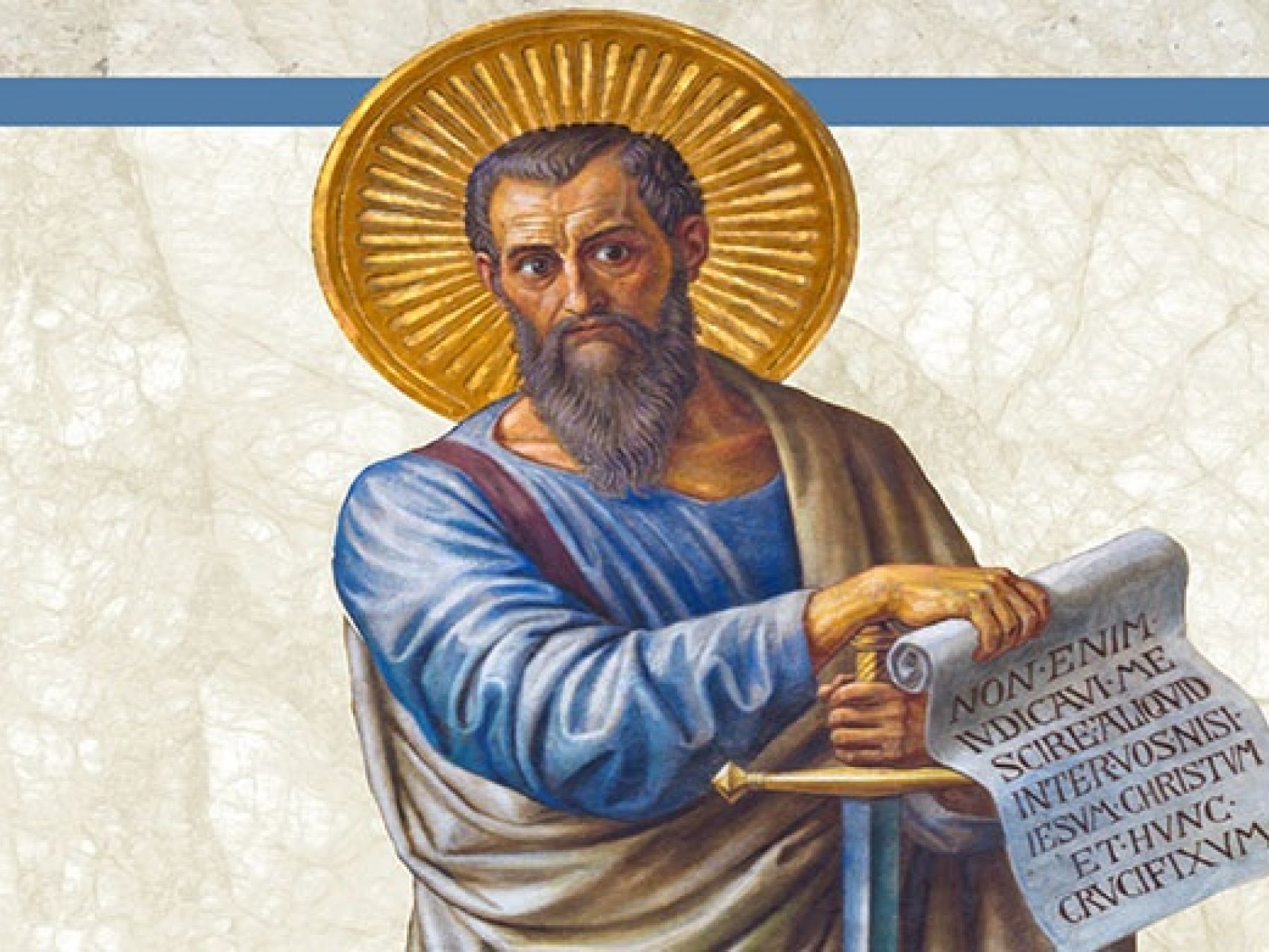
“[F]or a small delight in this passing life, [men] incur the death of their soul.” (IC 3,12,4) | “[W]hoever breaks one of the least of these commandments and teaches others to do so will be called least in the Kingdom of heaven.” (Mt 5:19a)

|The Imitation of Christ by Thomas à Kempis, Book III Chapter XII: ”Of Learning to Acquire Patience and to Fight Against Concupiscence” (second entry)

Kempis’s Christ admonishes the disciple to turn from drunkenness, blindness, lust, and carnal pleasures toward the Lord by delighting in Him and doing His will.

|Today’s Gospel reading: Mt 5:17-19

The Sermon on the Mount continues with this pithy selection. Jesus urges His listeners to keep the commandments and to encourage others to do the same. Failure to do so causes a great diminishment in one’s status in the next life.

|Reflection

Jesus speaks of “the least of these commandments” when addressing the crowd. Disobeying God’s law in even minor matters is wrong and offensive to Him, and it is made worse by actively encouraging others to do the same or by causing scandal just by example. Such a “small delight,” as Kempis puts it, is not worth the price of one’s soul. Yes, Jesus says that the person breaking a least commandment still may gain the Kingdom. But we know that for the unrepentant mortal sinner, such grave matter will “incur the death of their soul” and put others in danger of the same fate by involving them in the transgression or encouraging them to follow your lead.

Our call is to build up the Kingdom here on earth. Our example in word and deed indicates how important we consider this calling of ours. May we be ever vigilant to eschew sin and encourage others to do the same. Consider the words of Jesus that came immediately before today’s reading:

[Y]our light must shine before others, that they may see your good deeds and glorify your heavenly Father. (Mt 5:16)

“It is just what they deserve: that they who inordinately seek and follow pleasures, should not enjoy them without confusion and bitterness.” (IC 3,12,3) | “Men of rank, how long will you be dull of heart? Why do you love what is vain and seek after falsehood?” (Ps 4:3)

|The Imitation of Christ by Thomas à Kempis, Book III Chapter XII: ”Of Learning to Acquire Patience and to Fight Against Concupiscence” (first entry)

In this chapter, Kempis has Christ advising the disciple on patience in adversity. The Lord does not wish to take away our challenges and difficulties but wants us to grow spiritually stronger through them so we can endure the trials of this life and even the fires of Purgatory that may await us in the next life. In the quote above, Christ tells of what befalls the worldly person who may seem to have it easy but ultimately finds no peace in the passing fancies of this life.

|Today’s Responsorial Psalm: Ps 4:2-3, 4-5, 7B-8

This short song has the Psalmist imploring God’s help in times of trouble while urging God’s people to repent of sin. This is the formula for peace of heart — not vanity and lies.

|Reflection

Is it not so often the case that those possessions or activities that we think will satisfy us, ultimately do not? Yes! we finally got that fancy automobile for which we have been working long and hard. But it still just gets us from point A to point B. Beside, my neighbor just got a newer, better model — blast him! Or what of the lottery winner who becomes miserable due to all the unwanted fame, unending requests, and foolish investments; more than a few have committed suicide ultimately. The examples are countless. St. Augustine had it right:

Our hearts are restless until they rest in thee, O God.

Of course “confusion and bitterness” are the result when “you love what is vain and seek after falsehood.” When the focus is on satisfying ourselves in this mortal coil, we do not have peace. We are bound to wonder, “Is this all there is to life?” The lie that, “It’s all about number one” is quickly dispelled in our drive for “stuff.” How many family members, friends, colleagues, clients, neighbors, citizens, are to be ground underfoot due to a pursuit of the “golden goose”?

We are warned of a self-centered, worldly perspective in Scripture:

They exchanged the truth of God for a lie and revered and worshiped the creature rather than the creator (Rom 1:25)

From God alone comes the fullness of truth. God is Truth. May our worship be of Him alone and reverence of Him be above all else. May we never set Him aside for anything in the world.

Christ and the Rich Young Ruler (1889) by Heinrich Hofmann

“[T]o not murmur at any adversity whatsover.” (IC 3,11,5) | “Blessed are you when they insult you and persecute you and utter every kind of evil against you falsely because of me. Rejoice and be glad, for your reward will be great in heaven.” (Mt 5:11-12a)

|The Imitation of Christ by Thomas à Kempis, Book III Chapter XI: ”How We Must Examine and Moderate the Desires of Our Heart” (third entry)

Kempis closes this chapter on moderating the desires of our heart with the words above. Fitting it is since our tendency is to become annoyed and voice complaint when things don’t go precisely they way we want them to, often in the most minor matters. By controlling these earthly, passing desires, we mortify ourselves and become more open to the Lord’s voice and more like Jesus in humility in order to face much more significant adversities as we ought.

|Today’s First Reading: Mt 5:1-12

Today begins our slow and steady journey through the Sermon on the Mount, beginning with the famous Beatitudes. Jesus sure knows how to get a crowd’s attention when beginning to teach. All the points He makes are challenging to bear with or live out, particularly the final one which, after being stated, is emphasized in the quote above. The people must have been astonished in this heretofore unheard of program from a man of God. There must have been a lot of mouths agape and glances shot as Jesus fired off each blessing. Undoubtedly His listeners were eager to find out where He was going with all of this. We will find out in the coming days.

|Reflection

This long slate of blessings in the Beatitudes come when we persevere through sadness, difficulties, and challenges, keeping our eyes on the ultimate goal: union with God in His Kingdom. Whether or not we receive material benefits or even spiritual comfort from doing what is right, we know that through our faithfulness, we will be rewarded.

By not “murmuring” at the little personal adversities we work on steeling ourselves against the greater insults, persecutions, and calumnies that are sure to come when we boldly live the Christian life in word and action. Kempis is wise to emphasize, time and again, self-discipline. As much as the wiles of the enemy can hurt, whether in mind, body, or spirit, we know that if we faithfully defend Christ, we are on the right side of (salvation) history. Take courage!

What then shall we say to this? If God is for us, who can be against us? He who did not spare his own Son but handed him over for us all, how will he not also give us everything else along with him? Who will bring a charge against God’s chosen ones? It is God who acquits us. Who will condemn? It is Christ [Jesus] who died, rather, was raised, who also is at the right hand of God, who indeed intercedes for us. What will separate us from the love of Christ? Will anguish, or distress, or persecution, or famine, or nakedness, or peril, or the sword? As it is written:

“For your sake we are being slain all the day; we are looked upon as sheep to be slaughtered.”

No, in all these things we conquer overwhelmingly through him who loved us. For I am convinced that neither death, nor life, nor angels, nor principalities, nor present things, nor future things, nor powers, nor height, nor depth, nor any other creature will be able to separate us from the love of God in Christ Jesus our Lord. (Rom 8:31-39)

Christian preacher Phillip Blair of Torch of Christ confronted by ...

“[T]otally conform your desires to My good pleasure, and…be not a lover of yourself, but the fervent executor of My will.” (IC 3,11,3) | “Whoever believes in him will not be condemned, but whoever does not believe has already been condemned” (Jn 3:18)

|The Imitation of Christ by Thomas à Kempis, Book III Chapter XI: ”How We Must Examine and Moderate the Desires of Our Heart” (second entry)

Kempis has Christ begin with these words as He tells the disciple that “you still have to learn many things, which you have not yet learned well.” Focusing on Jesus and His will for us covers it. Total conformity to God’s will takes care of everything if we can attain it. As the rest of the chapter tells us, as if we need any outside source to raise awareness of this, it is not easy to overcome fallen desires that conflict with the Lord’s designs.

|Today’s First Reading: Jn 3:16-18

Today we hear the famous John 3:16 verse (made prominent at many football games). Jesus goes on to expound upon this message, with the follow-up declaration to Nicodemus in the headline. In this short reading we have Jesus declaring Himself the Son of God and the only Savior of the world. Belief in Him is required for salvation.

|Reflection

The reason I put these Kempis and John quotes together is to emphasize a point that I never tire of making because I believe it is much misunderstood, even in certain Christian circles. “Belief” in Christ is not merely a verbal, emotional, or even intellectual, assent; all these are good as far as they go, but they are insufficient. True belief does not stoop to an “easy-believism” (that is, I can’t lose my salvation no matter how I behave now that I have declared allegiance to Jesus). No, we are required to conform our hearts and minds to God and live this out accordingly. Paul’s words to the Romans are instructive:

Do not conform yourselves to this age but be transformed by the renewal of your mind, that you may discern what is the will of God, what is good and pleasing and perfect. (Rom 12:2)

I hear a lot of Kempis in this important passage. I also hear a lot of Jesus here (see Mt 5:48 for starters).

“Belief” requires a radical change from our fallen desires that constantly tempt us away from God. The world, the flesh, and the devil are powerful forces (see Eph 2:1-3; some also see these challenges in the Parable of the Sower in vv. 4-7). But they don’t stand a chance against grace. Grace does not necessarily make conforming to God’s will, and ultimately salvation, easy. But it does make it possible (see Mt 19:26 and 2 Cor 12:9).

Let us pray daily that the Father and Son send the Holy Spirit to dispense the graces that we would be lost without to aid us in our struggles to meet His demanding standards..

File:Henry Ossawa Tanner - Nicodemus coming to Christ.jpg
Nicodemus coming to Christ (between 1924-1927) by Henry Ossawa Tanner

“If you are inspired by Me, you will find yourself contented in any manner I shall dispose; but if your self-interest enters in, behold, this is that which hinders you and burdens you.” (IC 3,11,3) | “[B]e persistent whether it is convenient or inconvenient” (2 Tim 4:2a)

|The Imitation of Christ by Thomas à Kempis, Book III Chapter XI: ”How We Must Examine and Moderate the Desires of Our Heart” (first entry)

Kempis spends this entire short chapter speaking of the need to moderate our own desires in favor of God’s will for us. In today’s key quote from this chapter, the author has Christ telling the disciple that self-interest must not trump what He desires of us. Focusing on self only leads to distraction, scandal, and losing heart.

|Today’s First Reading: 2 Tm 4:1-8

Today we continue to read Paul’s instruction to his disciple Timothy. The Apostle urges him to be persistent in his ministry even thought it will be challenging, since “people will not tolerate sound doctrine…and will stop listening to the truth.” Paul concludes by saying that his time on this earth is just about up (“I have competed well; I have finished the race; I have kept the faith”).

|Reflection

Paul’s encouragement to the disciple to be persistent in ministry (and all the baptized have a God-given ministry) “whether convenient or inconvenient” bolsters the point Kempis’s Christ is making. Self-interest will often render giving Christian witness in word and deed “inconvenient” in a world where “people will not tolerate sound doctrine…and will stop listening to the truth” (also see Rom 1:25). What will people think? Do I really want to make waves? Is it worth the risk? Can I deal with the backlash sure to come?

Well, being “convenient” was not a hallmark of Jesus’ ministry. He made plenty of people uncomfortable — that double-edged sword can cut deep in the most sensitive areas (see Heb 4;12). Sometimes (often?) it was tough love. But it was out of love that Jesus taught what He taught, lived how He lived, and died how He died. St. Augustine is helpful here:

Once for all, then, a short precept is given thee: Love, and do what thou wilt: whether thou hold thy peace, through love hold thy peace; whether thou cry out, through love cry out; whether thou correct, through love correct; whether thou spare, through love do thou spare: let the root of love be within, of this root can nothing spring but what is good. (Seventh Homily on 1 John 4:4-12 [#8])

So, with the Doctor of Grace, let us always remember that Love comes first. If we love with the love of God, then all we do will be in accord with His will. “whether it is convenient or inconvenient” for our worldly status.

Painting : "St. Timothy" (Original art by Brenda J. Fox )
St. Timothy (contemporary) by Brenda J. Fox

“O service worthy of being embraced and desired, by which one merits the supreme good and acquires the joy that will never end.” (IC 3,10,6) | “You have followed my teaching, way of life, purpose, faith, patience, love, endurance, persecutions, and sufferings … Yet from all these things the Lord delivered me.” (2 Tim 3:10-11)

|The Imitation of Christ by Thomas à Kempis, Book III Chapter X: ”How it is Sweet to Serve God by Despising the World” (fourth entry)

Kempis closes this chapter on the sweetness of serving God with the fitting words above. This way of life that he exalts, when followed faithfully, leads to “the joy that will never end.” Thus, he espouses here, as he has many times before, despising worldly things in order to gain heavenly glory.

|Today’s First Reading: 2 Tm 3:10-17

We once again dip into Paul’s words to Timothy where he again encourages faithfulness through trials (he lists his experiences above) so that they will be delivered as he has been. He also warns of the machinations of those who are out to deceive the people of God. Then he goes on to famously convey the importance of the knowledge of Scripture that is “for teaching, for refutation, for correction, and for training in righteousness.”

|Reflection

The good Lord promised that faithfulness and discipleship will come with trials and suffering. He also promised that those who endure till the end will be eternally rewarded. So, while Kempis looks forward to the “supreme good” and “joy that will never end,” he makes no bones often throughout the book about the challenges that come with attaining this end. The emphasis, though, is that this glorious outcome far outweighs even the worst that this life can throw at us. We are here for just a moment in the timelessness of eternity, yet our everlasting fate depends on how we use that moment. Paul asks his friends to call to mind how he spent his moment in his: “teaching, way of life, purpose, faith, patience, love, endurance, persecutions, and sufferings.” Through insatiable zeal and patient endurance he can say that from the persecutions “the Lord delivered me.” We need to have this same confidence that we will be delivered by Jesus in this life and in the next if we endure in faith, hope, and love.

“They will gain great freedom of mind who, for Your Name, will enter upon the narrow way and put aside worldly care.” (IC 3,10,5) | “If we have died with him we shall also live with him; if we persevere we shall also reign with him.” (2 Tim 2:11-12a)

|The Imitation of Christ by Thomas à Kempis, Book III Chapter X: ”How it is Sweet to Serve God by Despising the World” (third entry)

Again, Kempis’s focus is on those who have chosen the vowed religious life. But it is really a message to all Christians, a universal call to holiness (see here). Keeping on the “narrow way” (see Mt 7:13-14) is the greatest freedom since God, the divine Creator, has the instruction manual for lives lived properly to meet their purpose and end.

|Today’s First Reading: 2 Tm 2:8-15

As we continue to hear Paul’s second letter to his disciple Timothy, he implores the purveyors of the Gospel message to persevere in their evangelization efforts, even as he does as a prisoner in chains. Stay true to the cause and the message for the sake of others, he says, “so that they too may obtain the salvation that is in Christ Jesus.”

|Reflection

Paul speaks of persevering with and dying with Jesus. To “enter upon the narrow way and put aside worldly care,” as Kempis puts it, requires perseverance and dying to self, does it not? When we say, with our Lord, “not my will but yours be done” (Lk 22:42), even in our greatest trials and temptations (remember, Jesus said these words in his Agony in the Garden), we free ourselves of the shackles of worldly concerns in order to “live with” and “reign with” Jesus.

It is something of a paradox that the more narrow-minded we are the more attractive the wide path (to destruction) is. We must broaden our perspective to appreciate not only the goods of this world and our God-given mission in it, but also to never lose clear sight of our ultimate goal: eternal life in Heaven with the Trinity.

“Is it a great thing to serve You, Whom every creature is bound to serve? No, it ought not to seem much to me to serve You; but rather this seems great an wonderful to me, that You deign to receive as your servant and number among your beloved servants I who am so unworthy and poor.” (IC 3,10,2) | “He saved us and called us to a holy life, not according to our works but according to his own design and the grace bestowed on us in Christ Jesus before time began” (2 Tim 1:9)

|The Imitation of Christ by Thomas à Kempis, Book III Chapter X: ”How it is Sweet to Serve God by Despising the World” (second entry)

Kempis’s words of the disciple, at first glance, should strike us as odd. Do we not think the answer to the initial question should be resounding in the affirmative? Yet, the author wishes to emphasize the point that we should not be focused on the status discipleship brings but only on our own unworthiness to carry that mantle. Earlier in the section, the disciple acknowledges his own corruption but then lauds the mercy, grace, and friendship — all undeserved — that elevates him to the position of being a special servant of God.

|Today’s First Reading: 2 Tm 1:1-3, 6-12

The beginning of this epistle has Paul once again greeting Timothy, whom Paul has ordained. In what we heard today, Paul gives encouragement to Timothy in his ministry, with an emphasis on “courage.” The gifts Timothy received through the Spirit, “power and love and self-control,” enable the faithful disciple to remain steadfast, to not be ashamed of Christ, Paul (now in prison), or the Gospel, and to endure well suffering (undoubtedly already experienced by Timothy in his travels with Paul).

|Reflection

The emphasis from both Kempis and Paul today is on our call from God to be disciples despite our unworthiness. It is “according to his own design” that the Lord designates us for our important roles, that only we can fulfill, in building up His Body on earth. There is no reason to exalt ourselves for being set apart; rather, it is our duty and obligation to pursue our designated mission for love of God and neighbor, despite our being “unworthy and poor.” The result of our calling and labors should be gratitude to God: for being made worthy to evangelize in the first place and for any good outcomes from our faithfulness that ultimately blossom.

St. Timothy, Minology of Basil II in the Vatican Library, via Wikimedia Commons
St. Timothy, Minology of Basil II in the Vatican Library

“[T]hey, who spontaneously subject themselves to Your most holy service, shall obtain great grace.” (IC 3,10,5) | “[G]row in grace and in the knowledge of our Lord and savior Jesus Christ.” (2 Pt 3:18a)

|The Imitation of Christ by Thomas à Kempis, Book III Chapter X: ”How it is Sweet to Serve God by Despising the World” (first entry)

In this chapter, Kempis focuses on those who, like himself, have dedicated themselves to the vowed religious life. Yet, like almost all of this book, the principles he espouses have wide applicability. Case in point, the quite above. We are all to “subject” ourselves to the “holy service of God.” Not only, in following our calling, will we receive “great grace,” but Kempis goes on to say that this also leads to “sweet consolation” and “great freedom.”

|Today’s First Reading: 2 Pt 3:12-15a, 17-18

This excerpt from 2 Peter gives us the first pope’s words at the very end of the letter. Peter encourages his readers to “be eager to be found without spot or blemish before him, at peace” while they “[w]ait for and hasten the coming of the day of God.” They must not be led astray by the unprincipled but to do what it says in the headline.

|Reflection

Peter’s letter tells us to grow in God’s grace. Kempis gives us an important — vital, really — way to do this: become subject to God. That is, “Do whatever he tells you” (Jn 2:5). These wise and final Scriptural words of the Mother of Our Lord, are meant for all Christians for all time. As Peter says, we are to grow in the knowledge of Jesus. Good books, preeminently the Bible, and then the Catechism of the Catholic Church, will assist us in getting to know Jesus better. This must be combined with prayer — developing a personal intimacy with Christ. And the highest prayer, the Mass, brings Jesus to us in the way par excellence: the Eucharist. To prepare for receiving Jesus in the Blessed Sacrament we go to Confession. Sacraments are the ordinary means in which we receive sanctifying grace. Let’s frequently take advantage of these great gifts given to the Church by its Head for our help and salvation.

https://i1.wp.com/fatherbroom.com/wp-content/media/png/Mary-wedding-at-cana-4.png

“If you are truly wise you will place your joy and your hope in Me alone; because no one is good by God alone, Who is to be praised above all things and blessed in all things.” (IC 3,9,3) | “All these devoted themselves with one accord to prayer” (Acts 1:14a)

|The Imitation of Christ by Thomas à Kempis, Book III Chapter IX: ”That All Things Should be Referred to God as Our Last End” (third entry)

The closing words of this chapter have Kempis sharing the eternal truth that joy and hope must be centered on the Lord alone since no passing thing can rightfully promise these virtues in an enduring way. For His unfailing love and desire for us to be with Him forever, we praise and bless God for who He is, what He has done, and what He will do for those who remain faithful until He calls them home.

|Today’s First Reading: Acts 1:12-14

The alternate first reading gives us the events immediately after Jesus’ Ascension. The Eleven, Our Lady, some other women, and some relatives of the Lord head back to the Upper Room to pray, awaiting the Holy Spirit just promised to them by their Master.

|Reflection

It is important to keep the perspective that Kempis shares with us as we march through the highs and lows in life: always place joy and hope ultimately in God. All things in this life pass: the good and the bad, the joys and the sorrows, the hope and the despair. But if we praise and bless God in all things, we not only dispose ourselves to see God in all things, we also dispose ourselves to see all things as God sees them. The apostles had experienced over the course of Holy Week all those wide ranges of emotions. So, like the apostles, to keep an even keel and focus us on our mission in this life, we too are to pray for the coming of the Holy Spirit into our lives, that He possess us, enlighten us, and guide us. We know very little of what Jesus said to the apostles during those forty days before the Ascension, but they knew He was commissioning them to carry on His work. They knew they could not make any progress without God’s help. They placed their hope in the Lord and so must we. Their first instinct in the excerpt from today: praise and bless God and ask for guidance to do it better and to manifest this conviction in their apostolate to others. This seems to me a pretty good formula for us today.

Pentecost 1