“All…is vanity, except to love God and serve him alone.” (IC 1,24,7) | “How can you believe, when you accept praise from one another and do not seek the praise that comes from the only God?” (Jn 5:44)

We close out this chapter of Kempis (1,24) with an all-encompassing message: all we do must be done for the love of God.  If we sincerely try to do this and have sorrow, repent, and do penance when we do fall short, fear of judgment will not be in us.

Jesus’ long message to the Jewish religious leaders, after His healing on the sabbath of the man at the Bethesda pool, takes up the remainder of the chapter, with a long excerpt proclaimed today (Jn 5:31-47).  This comes immediately after Scripture tells us that “the Jews tried all the more to kill him, because he not only broke the sabbath but he also called God his own father, making himself equal to God” (v. 18).  Jesus’ words are strong and pointed as He hopes to shake these men out of their biases, misconceptions, egocentrism, and envy.  In the quote at top, the Messiah calls them out for what is truly important to them: praise from men rather than the approval of God.

The Jews are guilty of what Kempis highlights: vanity.  They lost perspective (if they ever even had it) regarding who they were supposed to be serving primarily.  For these men it was themselves first and everyone else (including Yahweh) somewhere down the line, if at all in their thinking.  Over and over Jesus attempts to instill the fear of judgment in them (see for example Mt 21:28-32), but few seem to interiorize these warnings; rather they harden their hearts against Jesus all the more.

So, in the service of God, we are not to seek the approval of anyone but our Lord.  From those persons who understand this, we will get affirmation (praise God), but we shouldn’t count on receiving comfort in this world.  From the rest of secular society and its worldliness we don’t expect accolades and often get condemnation.  Let us always seek the praise of God and let the chips fall where they may.


(1852-1901)
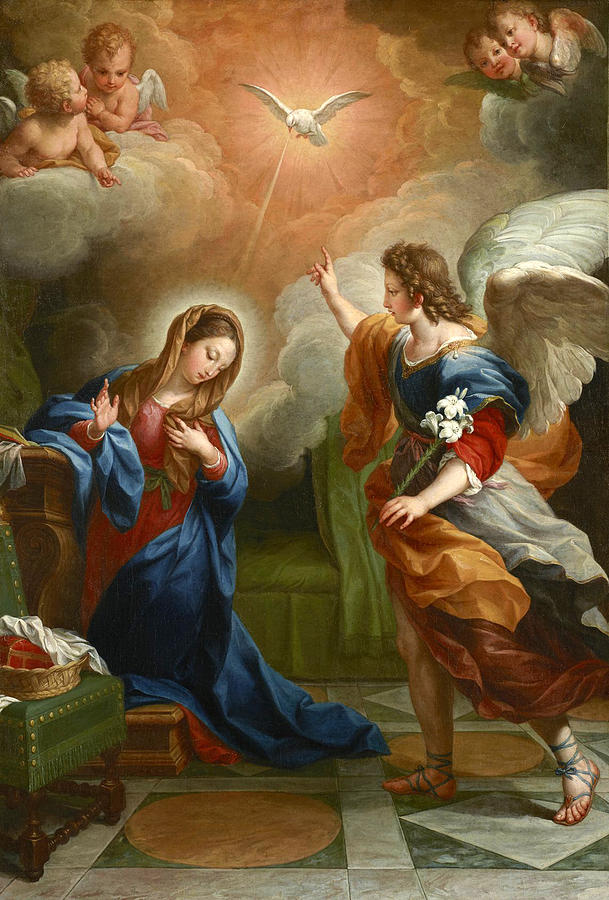
“[T]he poor and humble will have great confidence, and the proud will fear on every side.” (IC 1,24,4) | “Mary said, ‘Behold, I am the handmaid of the Lord. May it be done to me according to your word.'” (Lk 1:38)

Kempis never tires to speak of the importance of humility and being poor in spirit, that is not prioritizing or having undue attachment to the material over the spiritual.  In this chapter (1,24), his emphasis focuses on our particular judgment at death and the punishment meted out at that time to those who have sin or the effects of sin still on their souls (see CCC 1030) as well as the benefits of being faithful (both aspects seen above in a very short phrase).

As is appropriately proclaimed each March 25, The Feast of the Annunciation, we hear from Luke, the only evangelist who fully records this scene, the visit of the Archangel Michael to Mary in her home town of Nazareth (Lk 1:26-38).  The angel appears suddenly, declaring her chosen to bear the “Son of the Most High.”  She wonders how this could be since she must have made a vow of perpetual virginity (why else would this even be a question since she was betrothed to be married?).  In humility, she gives her consent (God never forces Himself on us — He is a gentleman) as “handmaid of the Lord.”

Two things struck me about Kempis’s words in relation to today’s Gospel.  Firstly, there is no better example than Mary of poverty and humility.  Sinless from conception until her dormition, Mary lived perfectly our divine directive to always put God first, others second, and herself last.  Secondly, I have long imagined her as the picture of confidence in her interaction with the angel.  Surprised, no doubt, in her humility, that such a great favor would fall to her, I can’t believe there was even a bit of fear in her despite her encounter with “one of the seven angels who stand and serve before the Glory of the Lord” (Tob 12:15) who likely appeared in all his glory.  She expressed herself with poise (not doubt) when questioning how his announcement squared with her vow, and then humbly, but forthrightly, agreed to this request from her Creator, fully assured in faith that God wanted and needed her for His plan of salvation.

Servile fear of God or unwarranted anxiety about events should not be a part of Christian life.  God is in control, even in the most troubled times, ordaining or permitting all that happens.  The questions we should ponder are: How can God be glorified in the midst of this difficult time?  What can we take from the challenge He has put in front of us?

Like Mary, we should approach whatever is presented to us in full confidence in Our Father, who knows what’s best for us (see Lk 11:11-13).

Fear is useless. What is needed is trust. (Mk 5:36; Lk 8:50)

The Annunciation Painting - The Annunciation  by Agostino MasucciThe Annunciation (1742) by Agostino Masucci

“Learn, at present, to suffer in little things, that then you may be delivered from more painful sufferings.” (IC 1,24,6) | “Look, you are well; do not sin any more, so that nothing worse may happen to you.” (Jn 5:14)

The Imitation of Christ, Book One, Chapter 24, is entitled “Of Judgment and the Punishment of Sinners.”  Kempis, in one of his lengthier chapters, bluntly reminds the reader of his call to holiness in this life and the consequences in the next life of not heeding that call.  The admonition in the headline is one of the less pointed, but still strong, admonitions he presents.

The Gospel reading has the story of a man sick for thirty eight years who desperately wants to be healed in the miraculous waters of the Bethesda pool (Jn 5:1-16).  (A side note: it is not known how often the waters were stirred up, but it says little for the compassion of others that no one in that entire span helped the poor invalid take advantage of the blessed bath.)  Jesus, walking by on the Sabbath, asks the man if he wants to be healed, he indirectly answers in the affirmative that he wishes to be physically restored, and Jesus instantly restores him to health and tells him to pick up his mat and go on his way.  Interestingly enough, Jesus makes a point to find the man later, makes Himself known to him, and gives him the warning in the headline.

Thirty-eight hours in desperate straits seems to us too much to bear.  Imagine thirty-eight years of incapacity and frustration.  Do we want to be healed in body?  What kind of question is that?  Of course — without counting the cost.  Do we want to be healed in soul?  Hmmm — maybe if  the cost isn’t too great.  Per Kempis, enduring the sufferings of this short life can help us avoid much more severe anguish in the next.  I’m reminded of the Lord’s words elsewhere:

[D]o not be afraid of those who kill the body but cannot kill the soul; rather, be afraid of the one who can destroy both soul and body in Gehenna. (Mt 10:28)

Maybe suffering comes from physical ailments.  Or maybe it comes from suppressing our own weakened will in favor of God’s will.  Better this now than something worse happening after death when we can no longer help ourselves.

Jesus’ words to the old man should be taken to heart.  It is far too easy to push God to the background when things are going well — this is an ever-present danger.  For the man in the Gospel, who was likely praying constantly for healing, and maybe staying out of trouble due to his infirmity, how will he use his newfound health and freedom?  His reprieve in this life does not guarantee the same in the next.  Neither does ours.  The remedy: thank God daily for whatever life brings and dedicate each morning and evening anew to praising, honoring, and following His Son through the power of the Holy Spirit.

Nathan Greene, 'At the Pool of Bethesda'At the Pool of Bethesda (contemporary) by Nathan Greene

“Be, therefore, always prepared, and live in such a manner that death may never find you unprepared.” (IC 1,23,3) | “Hear, O LORD, and have pity on me; O LORD, be my helper.” (Ps 30:11)

“Be prepared” is the famous motto of the Boy Scouts,  Per its website, this saying means “that you are always ready to do what is necessary to help others.”  I believe Kempis would endorse this way of life, and not only for others, but for ourselves (whom he is focused on here), as well (1,23).  By always having our earthly demise in mind (not morbidly or obsessively, but realistically — it comes for all of us), we will not be caught unawares or unprepared in soul to meet our Lord.

David’s psalm of thanksgiving (Ps 30:2 and 4, 5-6, 11-12a and 13b) is worth reading in its entirety (it is quite short).  The repentant David (adultery and murder are in his past — see 2 Sam 11) praises God for his help and healing, urges others to do the same, recalls how he threw Himself on the mercy of God (see the headline), and then closes with another word of thanksgiving.

To honor Kempis’s (and Jesus’ — see Mt 25:13) call to “be prepared,” a regular reading of Psalm 31 is recommended.  “Have pity on me!  I can’t do this on my own.”  “I know my sins are many and great, and they fill me with fear, but I hope in your mercies, for they cannot be numbered” (from this beautiful prayer of St. Ambrose).  Humility, acknowledging our complete dependence on God, disposes us to acknowledging our sins, asking for forgiveness, and being open to the grace to not repeat them or fall into new ones.

May our Lord never find us unprepared for His mission for us in this life of for His calling us to the next life.

"David and Bathsheba" 20th Century Fox, 1951
David and Bathsheba from 20th Century Fox, 1951

“Learn now to die to the world, that then you may begin to live with Christ.” (IC 1,23,6) | “Awake, O sleeper, and arise from the dead, and Christ will give you light.” (Eph 5:14)

This chapter of The Imitation of Christ (1,23) is wrought with mortification and turning from sin.  Another example is presented above.  The paradox of the requirement of death to bring new life is central to the Bible in the Resurrection.  For Kempis, this transformation starts in this life.  Die now to iniquity and worldly desires to draw ever closer to Jesus, who, as we should, always had His end in mind in His work here on earth.

Paul tells the Ephesians (Eph 5:8-14), and us,

Take no part in the fruitless works of darkness;
rather expose them, for it is shameful even to mention
the things done by them in secret

What are these works of darkness?  Paul explains earlier in the chapter: “Immorality or any impurity or greed” (v. 3).  He urges us to “expose” them in ourselves now.  We have this opportunity in the Sacrament of Reconciliation.  Not only does this great gift give us the assurance of forgiveness if we sincerely desire it, it provides us the grace, to the extent that we are open to it, to overcome the temptations that assault us daily.

Paul’s words “Awake, O sleeper” (speculation is that the words in today’s headline come from a hymn already sung in Paul’s time; here is one from closer to our time) likely make us think of the sleep of physical death, but we should not approach this teaching only in those terms.  “For the wages of sin is death” (Rom 6:23a).  All sin damages our relationship with God; mortal sin is death to the soul.  The time to repent is now; there is no more opportunity once Jesus calls us to Himself.

So Kempis agrees with Paul (no surprise!).  The time is now to lay ourselves bare, repent, ask forgiveness, do penance, and “firmly resolve with the help of God’s grace to sin no more and to avoid the near occasion of sin.  Amen.” (from the Act of Contrition)

The dire warning we just heard from Paul’s letter to the Romans ends with this good news: “but the gift of God is eternal life in Christ Jesus our Lord” (Rom 6:23b).

Let us be enlightened now by the Truth so as to live in the light of Christ for all eternity.

“Send heavenward your daily prayers with sighs and tears, that after death your spirit may be worthy to pass happily to our Lord. Amen.” (IC 1,23,9) | “O God, be merciful to me a sinner.” (Lk 18:13)

Kempis hits the reader powerfully with death (1,23).  He urges constant preparation for that moment that will come to each of us: when the Lord calls us to Himself at the end of this earthly existence.  Daily prayer and repentance are necessary to prepare well for the moment we take our last breath.

Jesus’ well-known parable of The Pharisee and the Tax Collector (Lk 18:9-14) once again highlights the vice of pride and the virtue of humility.  The Pharisee thinks he is the source of his own glory — look at how great I am!  Then he wishes to lift up himself by putting another down, comparing himself to the tax collector in his midst (and don’t think that poor wretch wasn’t meant to overhear the Pharisee’s denunciation).  The man in the back, on the other hand, shows true humility, needing few words and using no excuses to lay bare his soul (whose state is known better to God than to either man) by simply asking for mercy.

Kempis would have approved of the tax collector’s attitude as well.  The man’s prayer, “sent heavenward…with sighs and tears,” is exactly the disposition that the sinner (that is, all of us) should have when speaking to God.  To realize we are helpless without God, but that “with God all things are possible” (Mt 19:26), is vital to keep proper perspective on our relationship with the Lord and to the Lord.  To the extent we are open to God’s help, God will help.  Radical humility opens the door to the divine assistance (that is, grace).

Let us never tire of offering ourselves completely to the Lord God, even our sins, so that the merciful Father can forgive us, heal us, and strengthen us for the fight ahead until He calls us home.

Image result for pharisee and  tax collectorThe Parable of the Pharisee and the Publican (1661) by Barent Fabritius
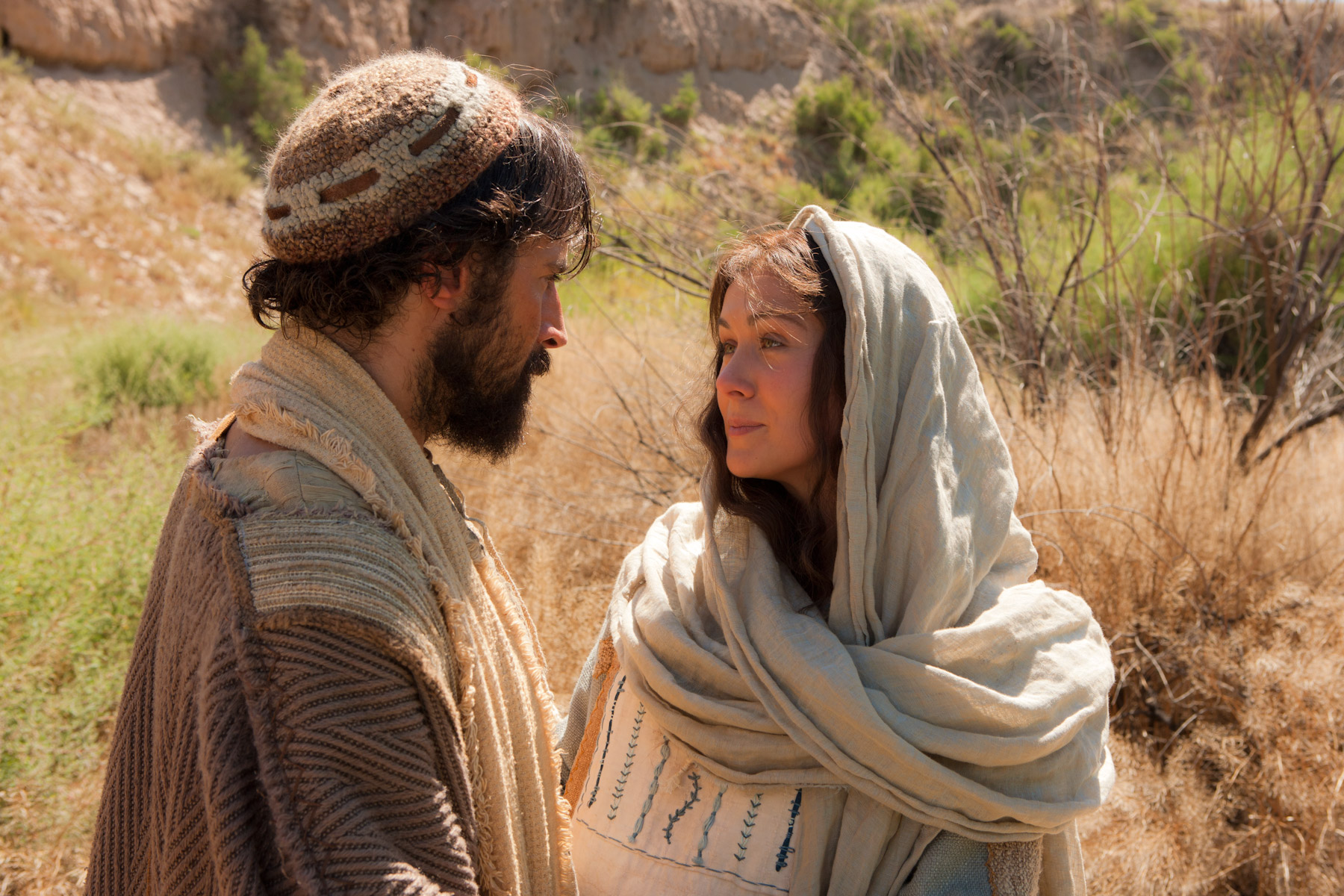
“Oh, the dullness and hardness of man’s heart, which only thinks of what is present, and looks not forward to things to come.” (IC 1,23,1) | “Straight are the paths of the LORD, in them the just walk, but sinners stumble in them.” (Hos 14:10b)

This new chapter (XXIII) of Book One of The Imitation of Christ by Thomas à Kempis is a Meditation on Death.  The crux of it: live well every moment because death can come at any time — and will come eventually for everyone.  In the first section, the quote above ties in very well with the end of the first reading today.

The reading from Hosea (14:2-10) gives us almost the entire last chapter of this book.  Hosea lived in the eight century B.C. in the Northern Kingdom.  The prophet documents various internal intrigues as well as relations with other nations, including Assyria, which would overrun the north in 722 B.C.  He urges the people to admit their sins, repent, and come back to the Lord.  God, for His part, is eager to take them back, and promises abundant blessings if they humbly return.  But the final warning from Hosea is provided in the headline.

Hosea’s final admonition should remind us of Jesus’ words, who well may have been thinking of this prophet, when He uttered the following:

Enter through the narrow gate; for the gate is wide and the road broad that leads to destruction, and those who enter through it are many. How narrow the gate and constricted the road that leads to life. And those who find it are few. (Mt 7:13-14)

The path is straight: keep the commandments.  It is not easy, though, as the road is “constricted.”  By God?  No!  By us!  We far too often find the detours, brush, and trees off the road too tempting not to follow.  We are easily distracted, due to our fallen human nature, with sin and materiality.  We “stumble” amidst the rocks, briers, and detritus that litter these detours that appeal far too easily to our fallen nature.  Kempis and Hosea both are encouraging us to keep our eye in the prize if we are to achieve peace now and ultimate happiness with the Lord forever.

Image result for the narrow path

“[T]he saints of God and all the devout friends of Christ took no account of what pleased the flesh or flourished in this life; but their whole hope and aim aspired to eternal things.” (IC 1,22,4) | “When Joseph awoke, he did as the angel of the Lord had commanded him and took his wife into his home.” (Mt 1:24)

Mortification of the flesh with an eye toward eternal bliss should be a key takeaway for us as we consider the lives of the saints.  To become a saint, one must have demonstrated heroic virtue.  Would we not consider it heroic, based on our fallen inclinations, to “take no account of what pleased the flesh or flourished in life” (1,22) here in this mortal coil for the sake of life eternal?

Were there two greater saints than the Virgin Mary and St. Joseph?  They gave their entire lives after betrothal to the raising of the God-Man, focused entirely on Him.  We know Jesus’ mother never sinned so she certainly had no inordinate desires in this life.  A similar case could be made for St. Joseph.  While he was not conceived without original sin, it seems unlikely that he ever sinned from the time he came to know Mary.  They had their challenges from the time of the miraculous conception (see today’s Gospel Mt 1:16, 18-21, 24a), to the difficult circumstances around their Son’s birth, to raising a family as poor folks, to the Finding in the Temple, to losing Joseph to death, to Mary witnessing the rejection and ultimate death of her little Boy.  A sword through her heart was promised when Jesus was only days old (Lk 2:35); she experienced the full blade at the Cross.  Through it all, aspiring to eternal things — with the Eternal Word with them daily all the while — was their focus.

It is good for us to look to the Holy Family for the prime example of family life.  Living for each other, helping lead the family to heaven, and doing the Heavenly Father’s will, were all they aspired to.  With their focus on God they found everything else falling into place.  We would be wise to have the same approach thus guaranteeing the same results.

“The more a man desires to be spiritual, the more this present life becomes distasteful to him; because he better understands and more clearly sees the defects of human corruption.” (IC 1,22,2) | “[W]hoever breaks one of the least of these commandments and teaches others to do so will be called least in the Kingdom of heaven. But whoever obeys and teaches these commandments will be called greatest in the Kingdom of heaven.” (Mt 5:19)

What is the “misery of man” that Kempis speaks of in this chapter (1,22)?  It is not only our worldly desires but even our physical needs.  To the extent that these pull us away from God, they are problematic.  Thus the pressing need to eliminate sin and mortify the body; that is, to loosen our attachments in this brief life so as to better prepare for life eternal.

Jesus also frequently spoke of the Kingdom (in fact, today’s evangelist’s Gospel [Mt 5:17-19] is sometimes called the Gospel of the Kingdom).  He ushered in the Kingdom here on earth (see Mk 1:15 and Jn 11:23-25) but wants us to remain focused on the next life.  How we behave here and now determines our eternal destination (Jesus speaks plenty about hell as well throughout the Gospels; in fact, just read the remainder of this chapter to get a heavy dose).

Considering the words of Kempis, we see how detachment from sin and material needs keeps us focused on the next life.  When this disposition becomes habitual (with God’s grace and our cooperation), the danger of being led astray or leading others astray diminishes, thus honoring Jesus admonition to obey God’s commandments ourselves and teach these commandments to others.  This is  not optional.  The failure to do so has never-ending consequences.

Sermon on the Mount, Scenes from the Life of Christ (6th c.) from the Byzantine School

“We have reason…to humble ourselves and never to think much of ourselves since we are so frail and inconstant.” (IC 1,22,6) | “For we are reduced, O Lord, beyond any other nation, brought low everywhere in the world this day because of our sins.” (Dn 3:37)

It is no surprise that Kempis returns again and again to the “gem casket of all the virtues,” as St. Basil described it: humility (1,22).  He never tires to remind us that our fallen nature, “frail and inconstant,” should make us meek in recognizing our own weakness and the greatness of God.

Blessed are the meek, for they will inherit the land. (Mt 5:5)

The words in the headline come from the lips of Azariah (Abednego) who, we hear proclaimed in today’s first reading, was cast, along with two companions, into a white hot furnace for his refusal to worship a golden idol (Dn 3:25,34-43).  Being spared by God due to their faithfulness, Azariah speaks for the men in the midst of the flames, giving a long testimony to God’s faithfulness to His people, and his trust in God’s mercy.  This miracle leads to King Nebuchadnezzar, the one whose edict they defied, giving them high positions in his kingdom, and a newfound respect for their God, a respect he commanded of all the citizens of his empire.

What an amazing display of humility leading to trust in God!  The three men would not be unfaithful to Yahweh, despite the immediate threat of immolation, whether or not their Lord decided to spare their earthly lives.  Even in the midst of the flames they lay bare their iniquities and the sins of their people.

One significant reason God gave us Scripture is for our instruction (see 2 Tim 3:16-17).  This example from the Old Testament should really make us think about the way we approach adversity regarding challenges to our faith.  Fortitude in the face of persecution, humility regarding our own sinfulness, and trust in the power of God to save us (if not in this life, then the next) lead to glorification of God through our steadfastness.  “The blood of martyrs is the seed of the church,” whether it is red or white.

The Burning Fiery Furnace (1832) by George Jones