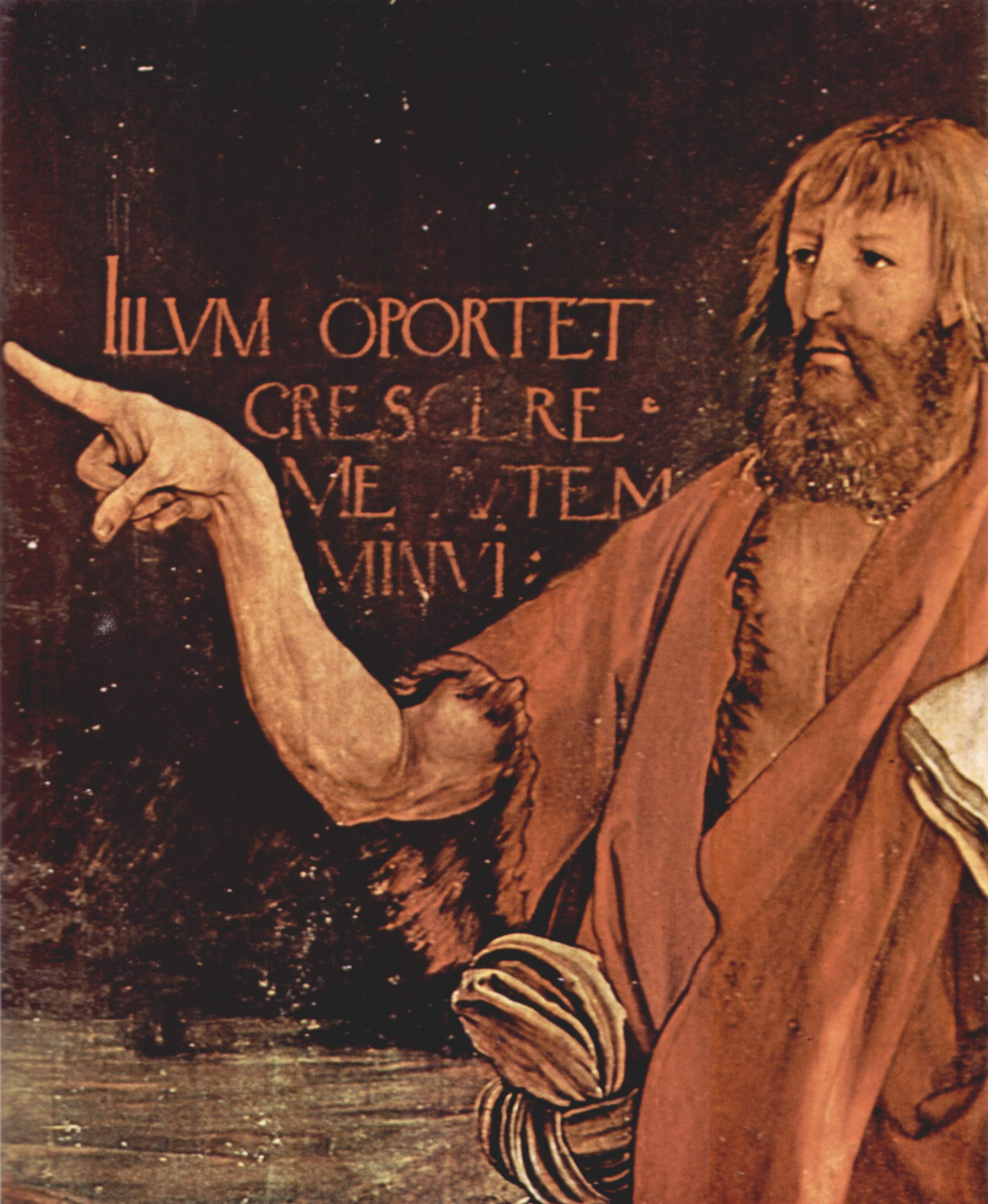
“If it seem to you that you know many things, and understand them well enough, know at the same time, that there are many more things of which you are ignorant.” (IC 1,2,3) “[B]ehold, magi from the east arrived in Jerusalem, saying, ‘Where is the newborn king of the Jews? We saw his star at its rising and have come to do him homage.'” (Mt 2:1-2)

Consider Kempis’s message above as it relates to the undoubtedly long and arduous journey of the Magi highlighted in today’s Gospel for the Feast of the Epiphany (Mt 2:1-12).  The Catholic Bible Dictionary (on page 565) tells us that the Magi were “[a]ncient wise men who were specialists in dream interpretation, astrology, and sometimes magic…On the basis of the Old Testament (cf. Ps 72;10; Isa 49:7; 60:3, 6) the tradition arose that the Magi were three kings.” (Scott Hahn, Gen. Ed. New York: Doubleday, 2009).

Certainly, these men from afar were learned, respected, and of high status in the regions from which they came; many persons must have come to them for help or advice.  Yet, they hungered for more knowledge, so in all humility came to do homage to an infant only recently born.  A sign in the sky indicated a momentous event and they must learn all about it.  Who can say what conversations they may have had with Jesus’ mother?  What gaps in their knowledge and understanding of divinity must have been filled!  Here were the first Gentiles to witness the Messiah.  Would it be any surprise if they were the first Gentiles to witness of the Messiah in their respective towns?

So it should be with us.  We should acknowledge our ignorance but not remain willfully in it.  Prayer, study, and contemplation fill in our gaps in knowledge of the Lord and, by their nature, require us to share the Good News.  The first spiritual work of mercy is to “instruct the ignorant.”  We are the first targets of this admonition but should not be the final ones.  We should come to a deeper knowledge and appreciation of Scripture every day.  And who doesn’t like to share good news?Image result for three kings paying homage

“If you would know and learn anything…love to be unknown and esteemed as nothing.” (IC 1,2,3) “The two disciples heard what [John] said and followed Jesus.” (Jn 1:37)

Humility is a common theme in The Imitation of Christ, and rightfully so; it is the gemcasket of all virtues — that is, their safeguard.  So it is with this second chapter of Kempis’s work (1,2), which emphasizes humility over the temptation to exalt oneself due to specialized knowledge in a particular area.

Our gospel has us still working through the first chapter of John and his exposition of John the Baptist.  Considering Jesus’ declaration about His cousin: “Amen, I say to you, among those born of women there has been none greater than John the Baptist” (Mt 11:11), can there be any doubt that the Baptist was the most humble human person that ever lived (save his cousin Mary)?  When a person is free from sin he sees more clearly his own status in relation to his Maker (that is, the unhesitating realization that God is God and I’m not).

Thus, it is fitting to consider John in this reading of Kempis’s chapter entitled “On Having a Humble Opinion of Oneself.”  John knew his role: to prepare the way for the Messiah.  When he had fulfilled that calling, he could point his disciples to Jesus and tell them to follow Him.  There was not a proud bone in John’s body — he could, without hesitation, be “esteemed as nothing,” as Kempis writes, and give up everyone and everything for his Lord.  “He must increase; I must decrease” (Jn 3:30).  What if we could say that and mean it?  That we have eliminated sin from our lives to such a degree that others only saw Christ in us (John may not only have borne a physical resemblance to Jesus, but many who knew both men must have been reminded of John in hearing Jesus’ words and observing His actions).  What a wonderful world this would be if this were so, and how much closer we would be to honoring Jesus’ petition in the Lord’s Prayer: “thy kingdom come on earth as it is in heaven” (Mt 6:10).

John the Baptist, pray for us!

Related image

Illum oportet crescere, me autem minui or: ‘He must become greater, I must become less’ (Jn 3:30) (1510-1516) by Matthias Grünewald (detail from the Isenheim altarpiece)

We ask that on the Memorial of Saint Elizabeth Ann Seton, Religious, that this first American born saint, pray for us and for our nation.

“It is vanity to follow the desires of the flesh and to desire that for which you must afterwards be grievously punished.” (IC 1,1,4) “No one who remains in him sins; no one who sins has seen him or known him.” (1 Jn 3:6)

Today’s first reading (1 Jn 2:29-3:6) contrasts those who know God and those who do not know God, being distinguished from each other based on their behavior.  As we conclude the first chapter of The Imitation of Christ (1,1,4), we are reminded that the entire chapter has the same thrust as this excerpt from John’s first epistle, namely: really knowing the Lord should preclude sinful behavior in our lives.  Yet sin abounds, even from those of us who claim to know Jesus well.

Kempis was keenly aware of the human race’s fallen nature and so was John.  Even the most casual observer of the culture at any time and in any place would have to be willfully ignorant or utterly debased not to recognize the rampant immorality that abounds among Christians and non-Christians alike.  What both of these men are imploring us to do is to aim for something higher.  Jesus tells us to “be perfect, just as your heavenly Father is perfect” (Mt 5:48).  And Christians have the gift of grace to help us to reach that goal, making it possible, but not necessarily easy, to attain.

It is easy to say we believe in God, but if we really know Him and what He desires of us, than we can give no quarter to sinful behavior in our lives or in our society.  Rooting this out in ourselves is a daily struggle — even the greatest saints will admit to that.  But what about in society as a whole?  What possibly can we do?

For starters, we are reminded of the proverb Jesus relates: “Physician, cure yourself” (Lk 4:23) which, like “Why do you notice the splinter in your brother’s eye, but do not perceive the wooden beam in your own eye?” (Mt 7:3), admonishes us to get our own house in order before reproving others.  So, there can be no more powerful testimony than the way we ourselves live and the manner in which we express ourselves.  But we don’t wait for personal perfection (which, for many of us, will come in the next life) to call out injustice and immorality in the broader society.  By our personal example and by knowing our Bible and Church teaching, we can confidently share the Good News with everyone, that they too may be invited to partake of the “hidden manna,” as Kempis says (1,1,2).

St. Jerome’s most famous quote is: “Ignorance of Scripture is ignorance of Christ” (Commentary on Isaiah [Nn. 1.2: CCL 73, 1-3]).  We have a duty to the Lord not to be ignorant of Him.  We also have a duty to spread the Word (see Mt 28:19-20).  Let us not be found lacking on either count.

Image result for Ignorance of Scripture is ignorance of Christ

“It is vanity…to be ambitious of honors, and to raise oneself to high station.” (IC 1,1,4) “[T]here is one among you whom you do not recognize…whose sandal strap I am not worthy to untie.” (Jn 1:26-27)

In today’s Gospel reading (Jn 1:19-28), John (the Evangelist and Apostle) introduces us to John (the Baptist).  The latter is confronted by Jewish religious leaders sent to determine who John was and why he was baptizing.  They find out (also see Mt 3:11) that his is a baptism of repentance that is meant to pave the way for someone much greater (to whom we are introduced in the following verses).  John does not exalt himself but, rather, clearly recognizes his role as a forerunner to the “Lamb of God,” thus his final words to the Pharisees, repeated in the headline above.

Kempis warns against vanity, which he characterizes as exalting worldly things.  Included in his list of vanities is the line that tops this post.  John, had he been caught up in his popularity (see Mt 3:5-6), could have easily succumbed to attributing honor to himself, to “raise [him]self to high station.”  Had he kowtowed to the religious leaders of his day (not! — see Mt 3:7-10), he would undoubtedly been given a place of honor at table at their banquets (as it turns out, because of his defense of truth, his sole appearance at a banquet comes only from the neck up — see Mt 14:3-12).

But John knew his station and he knew the one coming after him (even from the womb! — see Lk 1:41). He knew better to exalt himself (the true judge of hearts, Jesus, took care of that for his cousin — see Lk 7:28).

Related imageBartolomé Estéban Murillo, c.1655

On this Memorial of Saints Basil the Great and Gregory Nazianzen, Bishops and Doctors of the Church, we ask for these two great saints, personal friends, and defenders of the Faith to pray for us.

“Let it then be our chief study to meditate on the life of Jesus Christ.” (IC 1,1,1) “And Mary kept all these things, reflecting on them in her heart.” (Lk 2:19)

In this new year I will be slowly working through Thomas à Kempis’s The Imitation of Christ, an early 15th century work that may be the most widely read and distributed Christian work next to the Bible.  In addition, I will be looking at the day’s lectionary readings for connections to the chapter in Kempis on which I’m focused.  I endeavor to post daily some thoughts that strike me as I carefully and meditatively read the book (I invite you to read along with your own copy or use a full text version, but I will also link, in the post, directly to the chapter under discussion).  I will also add some beautiful and inspirational art for contemplation (click on the image to see it in its original location) as well as additional links for further study and exploration.

I plan to do three or four posts on each chapter.  The citation in the headline will provide the book, chapter, and paragraph numbers.

I hope it will provide us all a deeper appreciation of the Faith and Scripture.  Of course, I would love for you to provide your thoughts in the comments and will be happy to engage in a discussion with you.


Kempis begins his work by contrasting the importance of knowledge of Christ and our fallen nature’s obsession with worldly pursuits (IC 1,1).  He certainly highlights the importance of the Gospel in this endeavor, yet he emphasizes not head knowledge but rather heart knowledge that cannot be attained “without the love and grace of God” (IC 1,1,3).

This fits perfectly with today’s gospel reading (Lk 2:16-21) in which we hear of the shepherds coming to see the wondrous event of the Savior’s birth that the angels had just announced to them and then going to spread the Good News before coming back once again to the stable to glorify and praise God.  Jesus’ mother, seeing all these things unfold, “reflect[s] on them in her heart.”  How often must Our Lady have mulled over the wondrous events in her life, even to this point!  An announcement of an angel out of the blue; the exclamation of her cousin, Elizabeth, upon their meeting; faithful Joseph with her the whole way; the long trip to Bethlehem so late in her term; consignment to a cave that becomes her maternity ward; and, all the while, wondering what this will mean for their little family and for her beloved Child.

A mother’s heart, so full of love for her child, for her family, and for all of humanity.  A heart and soul, as we will soon find out (see Lk 2:35), that will be pierced as only a mother’s can be when witnessing the suffering of her offspring.  A heart that will continue to ponder the meaning of all these things for the remainder of her time on earth (see Lk 2:51).

What better example was there ever of a human person whose “chief study [was] to meditate on the life of Jesus Christ,” as Kempis admonishes us, than the Blessed Mother (and what more appropriate title for the one whom all generations shall call “blessed” [see Lk 1:48] and who is “the mother of my Lord” [Lk 1:43]).

O, dear Lady, on this the Solemnity of the Blessed Virgin Mary, Mother of God, make our hearts like unto yours.

'But Mary kept all these things and pondered them in her heart,' by Alice Havers, c. 1888. Norwich Castle, Norwich, United Kingdom. Via IllustratedPrayer.com

But Mary kept all these things and pondered them in her heart by Alice Havers, c. 1888. Norwich Castle, Norwich, United Kingdom.


“You will be given at that moment what you are to say…they could not withstand the wisdom and the spirit with which he spoke.”

Today’s gospel (Mt 10:17-22) tells us the means by which Deacon Stephen was to overcome his persecutors and bravely face his death (quote is from Mt 10:19b and Acts 6:10).  It was the Holy Spirit, the Spirit of truth that was given to him and for which, by employing, he was rewarded with a vision of heaven and, in short order, entrance thereto.

Jesus did not promise His disciples a rose garden.  For many of them, the only semblance of that flower they would experience in this life was its thorns.    Scourging and death awaited, sometimes due to betrayal from the most unexpected sources (i.e., immediate family).  But Jesus did not give His disciples, not does He give us, a burden that He did not carry first.

Are we ready to be “hated by all because of [Jesus] name”?  Do we trust implicitly that in so doing “whoever endures to the end will be saved”? (v. 22)

A promised challenge and a challenging promise.  St. Stephen, Deacon and Martyr, pray for us that we may endure faithfully, even unto death, as you did!

Image result for st stephen martyr

“This saying is hard; who can accept it?”

The Bread of Life Discourse ends today (Jn 6:60-69) as Jesus gets the response above from His disciples (not just the general public).  “As a result of this, many of his disciples returned to their former way of life and no longer accompanied him.”

https://richardgrebenc.com/wp-content/uploads/2018/08/062ec-jesus-sending-out-disciples-2-by-2.jpg

It strikes me that the core of so many of the problems the Church is currently facing within its own ranks has to do with lack of faith in or seriousness about that which caused Jesus to lose so many of His most engaged followers: the Eucharist.  If one really believes that Jesus offers Himself body, blood, soul, and divinity in Holy Communion, how could that person: not enter the Catholic Church, stay away from Mass, leave the Catholic Church, or, most pertinent to these times, betray the faithful?

At least the honest disciples in today’s reading walked away.  Judas did not (Jn 6:70-71 — sadly these verses did not make the lectionary), waiting to do his “shuffle” at the Last Supper in order to betray the Lord (Jn 13:27).

It is time for the Judases, the dishonest members of the hierarchy, to return to their former way of life, i.e.,  pre-ministry, rather than staying on and continuing to betray the Lord by betraying His Church, harming and scandalizing the People of God.

Paul, today (Eph 5:21-32), speaks of the proper disposition of the husband (the priest’s “bride” is the Church):

Husbands, love your wives,
even as Christ loved the church
and handed himself over for her to sanctify her,
cleansing her by the bath of water with the word,
that he might present to himself the church in splendor,
without spot or wrinkle or any such thing,
that she might be holy and without blemish.

How did Christ love the Church?  He died so that it might be born from His side.  This is the proper disposition of the priest to that which is entrusted to him by virtue of his ordination.

Even the first reading, from Joshua (Jos 24:1-2a, 15-17, 18b), gives us a word that needs to be taken to heart (by all of us) in these days:

Therefore we also will serve the LORD, for he is our God.

Authentic service to God, for the ordained man, means caring for His flock above all.

As for the rest of us, prayer and penance is a must.  Not only for those involved in the most egregious sins of which we have come to learn, but for ourselves, as well.  “Physician, heal thyself” (Lk 4:23).  Reform starts at home.  Remember, “There, but for the grace of God, go I.”

Pray for priests, bishops, and the pope, that all will do the right thing in the eyes of Christ and for the sake of His Body, the Church.

“Go to the sea, drop in a hook, and take the first fish that comes up. Open its mouth and you will find a coin worth twice the temple tax.”

In today’s gospel (Mt 17:22-27), Peter and Jesus are approached by the collectors of the temple tax (“the annual contribution every Jew has to make for the upkeep of the temple” [The Navarre Bible: St Matthew, 2e, (Dublin: Four Courts Press, 1991), 159]), asking the Lord and the leader of the apostles why they don’t pay this tax.  Jesus argues against the need to do so (He is the Son of God, after all, not a foreigner), but in order to avoid offense (to those who don’t realize His true Personhood), He instructs the son of Jonah on how to go about paying the collectors.

https://i.pinimg.com/736x/e9/e5/0b/e9e50b28eeb54c0b6877b4ccdefe1bbc.jpg

Peter was certainly a good fisherman — it is how he used to make his living.  But why have him go through this rather elaborate and time-consuming process to make a simple payment?  It is not an insignificant amount, but Judas most certainly would have been able to provide from their common purse the amount to fulfill the payment (even though he was dipping and would have been reluctant to part with it).  So what’s going on?

Leiva-Merikakis, in his massive three volume commentary on Matthew (a must-have for scholars and lovers of Matthew), provides this spiritual (analogical) insight:

In this episode, at the level of its deepest symbolism, we have seen Jesus instructing Peter, his chief apostle, on the dynamics of the Paschal Mystery in a new and surprising manner.  Peter is to go to the Sea of Galilee — the place of danger and death — and, with the hook of his obedient faith, catch from the turbulent waters of the Passion the “first fish that comes up [άναβάγντα]” in Resurrection: the great ΙΧΘΥΣ ([Ichthys or “fish” in Greek whose letters are an acronym for] “Jesus Christ God’s Son Savior”), “the first to rise from the dead” (Acts 26:23), who brings in his blessed mouth, source of absolute truth, the precious gift of salvation and the joy of participating with him in God’s very life of freedom and love.  (Erasmo Leiva-Merikakis, Fire of Mercy, Heart of the Word, Volume II (San Francisco: Ignatius Press, 2003), 600)

“Humanae Vitae” at 50

Highlights from the encyclical “Of Human Life” promulgated fifty years ago today.  Do you think Blessed Paul VI was prescient?

17. Responsible men can become more deeply convinced of the truth of the doctrine laid down by the Church on this issue if they reflect on the consequences of methods and plans for artificial birth control. Let them first consider how easily this course of action could open wide the way for marital infidelity and a general lowering of moral standards. Not much experience is needed to be fully aware of human weakness and to understand that human beings—and especially the young, who are so exposed to temptation—need incentives to keep the moral law, and it is an evil thing to make it easy for them to break that law. Another effect that gives cause for alarm is that a man who grows accustomed to the use of contraceptive methods may forget the reverence due to a woman, and, disregarding her physical and emotional equilibrium, reduce her to being a mere instrument for the satisfaction of his own desires, no longer considering her as his partner whom he should surround with care and affection.

18. It is to be anticipated that perhaps not everyone will easily accept this particular teaching. There is too much clamorous outcry against the voice of the Church, and this is intensified by modern means of communication. But it comes as no surprise to the Church that she, no less than her divine Founder, is destined to be a “sign of contradiction.” She does not, because of this, evade the duty imposed on her of proclaiming humbly but firmly the entire moral law, both natural and evangelical.

Since the Church did not make either of these laws, she cannot be their arbiter—only their guardian and interpreter. It could never be right for her to declare lawful what is in fact unlawful, since that, by its very nature, is always opposed to the true good of man.

20. The teaching of the Church regarding the proper regulation of birth is a promulgation of the law of God Himself. And yet there is no doubt that to many it will appear not merely difficult but even impossible to observe. Now it is true that like all good things which are outstanding for their nobility and for the benefits which they confer on men, so this law demands from individual men and women, from families and from human society, a resolute purpose and great endurance. Indeed it cannot be observed unless God comes to their help with the grace by which the goodwill of men is sustained and strengthened. But to those who consider this matter diligently it will indeed be evident that this endurance enhances man’s dignity and confers benefits on human society.

I encourage you to read the entire document (it is not very long).  A nicely done article from yesterday regarding HV‘s context (historical) and reception (hysterical) can be found here.

https://mundabor.files.wordpress.com/2013/02/paul-vi.jpg

Blessed Paul VI will be canonized October 14th, due in no small measure, undoubtedly, to this encyclical and the terrible suffering he endured because of defending the truth in it.

“O my people, what have I done to you, or how have I wearied you? Answer me!”

This is the Lord’s plea through His prophet Micah (6:1-4, 6-8).  For all that He has done for His people, Yahweh must deal with an obstinate and disobedient flock.

Not much has changed in the intervening millennia.  Today, more and more, it is not even a matter of questioning or ignoring God — would there be at least belief!  That there even is a God (or “higher power” or “something out there” ) is placed into question or outright dismissed entirely.  The ongoing push for expulsion of Christianity from the public square (it has already been accomplished in the public schools) is a reason for dismay and for concern (pray for religious freedom!).

The remedy comes at the end of the reading:

You have been told, O man, what is good,
and what the LORD requires of you:
Only to do the right and to love goodness,
and to walk humbly with your God.

Easier said than done.  What have we been “told”?  What does the Lord “require”?  We have the Scriptures, Tradition, and the Magisterium?  But the number who know what is authentically taught by the Church continues to decrease.

What is “right”?  What is “goodness”?  With the dictatorship of moral relativism, this is an open question (at best — for some the poles have switched: good is now evil and evil is good) to the lukewarm, the easily swayed, the poorly catechized, the doubter, the unbeliever.  “Walk humbly”?  Humility is not treated as the safeguard of the virtues (the “gem casket” as St. Basil the Great put it) especially with our political leaders or in the swamp of social media.

https://i0.wp.com/www.womeninthebible.net/wp-content/uploads/2016/04/Queen_Sheba_AG.jpg

Visit of the Queen of Sheba to King Solomon  (detail), by Edward Poynter, 1890.

At the judgment the queen of the south will arise with this generation
and condemn it. (from today’s Gospel: Mt 12:38-42)

When will we heed the warnings and get right with God?