“Blessed is the servant…whom, when his Lord shall come he shall find watching” (IC 1,19,7) | “If the wicked man turns away from all the sins he committed, if he keeps all my statutes and does what is right and just, he shall surely live, he shall not die.” (Ez 18:21)

Kempis concludes regarding Practices of a Good Religious with the words above (IC 1,19).  He urges them to remain steadfast in their resolutions, examinations, devotions, and observances.  He wants them to consider themselves “not well prepared” so as “to prepare ourselves better for our departure.”

Today’s Old Testament excerpt is from Ezekiel (18:21-28).  Ezekiel relays these words from the Lord God firstly, after which the Almighty expounds on them by imploring all sinners to repent, and His desire that it be so.  God conveys His great mercy to those who turn away from sin, but to those who embrace evil, or return to evil ways, remaining unrepentant until the end of life, they will not achieve life, but rather, death.

I’m reminded of the old saying: “Treat each day as your last because one day it will be.”  For the terminally ill who have come to accept their situation this may be relatively easy.  But for most of us, the thought of our own demise is not something we care to dwell on.  While we should not obsess on death, it is worth reminding ourselves daily that there will be that moment for each of us when we stand before the Lord in judgment.

A good practice is to recite before bed the Night Prayer the Church gives us in the Liturgy of the Hours (here; it is quite short — five minutes or so).  Two great lines from it serve to remind us of death — the first taken from Jesus’ last words on the cross followed by Simeon’s conversation with Mary and Joseph:

Into your hands, Lord, I commend my spirit.

Now, Master, you let your servant go in peace.

How prepared are we for the eventuality of our own deaths?


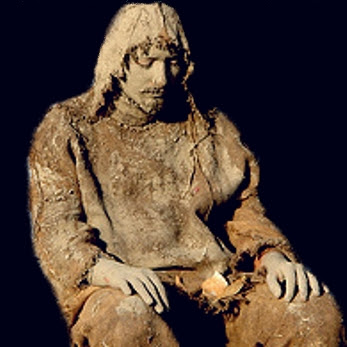
Administering the last rites (Dutch School, c. 1600)
“In the morning resolve, in the evening examine your performances, how you have behaved this day in word, work, or thought; because in these, perhaps, you have offended God and your neighbor.” (IC 1,19,4) | “Do to others whatever you would have them do to you. This is the law and the prophets.” (Mt 7:12)

Kempis gives wise advice to religious and to us: resolve first thing in the morning to be Christ-like throughout the day and then, last thing before bed, evaluate how you did (IC 1,19).

It is in the Sermon on the Mount that Jesus gave the world what we now call the Golden Rule (read yesterday: Mt 7:7-12).  Leave it to the Messiah to put in one sentence a perfect summary of “the law and the prophets.”  (It occurs to me that the Lord would be great on Twitter — He was ahead of His time.)  Actually, it reminds me of a famous St. Augustine quote that is even more succinct but really sums up the Gospel: “Love and do what you will.” (Homily 7 on the First Epistle of John)  Both men tell us that there is great freedom in authentic love and charity.

Anyone who has ever made a New Year’s vow can relate to the ease of composing a resolution and the quickly realized difficulty in keeping it.  The good news is that we are not alone in regards to commitments we make to sincerely follow God’s will and commandments.  Grace is ours ordinarily through sacraments so we should take advantage of those two sacraments that can be received frequently: Holy Communion and Reconciliation.  To the degree we are open to God’s help and mercy, we are able to overcome even the most difficult habitual sins and vices (see Mt 19:26).  Sometimes it will happen in an instant; much more often it is a process with many stumbles and setbacks.  Perseverance, a firm commitment, and most importantly, humility, are required daily to combat are weakened will and darkened intellect (look under “Mortal Sin” and then “The Effects of Sin” here).

A good habit is to use the failings considered the evening before as the resolution for the following morning.  AA has it right: acknowledging and admitting the problem is the indispensable first step in overcoming it.  Let us pray daily for God’s help in following the Golden Rule.

Image result for the golden rule

“The resolutions of the just depend on the grace of God, rather than on their own wisdom: and in him they always put their trust, no matter what they do. (IC 1,19,2) | “When the news reached the king of Nineveh, he rose from his throne, laid aside his robe, covered himself with sackcloth, and sat in the ashes.” (Jon 3:6)

Kempis reinforces the fact that by ourselves we can do nothing pleasing to God (IC 1,19).  But with grace all things are possible.  We must ask daily (see yesterday’s post) for the help we need to remain firm in our resolution to do God’s will in all things.

Some background on today’s first reading (Jon 3:1-10).  Nineveh was the capital of the pagan Assyrian empire that took down the Northern Kingdom of Israel in 722 B.C.  These people did not know the one true God.  Yet, through an extraordinary outpouring of grace, it took no time at all for the king and his kingdom to repent of its evil ways.  So, not only do the just depend on God’s grace, but the unjust can be moved to righteousness as well through a simple word inspired by God.

Such is the power of God’s word in Scripture.  This should inspire us to read and meditate upon the Bible frequently and share the Good News with others.  Who knows who will be led to repentance and a deeper trust in God because of it (maybe even ourselves!).

“Every day we ought to renew our resolution and excite ourselves to fervor as if this were the first day of our conversion.” (IC 1,19) | “This is how you are to pray: Our Father who art in heaven…” (Mt 6:9)

Chapter 19 of Thomas à Kempis’s The Imitation of Christ is entitled “Of the Practices of a Good Religious” (1,19).  As we’ve discovered, many of the traits that Kempis encourages priests and religious to embrace are to be taken to heart by all the faithful.  What resolution does he speak of? “[T]o be eminent in all virtues.”  We are to “walk the walk” “every day.”

Yesterday’s gospel (Mt 6:7-15) gave us the classic version of the Lord’s Prayer.  What better way to “renew our resolution” to be a good Christian than by saying this prayer at least daily, as it is meant to be said (“Give us this day our daily bread”); one is ensured this practice if able to attend Mass in which this beautiful prayer is always recited.  Its seven petitions are a map of life for us — is it any wonder this came from the lips of God in Jesus?

  1. Thy kingdom come — How are we making the world a bit more heavenly?
  2. Thy will be done — Do we sincerely try to follow God’s plan for our lives?
  3. Give us our daily bread — Do we go to Mass fully open to the graces available in the “supersubstantial” bread we receive at Communion?
  4. Forgive us our trespasses — Do we examine our consciences often and ask for mercy and help?
  5. As we forgive — Sometimes difficult, but always necessary, to obtain our own forgiveness (this petition is so important that Jesus repeats it at the end of the prayer).
  6. Lead us not into temptation — Urges to do what we know is offensive to God come often so we must be vigilant and overcome these with the Lord’s help.
  7. Deliver us from evil — “Your opponent the devil is prowling around like a roaring lion looking for [someone] to devour” (1 Pt 5:8).

“Lord, teach us to pray” (Lk 11:1) with fervor and a firm resolution.

The Ecstasy of St. Francis, A Monk at Prayer with a Dying Monk by Georges de La Tour
The Ecstasy of St. Francis, A Monk at Prayer with a Dying Monk (1640-45)
by Georges de La Tour

“They persevered in true humility, they lived in simple obedience, they walked in charity and patience; and therefore they advanced daily in spirit and obtained great favor with God.” (IC 1,18,4) | “Be holy, for I, the LORD, your God, am holy.” (Lv 19:2)

As we continue to reflect on Kempis exalting the early fathers of the Church (1,18), let us highlight what the author tells us made these men holy: humility, obedience, charity, and patience.  They needed to practice these virtues in the monastery, as well as with visitors, or when begging alms, or in any encounter with others.  They wished to attain the holiness that God intended for them.

In the first reading today (Lv 19:1-2, 11-18), the Lord God entrusts to His servant Moses a special message to the Chosen People regarding how they should conduct themselves in their affairs with each other and with Him.  The list is long: no stealing, no lying, no defrauding, no cursing, no dishonesty, no partiality, no slander, no hatred, no revenge, no grudges, and more.

Consider this list versus the traits of holiness in the first paragraph.  Is it any wonder the holy fathers embraced these virtues?  The opportunities to offend God and neighbor are frequent and tempting.  Constant vigilance was the rule for the saints.  Since we are all called to be great saints, it must be the rule for us as well.  Pray for help in this daunting challenge exacerbated by our fallen nature.

You shall love your neighbor as yourself.

This last line of the reading is the bottom line for us.  Remember Jesus’ answer to the scribe who asked Him what is the greatest commandment:

You shall love the Lord, your God, with all your heart, with all your soul, and with all your mind. This is the greatest and the first commandment. The second is like it: You shall love your neighbor as yourself. (Mt 22:37-39)

Jesus, as they say, “doubles down” on the words of His Father.  God knows it is difficult.  All the more reason to pray for an increase in virtue while disciplining ourselves to genuinely see all others through the eyes of Love (see 1 Jn 4:8).

Image result for god and moses heston

“Oh, how strict and mortified a life did the holy fathers lead in the desert! What long and grievous temptations did they endure! How often were they molested by the enemy! What frequent and fervent prayers did they offer to God! What rigorous abstinence did they practice!” (IC 1,18,2) | “At that time Jesus was led by the Spirit into the desert to be tempted by the devil. He fasted for forty days and forty nights” (Mt 4:1-2)

Kempis gives a sterling example of how the holy men of old “hated their lives in this world” by pointing to the so-called “desert fathers” (learn more about these radical early Christians here) (1,18).  Taking their cue from Jesus, they embraced mortification and fought the devil and temptation through prayer and fasting.

In today’s Gospel (Mt 4:1-11), Jesus, in order to prepare well for what He knew would be a challenging public ministry, is driven into the wilderness by the Holy Spirit.  There He devotes His time to speaking with His Father and disciplining His body through taking in very little sustenance.  Satan, believing he has an opportunity to derail Jesus’ mission, tempts Him regarding the flesh (to break His fast), an appeal to vanity (to “show off”), and a desire for power (with a worldly throne).  Jesus would have none of it, overcoming the temptations and seeing through the devil’s machinations.  (It is interesting to contrast this with the first reading in which Adam and Eve give in readily to the devil’s wiles; thus we have Jesus as the New Adam [and His mother, as we see early in Luke, the New Eve (see 1:38)] whose humility reversed the sin, stemming from pride, of our first parents.)

In a special way, the Lenten season gives us a reminder — and an opportunity — to imitate Jesus and the desert fathers: a forty day period in which we are invited to increase and intensify prayer while working on disciplining our worldly and fleshly desire here and now for the eternal benefits that come with the transformation that occurs within us when we seriously consider our ultimate destiny.

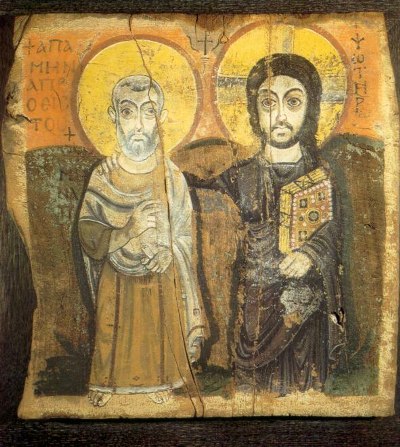
Plik:Icon of friendship luwr.jpgChrist and Saint Mina. 6th-century icon from Bawit, Egypt, now in the Louvre

“[T]hey hated their lives in this world, that they might possess them for eternity.” (IC 1,18,2) | “Keep my life, for I am devoted to you; save your servant who trusts in you.” (Ps 86:2)

Kempis tells us of the devotion that the holy fathers to their vocation and to their God for the sake of their salvation (1,18).  David also seeks salvation — for him it is salvation from his own fallenness and from his enemies (Psalm 86).

The fathers could certainly relate to David as we should be able to, as well.  That the fallen state of our nature makes it a challenge to do what is right and good should be obvious.  Knowing that our enemies are the world, the flesh, and devil, should bring us to the realization that we are to hate our lives in this world and that devotion to God is what is needed to save our lives for eternity.  With a full trust in God, the fathers strove to reject all that hindered them from full communion with the Lord.

All the faithful are bound to do the same, regardless of what walk of life we have chosen or been relegated to.  Anything in this life that  hinders devotion to God must be set aside so that eternal life is not placed in jeopardy.

King David Praying to The Most High. Book of Hours, Late France 🇫🇷 King David, Most High, Book Of Hours, History Facts, Brown Skin, Renaissance, Pray, Medieval, BibleKing David Praying to The Most High. Book of Hours, Late 1400’s France

“They considered themselves as nothing, and were despised by this world; but in the eyes of God they were very precious and beloved.” (IC 1,18,4) | “A heart contrite and humbled, O God, you will not spurn.” (Ps 51:19b)

The primary example of the holy fathers, as Kempis relates it, is humility (1,18).  Their prayer, hard work, mortification, and poverty all resulted from this foundational trait.

Psalm 51 is one of the most famous songs of David, a primary penitential psalm.  The king essentially wraps up the psalm with the words in the headline after laying out in very raw terms his sorrow for his sins, his desire to repent (asking for God’s grace to convert him), and his drive to make amends.

The holy fathers Kempis harkens back to surely took this Scripture to heart.  Seeking only God’s approval, a life of contrition and humility is all they strived for.  The “daily grind” was burnishing them for a heavenly reward — this is what they aspired to in this hidden life that the world could not (and still cannot) understand (at best) and even despised (at worst).  Such an attitude goes against all the world preaches: “Have it your way!” “You’ve earned it!”  “Just do it!”  “Look out for number one!”

Rather, the fathers we are to imitate said: “Do it God’s way!”  “Jesus earned it for us!”  “Just do the Almighty’s will!”  “The Lord is number one!”

Let us ponder often Psalm 51 as it applies uniquely to our own sins and deficiencies while considering the saints who overcame their personal challenges with transgressions and vice day by day to gain Heaven.

Stained glass window, St. Wenedlin Catholic Church, St. Henry, Ohio. Photo © Russ Martin, AKA Steeple Chaser. Used by permission of the photographer. Artist is unknown.Stained glass window, St. Wendelin Catholic Church, St. Henry, Ohio.
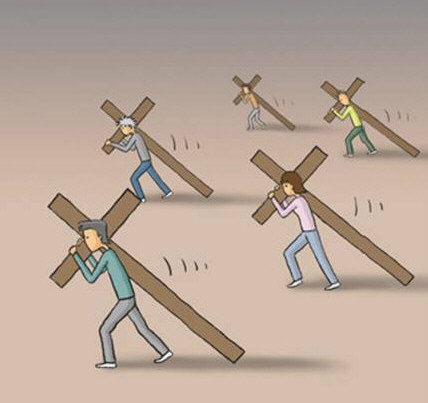
Photo © Russ Martin, AKA Steeple Chaser.

“Ah! how many and how grievous tribulations were suffered by the apostles, martyrs, confessors, virgins, and all the others, who were willing to follow Christ’s footsteps.” (IC 1,18,2) | “If anyone wishes to come after me, he must deny himself and take up his cross daily and follow me.” (Lk 9:23)

We begin chapter 18 (“Of the Examples of the Holy Fathers” [1,18]) of book one with this quote highlighting the life of extraordinary virtue that so many of our ancestors in the faith exhibited.  It is why reading the lives of the saints, and praying to these holy men and women, is so profitable to us.  A daunting example, but eminently possible, because they showed it could be done — entirely relying upon God’s grace for aid and perseverance — despite our fallen nature.

These persons we hold in esteem radically embraced what Jesus says in today’s Gospel (Lk 9:22-25) will surely come to His best friends: a daily cross.  For their deep and abiding faith, they lost their worldly lives (sometime literally) to gain eternal life.

We must be willing to do the same for the sake of the Kingdom of God.  Are we willing to be radical instead of conformist?  Are we open to be possessed by the Holy Spirit?  Do we embrace our daily challenges (big and small) that come our way?

In this Lenten season, let us be especially attuned to God with increased prayer, fasting, Bible study, and spiritual reading (especially the lives of the saints — find books on a favorite saint or read a compilation and come to Easter with a favorite saint).

Image result for take up your cross(Click here for the entire strip from which  this image was taken — excellent!)

“He who seeks many other things, and not solely God and the salvation of his soul, will find nothing but trouble and sorrow.” (IC 1,17,2) | “Even now, says the LORD, return to me with your whole heart, with fasting, and weeping, and mourning” (Jl 2:12)

Today we will have one last reflection based on Kempis’s chapter on the monastic life (1,17).  It seems a quote particularly worth considering as we once again begin Lent.  This penitential season is a particularly appropriate time to divest ourselves of the many worldly things we seek so that we can refocus on “God and the salvation of our soul.”  Is it not the case that we ultimately “find nothing but trouble and sorrow” when the world consumes us and causes us to neglect what is all=important: our eternal destiny?

Joel (2:12-18) is writing due to the people’s lack of awareness that the agricultural failure they are experiencing is because of their unfaithfulness; if they continue in their obstinance surely a worse fate will befall them.  The remedy: “fasting, weeping, and mourning” for their transgressions.

Like us, the Chosen People far too often became wrapped up in concerns of the flesh and idolatry.  While we may not run after foreign deities, we can easily fall prey to the temptation to treat material things as if they were gods, consuming our time, energy, and interest, but never fulfilling our deepest desires, all the while causing us to deviate from the “narrow path” (Mt 7:13-14)

So let us take this blessed season that the Church graciously gives us to fast from sin and weep and mourn for our past sins.  Let us focus on God and what is required of us for eternal salvation.  There is not a better way to do this than to consider deeply and frequently Jesus’ sacrifice for us for which we are preparing during Lent.  Paul provides a good approach for this period of the liturgical calendar and all of our days:

For I resolved to know nothing while I was with you except Jesus Christ, and him crucified. (1 Cor 2:2)

Image result for fast weep mourn