“The boy shall be consecrated to God from the womb, until the day of his death.”

Since today’s first reading is a repeat of Sunday’s (see my last post), I thought I would dip into yesterday’s proclamation from Judges (13:2-7,24,25a) for today’s reflection.

This excerpt tells the story of Samson’s conception and birth to a barren woman.  The time of the judges was a challenging period in the history of the Chosen People, not only because of oppressors like the Philistines, but also because so many judges themselves were less than stellar representatives of God or the people.  Samson will have his own faults as well but ends up, in a famous scene, giving his life for a greater cause.

The act of consecrating a child to God in the womb is something every parent should do the moment a pregnancy is confirmed.  Simply ask the Lord to watch over and protect the little one all the days of his or her life (a suggested prayer).  Additionally, pray that the Lord’s will be done in the life of this miracle and that he or she may follow that will perfectly.  Moral crises and the shortage of religious vocations would end if this plan were followed to the letter.

https://unbornwordoftheday.files.wordpress.com/2011/04/jesus-blessing-pregnant-woman.jpg


“The virgin shall conceive, and bear a son, and shall name him Emmanuel.”

We continue to hear from Isaiah (7:10-14), the foremost prophet who foretells the coming of the Messiah.  Some folks get caught up in the fact that the Christ’s actual given name was Jesus, per the angel Gabriel (Lk 1:31).  But this is not the point.  Today’s gospel gives us the explanation.  Joseph, the “master dreamer” (cf. Gen 37:19), is told by an angel that he is to be the caretaker of the child who is “God is with us,” telling us who He is.  The name “Jesus” only adds to this by telling us the why He comes: “God saves.”

https://i0.wp.com/www.durbinhypnosis.com/files/includes/images/josephs_dream.jpg

We know that God is always with His people in spirit.  Any good Jew of Isaiah’s time or living in 4 B.C. would have told you so, pointing to the many episodes in history when the Lord made Himself manifest to the Chosen People.  But Yahweh in the flesh?  How much more intimate could the Lord get to us but by becoming one of us?  This exercise in love and humility should render us dumbstruck.  Yet we too easily take it for granted.  Advent is the ideal time to gain an appreciation for the condescension of the Almighty for the sake of poor humanity, especially the reader.

And the legacy the God-Man left us?  The Eucharist!  God with us, saving us.  Here He becomes closer to us than we are to ourselves.  Never miss the opportunity to take advantage of this great gift.  And let us always be prepared to receive Him worthily through our lives and the great sacrament of Reconciliation.  Prepare your heart to receive Him this Advent season and then say “Stay with us” Lord (Lk 24:29).

“Observe what is right, do what is just; for my salvation is about to come, my justice, about to be revealed.”

The reading from Isaiah (56:1-3a, 6-8) opens up with the powerful statement above.  Salvation comes to us in the person of Jesus.  As we prepare to celebrate His birthday in just over a week, we do well to remember that this innocent babe, born in humiliation to a poor couple, came for us.  He comes to save and to bring justice.  He is demanding.  This same Jesus is the one who goes on to say that we are to be perfect (cf. Mt 5:48), gives us new commandments (cf. Jn 13:34), and shows us the way by word and the example of His life (and death).

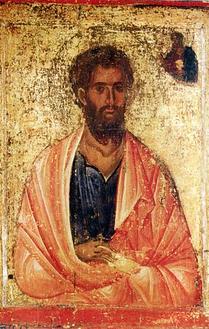
Christ Pantocrator

As we prepare to mark another Christmas, may it leave a permanent mark on us, one in which we appreciate more than ever what the Lord did for us and what He demands of us.  Let personal transformation in Christ, authentic conversion, be the preeminent resolution for each one of us this Christmas season.

“I am the LORD, there is no other.”

Thus begins today’s reading from Isaiah (45:6c-8, 18, 21c-25).  He then goes on to tell of the power and the glory of God.  God created light and dark, the heavens and the earth.  God provides safety and justice.  Those who turn against Him in anger will return in shame.

The little babe for whom we are preparing is this same Deity!

https://i0.wp.com/medjugorjeca.org/images/holy-family-holy-spirit-231x300.jpg

Do we appreciate enough the King of the Universe and the Lord of our lives?  And, if we confess Him as Lord, is he truly Lord over every aspect of our lives?  It is important that we move beyond the sentimentality of the season to go deeper into the stark reality of the mission of the God-Man.  He came as Savior and Redeemer, to give us the opportunity to be with Him forever in heaven.  It is a big deal.  In fact, it is the whole deal.  Jesus says,

Whoever wishes to come after me must deny himself, take up his cross, and follow me. For whoever wishes to save his life will lose it, but whoever loses his life for my sake and that of the gospel will save it.  What profit is there for one to gain the whole world and forfeit his life?  What could one give in exchange for his life?  Whoever is ashamed of me and of my words in this faithless and sinful generation, the Son of Man will be ashamed of when he comes in his Father’s glory with the holy angels. (Mark 8:34-38)

In the end, if we do not attain heaven we are the most wretched of beings.  So let this be the start of an even closer imitation of Christ in our daily living.  There is no better way to strive toward perfection than to come to know Christ.  Mass whenever possible during the week.  Scripture reading and meditation daily.  Let our memorial of Christ’s first coming usher in a new coming into our own lives in a special way each day from now on.

There is no one else like Him!  Just ask St. Augustine who, after a long time searching in all the wrong places, says at the beginning of his Confessions:

Thou hast formed us for Thyself, and our hearts are restless till they find rest in Thee.


“I will leave as a remnant in your midst a people humble and lowly, Who shall take refuge in the name of the LORD.”

https://upload.wikimedia.org/wikipedia/commons/thumb/f/f0/Zephaniah.jpg/170px-Zephaniah.jpg

Zephaniah, a seventh century B.C. prophet provides encouraging words (3:1-2, 9-13) to anyone who feels as if they are a part of rapidly shrinking “remnant” of those who put full faith in God in these troubling times.  His prescription, as is the advice of so many biblical authors and figures, not the least of whom is Jesus Himself, is to be humble.  That is, to acknowledge the truth of the Lord’s greatness and the problem of our own faults all the while taking refuge in God’s mercy through confession and penance, prayer and fasting.

It should not be difficult to be humble as we consider the incarnation and birth of Jesus during this time of preparation.  The Holy Spirit descends upon a lowly peasant girl and the Son of God becomes man.  Then He is born in a stable.  He goes on to live a life of profound humility dying ignominiously.

Is it so hard to be humble when God Himself condescends to the level of a lowly creature?  This is worth remembering and reinforcing at this time which marks the beginning of the liturgical year so this attitude remains with us the whole year through.

In humility Christ saved the world.  We must follow that example profoundly if we wish to do the same.

“Be patient, brothers and sisters, until the coming of the Lord.”

(Submitted by me for today’s bulletin as a member of my parish’s Spiritual Life Committee.)

The core message from the very practical James in today’s second reading (Jas 5:7-10) is one word: patience. Here James is counseling early Christians’ whose patience was worn thin because many of them expected the imminent return of Jesus, His second coming.  You have likely heard the adage, “Patience is a virtue,” but this quality was as difficult to practice for James’s contemporaries as it is for us today, especially as we approach Christmas.

https://i0.wp.com/churchianityorthecrossxstudies.weebly.com/uploads/1/0/0/5/10056555/9471805.jpg

The season of Advent is meant to prepare us for December 25th, the day we celebrate Jesus’ birthday.  This rich period on the liturgical calendar is meant to bring calm, to slow us down a bit, to give us the opportunity to exercise patience, so that we can properly consider the miracle of the Incarnation of Jesus and His birth to a virgin.  It should be a time for increased prayer and devotions and maybe even attending Mass, at least from time to time, during the week.

Unfortunately, far too often in the run up to Christmas, patience’s opposing vice, anger, is increasingly on display, maybe more so than during any other time of the year.  This may be experienced in mall parking lots, in store checkout lines, with online sites that no longer have the desired gift in stock, or in the general hustle and bustle of this time of year.  This is a sad state of affairs in what is supposed to be a season of joy and peace.  It is worth reminding ourselves that Jesus is the reason for the season.

We are encouraged during Advent to recall Jesus’ first coming in the flesh (in the past), His second coming in glory as we profess during the Creed at Sunday Mass (in the future), and His ongoing coming to us in a real and substantial way in the Eucharist at every Mass (right now).

How will you allow this season of preparation to lead you to the patience needed to carve out an appropriate amount of time to contemplate and appreciate our wonderful Savior who redeemed us then, nourishes us now, and will come in glory in the future?


“I, the LORD, your God, teach you what is for your good, and lead you on the way you should go.”

Isaiah (48:17-19) today reminds us of another aspect of our Redeemer that we mustn’t forget: that He is our teacher and leader.  During this time of the year, we get caught up in the good feelings of the babe in swaddling clothes, the manger scene, the singing angels, the humble shepherds, the Stille Nacht — and there’s nothing wrong with doing so but we must not forget to what this was to lead.  Jesus, thirty years hence, would be boldly proclaiming the Kingdom and giving His hearers — and all future generations — the keys to bring forth and enter into His Kingdom.  At great personal cost He, as a good shepherd should, guided us by telling us how to live and lived it Himself as our exemplar.  Remember these words of Jesus?:

I am the way and the truth and the life. No one comes to the Father except through me. (John 14:6)

Enter through the narrow gate; for the gate is wide and the road broad that leads to destruction, and those who enter through it are many. (Matthew 7:13)

We turn to The Navarre Bible, Major Prophets for the final word:

[T]his oracle is a “teaching” that applies in every age, and is valid for all nations and every individual:everyone must be converted and follow the way of the Lord. (212)

We must never cease striving to live up to the Lord’s expectations.  Advent is a good season to ponder this.  For those inclined to make New Year’s resolutions, this is prime time to develop resolutions that will bring us closer to God.  This is something we must all resolve to do.

“Where are you?”

As we do each Advent, we interrupt our regular sequence of readings to celebrate the Solemnity of the Immaculate Conception of the Blessed Virgin Mary.

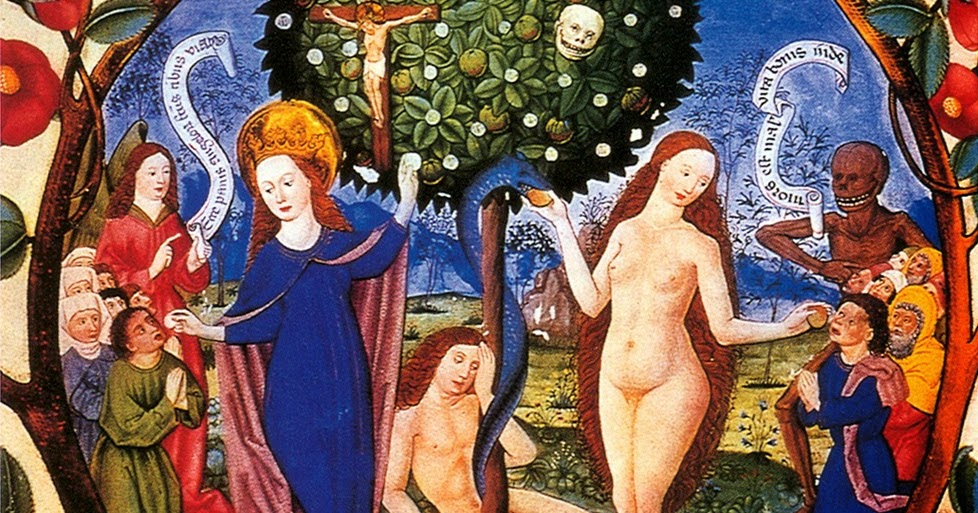
The first reading, from Genesis (3:9-15, 2o), gives us the aftermath of The Fall in which God confronts Adam and Eve beginning with the question above and ending with the Protoevangelium (v. 15), the foretelling of the woman (Mary) and the man (Jesus) whose obedience, as opposed to the disobedience of our first parents, will vanquish the sin and death the latter brought to the world..

https://lh3.googleusercontent.com/-BMC4AdpPm-8/VTAaBwvjCQI/AAAAAAAANqw/i_nIQQckl48/w1200-h630-p-nu/Mary-as-the-New-Eve-15th-century-1.jpg%20cursor:%20pointer;

God’s question is meant to elicit from them their states of mind and hopefully some self-realization of their sinfulness.  So, where are you in this whole mess, God asks the couple?  Well, Adam blames Eve and Eve blames the serpent.  The sin of pride “you will be like gods” (Gen 3:5) leads to excuse making and passing the buck.  No contrition is detected.

The good news is that a savior is coming.  We also anticipate His arrival during this solemn and holy season of Advent.  So, we also can imagine God asking us: “Where are you” in your relationship with Me?  Will we be making excuses and blaming persons and circumstances for a less than peaceful and prayerful run-up to Christmas?  Or will we avoid sin and unnecessary distractions in order to better welcome the Lord?  Advent is not halfway done — let us make the most of the rest of it!


“They that hope in the LORD will renew their strength.”

Appropriately, we continue to read from the great foreteller of the Messiah as the anniversary of the birth of the Christ Child creeps ever closer.  Isaiah (40:25-31) practically sings of the glory and majesty of God.  In a certain sense this vision contrasts starkly with the peaceful little scene of the Holy Family in a cave.  Jesus came in all humility with only shepherds and a few travelers (and of course Mary and Joseph) given any sense of the greatness and uniqueness of the event.  His strength and power will become manifest in His public life with His preaching, healings, exorcisms, and crucifixion.  Crucifixion?  Yes.  Jesus says to apostles:

I lay down my life in order to take it up again.  No one takes it from me, but I lay it down on my own. I have power to lay it down, and power to take it up again.  (John 10:17-18)

Later, Jesus says to Pilate, who claims to be the determiner of Jesus’ fate:

You would have no power over me if it had not been given to you from above.  (John 19:11)

Christ Before Pilate Again 1308-11 - Duccio Di Buoninsegna - www.ducciodibuoninsegna.org

Christ Before Pilate Again 1308-11, Duccio Di Buoninsegna

There is that word “power” again and again.  Through the Paschal Mystery (Jesus’ suffering, death, and resurrection) Jesus becomes the true power source of our lives.  This posting’s headline emphasizes this fact.  After a long year, we need to take time to recharge our batteries in the Lord so as to be ready for the adventures of a new year.  Be sure to take the time to plug into that power source (with no breakers — do not be afraid of this power surge!) as we approach the joyous time of Christmas (more about this in Sunday’s post).  Let it then be a reminder to not neglect this opportunity to approach Jesus for refreshment, restoration, and renewal throughout the year.  Only by the power of His grace can we have the strength to survive and thrive.


“The word of our God stands forever.”

Like yesterday, the prophet Isaiah (40:1-11) provides another hopeful message to the Chosen People.  After a time of trial Israel’s guilt is expiated.  God, in all of His power, will manifest Himself, yet gently lead them as a shepherd.  Certainly this pastoral image evokes to the Christian reader Jesus who has is often thought of as the Good Shepherd as conveyed particularly in John’s Gospel.  He comes in power and glory but as a humble shepherd guiding the people on the straight path of righteousness.

But it is the headline of this post on which I wish to focus.  From the beginning of that same Gospel of John we know that Jesus is the Word of God from all time.  This Word is living and active throughout time and eternity.  In fact, St. Peter, who spent three years with the Word Incarnate saw fit to reiterate this verse from Isaiah in the first part of his first letter (1 Pt 1:24-25).  No trial of the patriarchs or the Israelites ever toppled the Word.  No Jewish leaders or Romans ever ultimately defeated the Word.  No atheistic or heretical regime ever stamped out the Word.  No earthly force or hellish power will ever conquer the Word.

Remember the end of The Book, Revelation, which says:

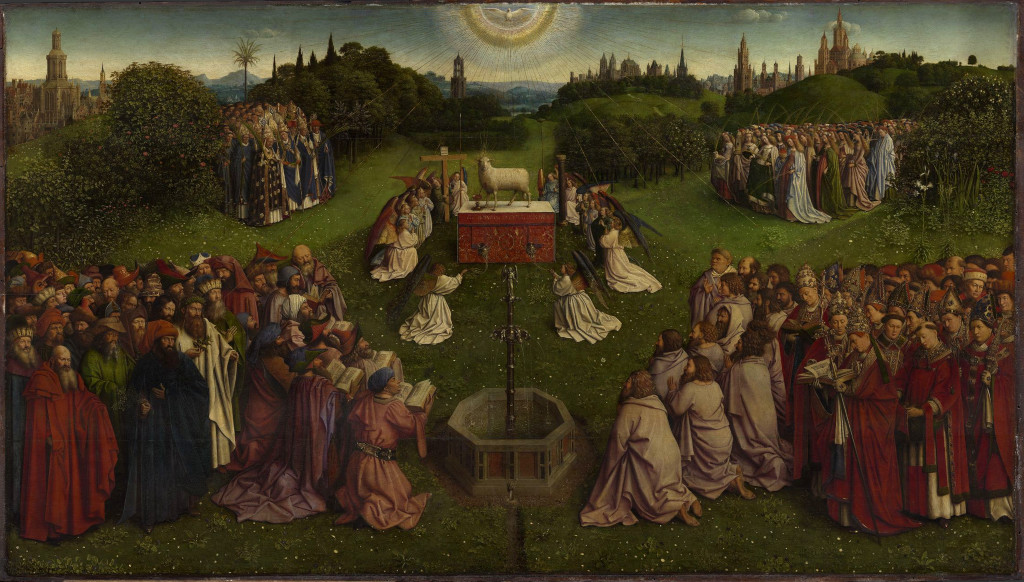
Then I saw standing in the midst of the throne and the four living creatures and the elders a Lamb that seemed to have been slain. (Rev 5:6)

Image result for van eyck lamb that was slain

The Ghent altarpiece: Adoration of the Lamb (Jan van Eyck 1390 – 1441)

Here we have our shepherd imagery, with the Lamb of God, the Word of God, not defeated by death but resurrected and glorious, erect on a throne, triumphant.

So shouldn’t we get to know this Word better?  We get to know the Word by reading the Word.  “Ignorance of Scripture is ignorance of Christ,” St. Jerome famously said.  Let this Advent season begin or renew a lifelong reading plan of the Bible.