“Nor will they gain freedom of mind, unless they submit themselves, with their whole heart, for God’s sake.” (IC 1,9,1) “[Jesus] said to [Simon Peter and Andrew], ‘Come after me, and I will make you fishers of men.’ At once they left their nets and followed him.” (Mt 4:19-20)

So many of the burdens that weigh on our minds, that occupy our thoughts, that bring anxiety to our lives, have to do with things of this world that divide our loyalties between God and mammon (i.e., material things — see Mt 6:24).  Kempis continues to expand on the issue of obedience and submission by declaring that we must give our whole hearts to the Lord to achieve true and lasting peace (1,9).

In today’s Gospel (Mt 4:12-23), we read of Jesus’ initial calls, soon after He begins His public ministry, to the men who He desires to be His closest collaborators.  Above we read of the fishermen brothers who were the first called.  The next two verses give us a similar response (“immediately they left”) of another two brothers, also fishermen, James and John.

We may be tempted to think that their quick response was a miraculous event, or that they were in some sort of hypnotic state — after all, it is the Messiah calling them and He should get the helpers He desires, right?

Well, Jesus does not force Himself on anyone.  He proposes, not imposes — the pattern we are to follow when sharing the Gospel.  All of the followers Jesus invited to ministry consented fully to being His disciples (although they certainly did not know all that it would entail — not even close, I’d wager).  So how did they know Jesus?  Likely they heard Him preach or at least heard glowing reports of Him (some quite possibly from John the Baptist).  Then, when encountering Jesus personally, He certainly must have been a compelling figure.

In the case of the four men mentioned in today’s Gospel, we have more insight into this episode from Luke (see 5:1-11).  When he first encounters these fishers, Jesus actually asks to preach from their boat (all four were working together), so they did hear the Good News directly from Jesus.  Then He miraculously provides them a great catch of fish, after which He tells them “from now on you will be catching men” (v. 10).

Jesus invites the whole world to “come after me.”  We should renew our commitment to this calling daily by seeking to eliminate all that causes separation between us and God (sin, unnecessary worry, and materialism).  We are to lighten our load and what better way to do so than to attach ourselves ever more closely to our Savior who said,

Come to me, all you who labor and are burdened, and I will give you rest. Take my yoke upon you and learn from me, for I am meek and humble of heart; and you will find rest for yourselves.  For my yoke is easy, and my burden light. (Mt 11:28-30)

Then we will be much better disposed to become “fishers of men” through word and action.
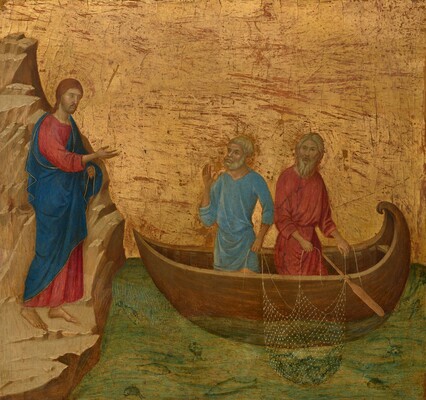
Image result for calling of simon and andrewThe Calling of the Apostles Peter and Andrew (1308-1311) by Duccio di Buoninsegna

“It is a very great thing to stand in obedience…and not be at one’s own disposal.” (IC 1,9,1) “Get up and have yourself baptized and your sins washed away, calling upon [Jesus’] name.” (Acts 22:16)

Chapter IX of The Imitation of Christ treats “Of Obedience and Subjection” (1,9).  The words above introduce this chapter.  On today’s Feast of the Conversion of St. Paul, Apostle, the man from Tarsus follows this good advice (Acts 22:3-16).  Not only does he obey Ananias, a man he just met, by receiving baptism, but, more importantly, he obeys Jesus, who he just encountered on the Damascus road in finding Ananias and receiving his marching orders from this man (read Acts 9:1-22, the alternate reading for today, and Luke’s rendition of Paul’s conversion, to flesh out more details).  Paul’s life would not be his own, ever again.  The zeal that he showed in persecuting Christians was now directed, many fold I suspect, in bringing others to Christ.

So, we also are to be obedient to the Lord and our lawful superiors.  Due to our fallen, stubborn, prideful nature, not always an easy task, whether it’s God or man giving the direction.  Once again, we go back to the virtue of humility.  Even though we believe, as we should, that the Almighty is perfectly trustworthy, His plans do not always comport with our desires.  With His grace and much prayer, we might just be able to comply in such circumstances.  But when our imperfect human family is the source of orders that contradict our opinions, that is when the rubber meets the road, so to speak.  Now, of course, we are not to follow sinful demands, and we may wish to provide a counterpoint, but as Kempis says further along in the chapter, “Although your opinion be good, yet if for God’s sake you leave it to follow that of another, it will be more profitable to you” (1,9,2).

The Gospel is challenging, isn’t it?

Saint Paul Ananias Sight Restored.jpgAnanias restoring the sight of Saint Paul (1631) by Pietro da Cortona

“Associate yourself with the humble and simple” (IC 1,8,1) “[Jesus] appointed Twelve, whom he also named Apostles, that they might be with him” (Mk 3:14)

Kempis continues to emphasize not only personal humility, but preferring the company of the lowly (1,8).  If anyone has the right to not be humble, it is Jesus, God incarnate.  Yet, from the moment of his fleshly existence until His death, He exemplified perfect humility.  Is it any wonder that He chose to be his closest collaborators not the wealthy and elite but those whom, in the world, were considered of little account (a bunch of fishermen) or even despised (a tax collector and a Zealot) (Mk 3:13-19)?  There would be no confusion either before or after Jesus’ death from where the power of word and deed of this motley crew came.  This would help convince many from various social strata, intellectual abilities, and faith traditions, the truth of the Gospel message.

We should be very mindful of this example.  Seek out the humble, that is, those who, as we should, know the proper relationship between themselves and God (in short: God is God and they are not).  A meek person acknowledges the truth, knows the author of it, and seeks to follow Him.  Outward appearances or personal abilities mean little in this.  Interior disposition is the key.  In this way we strengthen each other for the task ahead.

Therefore, encourage one another and build one another up, as indeed you do.
(1 Thess 5:11)

Image result for jesus chooses the twelve

“Open not your heart to every man; but treat of your affairs with a man who is wise and fears God.” (IC 1,8,1) “Saul discussed his intention of killing David with his son Jonathan and with all his servants.” (1 Sam 19:1)

This new chapter of Thomas a Kempis’s The Imitation of Christ entitled, “Of Avoiding Too Much Familiarity” (1,8), cautions against laying one’s heart bare to others indiscriminately — especially to those who are not close, who are immature, or, as above, who are nor wise and God-fearing.

In the first reading (1 Sam 18:6-9; 19:1-7), Saul, on the other hand, seems quite free to voice widely his displeasure with David by declaring his desire to kill him (in fact, in the remainder of chapter 18, not read at Mass but worth reading now, Saul tries to kill David twice by his own hand as well as attempting to set him up for failure and death in battles with the Philistines).  Fortunately, there was a man of God (and a great warrior in his own right — see 1 Sam 14) among his hearers, his son, Jonathan, who was a great friend of David’s (see 1 Sam 18:1-4).  Not only does Jonathan warn David of Saul’s continuing desire to kill him, but he also convinces his father of David’s value to him and his kingdom.  (Tomorrow we jump to chapter 24, but it is worth reading the intervening chapters as they show Saul’s continual attempts to eliminate David, as inspired by the devil, and Jonathan’s ongoing intervention.)

God forbid that, like Saul, murder would be in any of our thoughts, but when we are troubled by temptation, sin, doubt, despair, or anything that draws us away from the Lord, we should seek out persons who have gained our respect due to the true friendship they have shown us along with their witness of lives lived in accordance with a deep and abiding faith in Jesus.  This requires proper discernment.  We are not to be quick about revealing our deepest thoughts and feelings to others, but, rather, we must begin by going to prayer.  Begin with an examination of conscience, take advantage of the Sacrament of Reconciliation, and seriously consider a properly formed spiritual director for ongoing guidance in your spiritual life (contact your diocese for help in finding one, if necessary).

David and Jonathan (1843) one of Gustave Doré’s illustrations for
La Grande Bible de Tours


“He is a foolish man who puts his trust in men” (IC 1,7,1) “Looking around at [the Pharisees] with anger and grieved at their hardness of heart, Jesus said to the man, ‘Stretch out your hand.’ He stretched it out and his hand was restored.” (Mk 3:5)

It is difficult to argue with Kempis regarding in whom to put our trust, ultimately (1,7).  Even our closest family and friends can be a disappointment, but the Lord never lets us down.  God understands us perfectly and knows the heart.

So Jesus, being divine, in today’s Gospel (Mk 3:1-6), is able to read hearts.  The religious leaders were constantly looking for ways to trap Him, to accuse Him, to take Him down.  Jesus, who could have ingratiated Himself to these men to gain status in their eyes, rather trusted in His Father and the mission He was sent to fulfill.  Not caring for worldly accolades or recognition, Jesus does what is right (healing the man with the withered hand) rather than what is expedient.  We can recall these words written about Jesus:

Jesus would not trust himself to them because he knew them all, and did not need anyone to testify about human nature. He himself understood it well. (Jn 2:24-25)

And how do the Pharisees react?  Rather than resorting to prayer and searching the Scriptures (that they claim to be experts in knowing and interpreting) to resolve their concerns and doubts, they conspire with their enemies the Herodians (the political leaders associated with the pretender “king of the Jews,” Herod Antipas) — on the Lord’s day no less (thanks to Fr. Mitch Pacwa for this insight from today’s EWTN Mass homily)!  This is how they honor the day that God — who they claim as their own — has set aside for rest and worship?

Would that those politicians and religious leaders (and all Christians) of our day, who care more for political expediency rather than doing what is morally required by their professed faith, trust in God rather than men!  We would then see great progress toward the fulfillment of this petition of the Lord’s Prayer in our day:

Thy kingdom come, thy will be done, on earth as it is in heaven. (Mt 6:10)

Christ healing the man with a withered hand (Byzantine mosaic)
“Trust not in your own knowledge…but rather in the grace of God” (IC 1,7,1) “Not as man sees does God see, because he sees the appearance but the LORD looks into the heart.”

Another common early theme of Kempis (1,7) is the insufficiency of our own learning as compared to the inscrutability of God.  Here, again, he warns the reader to have faith in God much more than in our own limited knowledge, as deep as it may be.

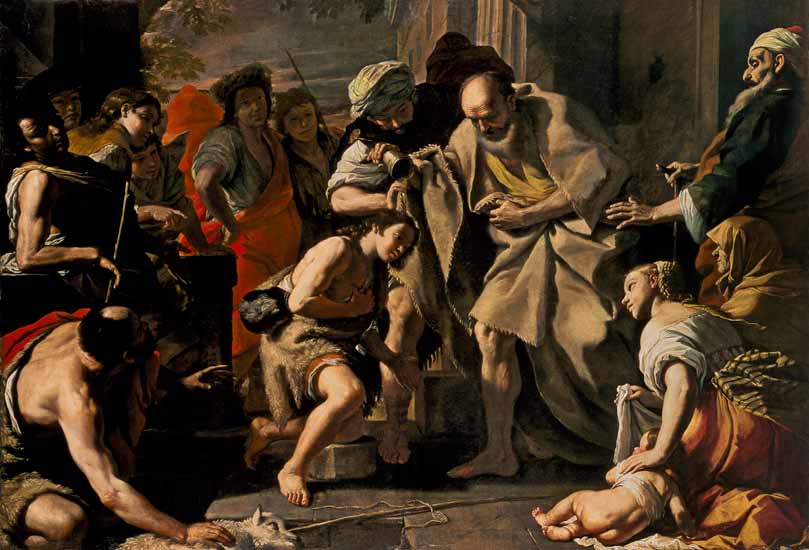
For Samuel in the first reading (1 Sam 16:1-13), in looking for the next king to replace the disgraced Saul, he is led by God to the family of Jesse in Bethlehem to pick the new monarch from among his sons.  In seeing the first born’s handsome “appearance” and “lofty stature,” and undoubtedly considering his status as the eldest, Samuel was sure this would be the chosen one.  Not so, God tells Samuel, then speaks the words in the headline to him.  After going through one son after the other, likely from oldest to youngest, Samuel finally has to ask Jesse if there are any more sons, for Samuel was assured that the next king was among them.  This is when we finally meet the humble shepherd boy, David, the youngest of the group, who is immediately anointed by Samuel.

Thus, we have another cautionary tale for our own lives.  It seems to me that too often folks are very quick to attribute positive events or circumstances to God’s ordained will.  A certain dynamic person comes into our lives unexpectedly so he must have been sent by the Lord.  Look at how all these circumstances fell into place for me so that I am able to attain this thing I desire.  What good fortune that I am able to pursue this matter uninhibited.

Now it may well be that God has actively intervened on our behalf in certain matters we desire.  But we must be careful.  We can be tempted by appearances to think that we know best.  Rather, we are to keep up regular conversation with God, place all things in His loving hands, and ask for a discerning heart (here a spiritual director can be of great help to give an objective evaluation of situations).  And, of course, as Kempis indicates, have recourse to the sacraments, the ordinary means of grace, to receive this free gift from God that surpasses all human knowledge.

Samuel anoints David by Mattia Preti (1613-1699)

“Continual peace is with the humble; but in the heart of the proud is frequent envy and indignation.” (IC 1,7,2) “A man is coming after me who ranks ahead of me because he existed before me.” (Jn 1:30)

The seventh chapter of The Imitation of Christ (1,7) rails against vanity and pride and exalts humility (as we’ve seen, and will continue to see, this is a common theme of Kempis’s and, frankly, of any solid work of Christian spirituality — especially the Bible).  No better example of humility among human persons, aside from Our Lady, is there than John the Baptist.

John was quite famous in his time.  As we have already read, the people flocked to him.  His message was severe, but his dynamism was evident.  He had his own group of loyal followers.  If anyone could have succumbed to pride through legitimate popularity it was John.  But it’s evident from his words above that he always knew his role and his place as a precursor to the Savior, the Son of God (a title he confers on Jesus in the last words of today’s reading).

John is clear why his cousin “ranks ahead of me”: it is “because he existed before me.”  Now John’s parents certainly would have told him that Jesus was born six months after he was, so Jesus came into existence in the flesh after John.  But Elizabeth, his mom, would also have told him that Jesus was the eternal Lord, as she exclaimed upon meeting Jesus’ mother Mary (see Lk 1:39-45, esp. 43).  In addition, how many times must Zechariah, his dad, have regaled him with the story of his encounter with the angel and what it meant for young John (see Lk 1:5-25, esp. 15-17)?

John undoubtedly would have taken this all to heart and meditated upon it often.  It is solid theological speculation that John was sanctified in the womb (“He will be filled with the holy Spirit even from his mother’s womb” — Lk 1:15) and that this happened when Mary visited as indicated by when he “leaped for joy” inside Elizabeth (Lk 1:44) who at that moment was “filled with the holy Spirit” (Lk 1:41).  So, it may well be that he never committed a personal sin.  In any case, he was a most fitting vessel to be the last, and greatest, of the Old Testament prophets who actually saw what they “longed to see” (Mt 13:17).

John was at peace with his mission, his exiting of the stage, and his ultimate demise.  He followed the Lord’s will perfectly and was able to meet death with the peace that comes with a clear conscience and a perfect submission to God’s will.  If we do the same we will hear the words that John undoubtedly heard upon his martyrdom: “Well done, my good and faithful servant…Come, share your master’s joy.’” (Mt 25:21)

john-jesus-ghirlandaio

Preaching of St. John the Baptist (1486–1490) by Domenico Ghirlandaio

“[I]f he has pursued his inclination, he is immediately tormented with remorse of conscience, because he has followed his passion, which helps him not at all to the peace he sought for.” (IC 1,6,2) “While he was at table in his house, many tax collectors and sinners sat with Jesus and his disciples; for there were many who followed him.” (Mk 2:15)

Kempis tells us of an experience most every person knows because we sinners ourselves have actualized it: giving in to temptation and then instantly feeling terrible about it. (1,6)  Some Catholics, usually non-practicing or ex-Catholics, often derisively refer to this as “Catholic guilt.”  Well, guess what, God, in His mercy, has gifted everyone with a conscience (see the CCC for more on this) which, when properly formed, helps us to stay on the narrow path to life (see Mt 7:13-14) or get back onto that trail when we have taken a detour.

In today’s Gospel (Mk 2:13-17), Jesus, as is often the case, takes heat from the Jewish religious leaders because He is dining with “tax collectors and sinners.”  Jesus deals with why He is compelled to do this in the passage, but what about His dinner guests?  Undoubtedly, they found Jesus’ preaching appealing and His manner welcoming.  They were quite bold to be so near to this great figure when they certainly realized the manner in which they were being judged by others.  Regardless of any hesitation they may have felt, they had become keenly cognizant of their own sinfulness and were not at peace with themselves.  Maybe they were aware of this all along.  Or maybe it was Jesus who tweaked their hearts (or, rather, pierced their souls — see Heb 4:12).

Both Kempis and Mark the Evangelist direct us, sinners all, to the Prince of Peace (see Is 9:5) the Divine Physician, to find forgiveness, healing, and the strength and grace to carry on and stay on His path.

File:Veronese, Paolo - Feast at the House of Simon - 1567-1570.jpg

The Feast in the House of Simon the Pharisee (1567-1570) by Paolo Veronese

“Whenever a man desires anything inordinately, he is immediately disquieted within himself.” (IC 1,6,1) “There must be a king over us. We too must be like other nations” (1 Sam 8:19-20)

Kempis tells us (1,6) that obsession with acquiring material things causes us to lose our peace of mind and heart.  Is it not the case?  “I gotta have that ‘hot’ new phone — I can’t stop thinking about it!”  “I must get those expensive tickets — I’ll move heaven and earth to make sure I snag a pair!”  “How can I show myself in public without the latest designer outfit — I’ll do and spend whatever it takes to get it!”  “We must get our candidate into office — if we don’t it will be the end of civilization as we know it!”

Anyone who watches even a bit of news or dips his toe into social media knows that the last sentence is not an exaggeration for far too many folks.  Well, as the Bible says, “There is nothing new under the sun” (Eccles 1:9).  This is where the people of Israel were.  While it is true that a lot of encouragement to the Chosen People was not provided by the judges regarding the latter’s personal behavior and their ability as leaders, the elders in today’s first reading (1 Sam 8:4-7, 10-22a) come forward and essentially want to double down.  Instead of going back to God, who should have been the only leader they ever would need, they look around and see other nations’ kings and want to have an earthly monarch as well.  Samuel relates to them that God says, “they are rejecting me as their king,” and warns them in detail that they are in for even worse times with this type of leader, yet they insist.  So God grants them their desire, essentially giving them the punishment they deserve (read the rest of the Old Testament for proof).

Kempis speaks of earthly possessions; his reproofs do not apply to the divine.  We cannot desire God too greatly — pleasing Him and doing His will are proper obsessions.  So, let us not fall into the trap of thinking that there is some magic formula among our fallen race to make us happy, to make everything right.  Let us not desire this elusive temporal “ruler” to straighten things out.  Let us look to the Almighty constantly and we will quickly come to the realization that “our hearts our restless until they rest in [God]” (St. Augustine in Confessions).

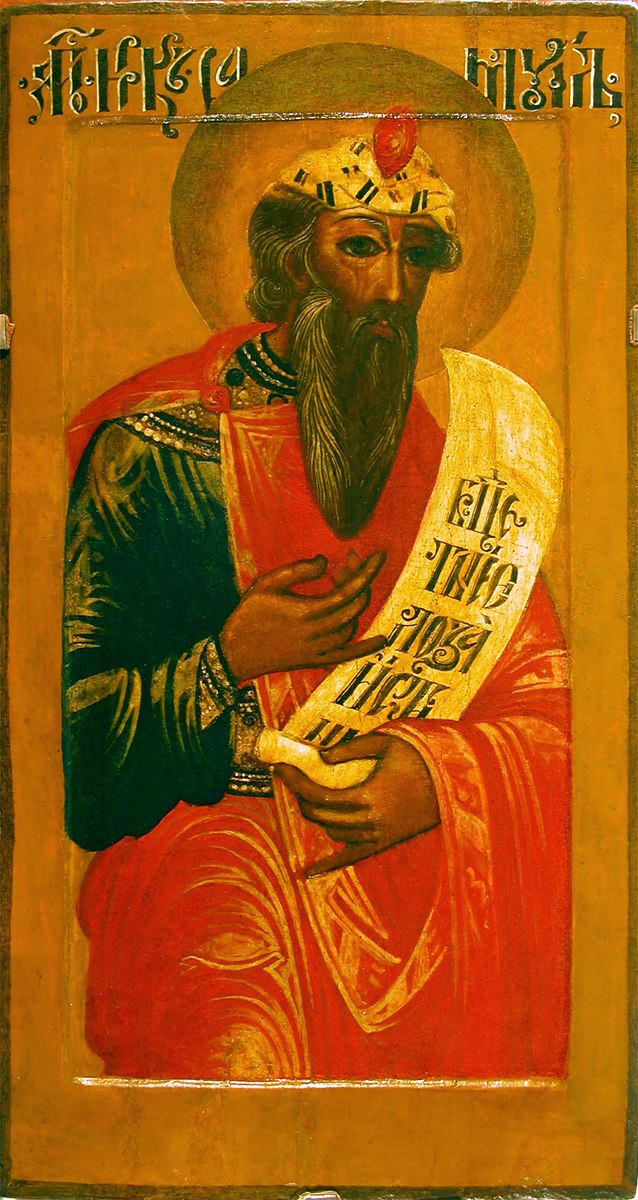
Image result for samuel in the bibleIcon of the prophet Samuel, 17th century


“The proud and covetous are never easy” (IC 1,6,1) “Why has the LORD permitted us to be defeated today by the Philistines? Let us fetch the ark of the LORD from Shiloh that it may go into battle among us and save us from the grasp of our enemies.” (1 Sam 4:3)

Chapter 6 of The Imitation of Christ (1,6) deals with human persons’ inordinate desire for carnal and sensual things.  Above is the first half of the second sentence of this chapter.  He means that the proud and covetous are never at ease, never at peace.  They are not content with what they have but, rather, are continuously concerned about what they have and what they want.  This drive of the flesh never ultimately ends well.

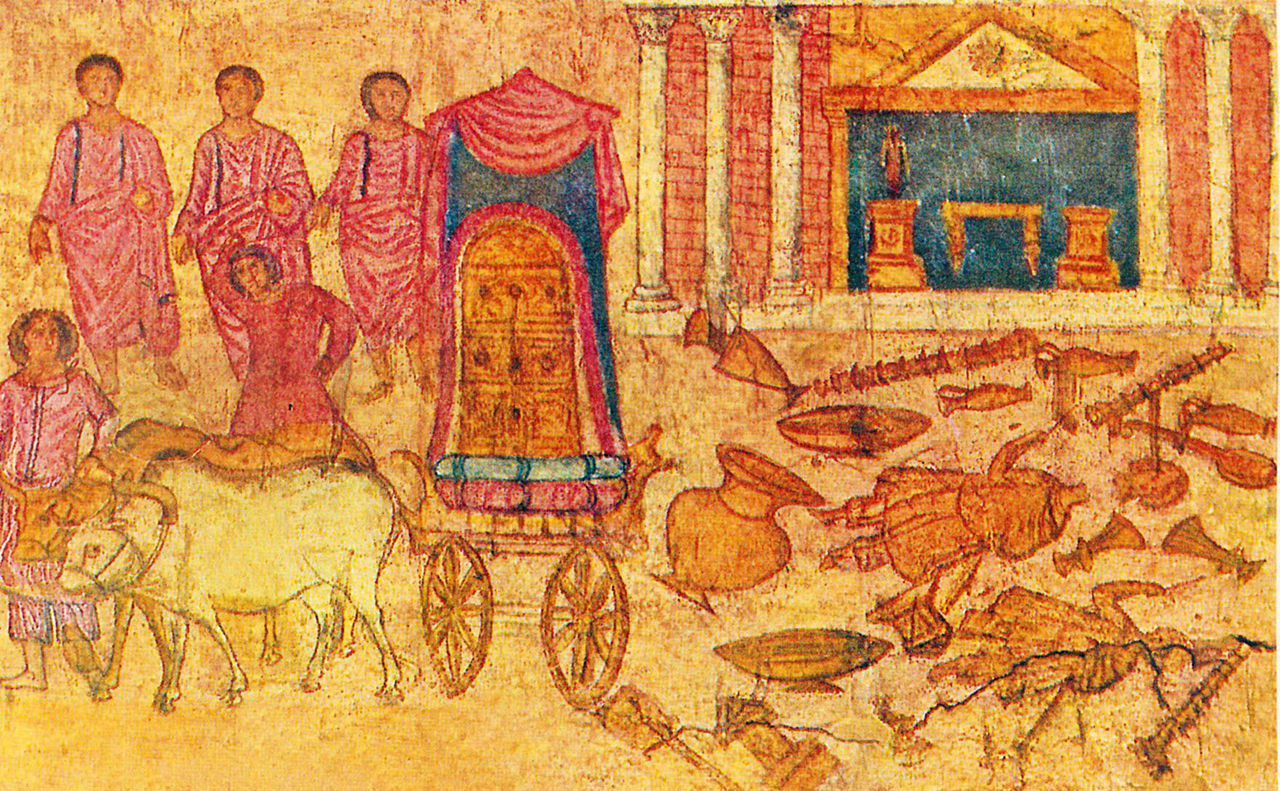
Consider the bit of history related in the first reading (1 Sam 4:1-11).  The Philistines attack Israel and defeat them soundly.  Israel, constantly running after foreign gods, suddenly remembers the true God’s dwelling among them, and decides to use the Ark of the Covenant as some sort of good luck charm.  Eli’s two evil sons (they fully embraced the carnal and sensual pleasure Kempis denounces [see 1 Sam 2:12-17]) are sent to “fetch” it.

Not only does Israel’s army get slaughtered (more than seven times worse than before), but the Ark is captured and taken by the enemy.  This is not the end of the story of the Ark (it will soon be returned), but is it any wonder that a God who is ignored and forgotten “ignores” and “forgets” the Chosen People?  Could they (we) ever have peace, could they (we) ever be at ease, in ignoring, or worse, defying God?  God sent His prophets time and time again — “one they beat, another they killed, and a third they stoned” (Mt 21:35).

The silver lining is that this happens while Samuel is being groomed, and is already widely acknowledged as a prophet (see 1 Sam 3:19-21), to lead the transition from the age of judges to the institution of an earthly king.  Samuel becomes the heir that Eli’s son forfeited by their actions and which ultimately led to their deaths.

Fresco of the Philistine captivity of the ark, in the Dura-Europos synagogue.